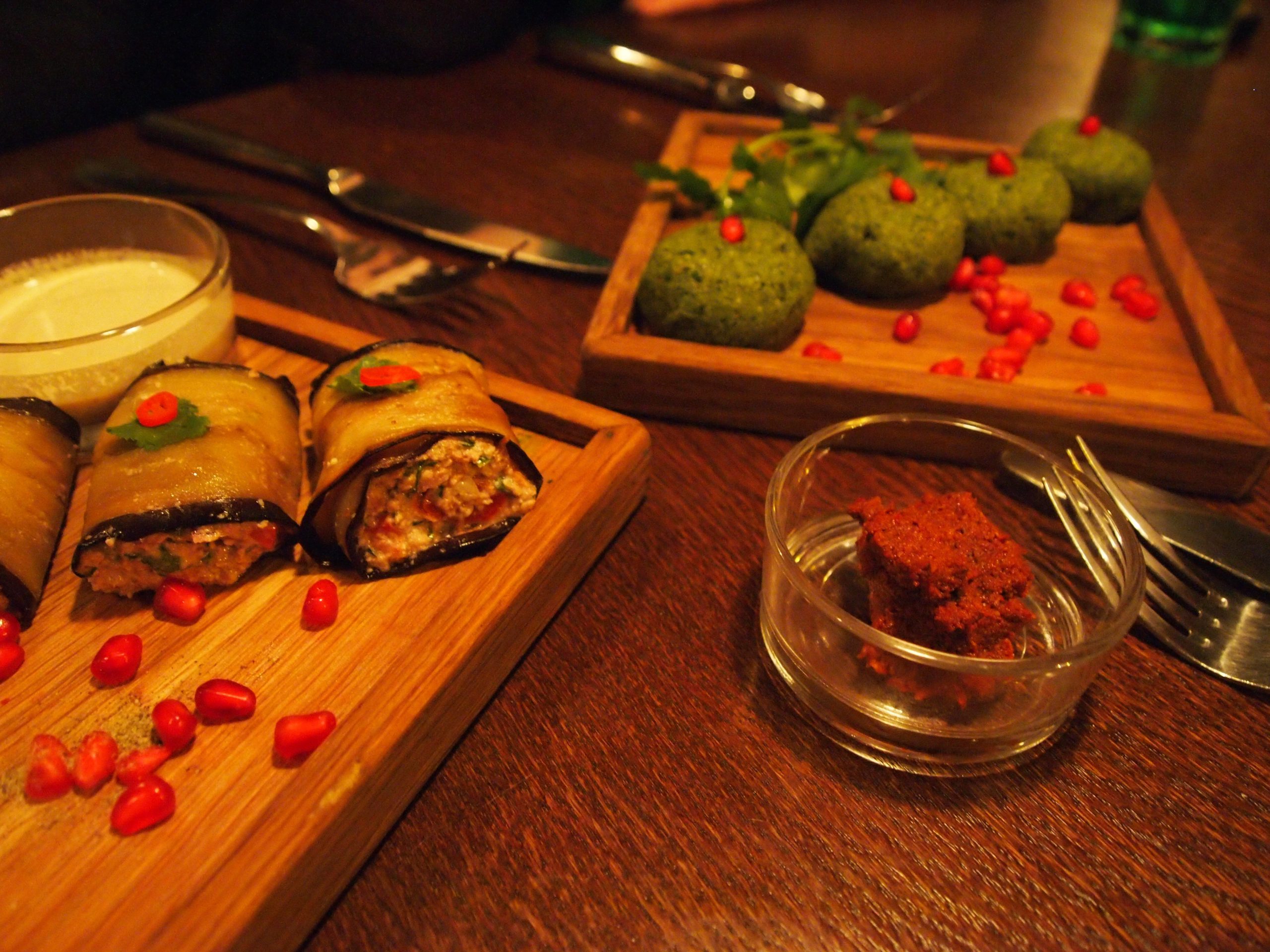
Pkhali are small Georgian vegetable pates, chopped greens or beets bound with a thick, garlicky walnut paste and shaped into little mounds topped with jewel-like pomegranate seeds. They come in a range of colors depending on the vegetable, and a plate of two or three kinds together is a fixture at the start of a Georgian meal. Rich with walnuts, sharp with garlic and vinegar, and entirely vegan, pkhali prove how central nuts and herbs are to the country’s cooking.
A Family of Colors
Pkhali is less one recipe than a method: take a vegetable, cook it, chop it, and bind it with spiced walnut paste. Spinach and beet greens make a deep green pkhali, cooked beets a magenta one, and there are versions from leeks, cabbage, carrots, and beans. At a Georgian supra, several colors are set out together on one plate, which is part of the appeal, both for the eye and for the range of flavors. Each shares the same garlicky, nutty, faintly sour base, so they taste related while looking distinct.
The Walnut Paste
Walnuts are the backbone of pkhali and of much Georgian cooking. Ground with garlic, herbs, and spices, they form a thick, rich paste that both flavors and binds the vegetable. The key is to grind the walnuts well enough that they release their own oil, which is what holds the pkhali together without any added fat; a food processor does this in a minute or two. The paste needs to be thick and slightly oily, not dry and crumbly. Fresh walnuts matter, since stale ones taste bitter and rancid and there is nowhere for that flavor to hide.
The Georgian Seasoning
The same trio of Georgian flavors that defines lobio runs through pkhali: ground coriander, blue fenugreek for its savory depth, and dried ground marigold for warmth and color. Garlic is generous, and fresh cilantro adds green freshness. Red wine vinegar brings the acidity that keeps the rich paste bright. These spices are what separate pkhali from a generic nut pate; ordinary fenugreek and turmeric stand in if the Georgian ones are out of reach, though the flavor shifts. Taste and balance the garlic, salt, and vinegar carefully, since they carry the dish.
Preparing the Vegetable
Whatever vegetable you use, it has to be well cooked and, crucially, well dried. Blanch leafy greens until wilted, then squeeze them out by hand with real force, because greens hold enormous amounts of water and a wet vegetable makes a loose pkhali that will not hold a shape. Grate cooked beets and, if watery, press them too. Chop everything fine so it binds evenly with the paste. This drying step is the one most often rushed and the one that most decides whether your pkhali form neat little mounds or slump into a puddle.
Shaping and Topping
Mix the walnut paste into the chopped vegetable along with a little minced raw onion until it comes together into a firm, cohesive mass. Then shape it: roll it into small balls or press it into little patties, arranging them on a plate. Press a small dimple into the top of each and fill it with pomegranate seeds, whose sweet-tart burst and bright color are the traditional finish and a lovely contrast to the dense, savory paste. A few whole cilantro leaves alongside complete the look. Serve them cool, not cold, so the walnut flavor comes through.
Serving and Keeping
Pkhali are a starter or part of a spread, eaten with bread and set among other small dishes at the beginning of a meal. They are best made a few hours ahead so the flavors meld, and they keep three or four days refrigerated, which makes them ideal party food you can prepare in advance. Add the pomegranate topping just before serving so it stays fresh and glistening. A plate of two or three colors, green, magenta, and pale, is the way to serve them, generous and made to be shared.
Building a Pkhali Platter
The most striking way to serve pkhali is as a set of colors on one plate. Make a green batch from spinach or beet greens, a deep red one from cooked beets, and a pale one from white beans or leeks, all sharing the same walnut base so they taste like a family while looking distinct. Arrange the mounds in rows or a circle, top each with pomegranate, and set out bread alongside. This platter is a common opener at a supra, the Georgian feast, where the table fills with small dishes before the larger ones arrive. It looks generous, travels well to a gathering, and can be made entirely the day before.
Common Questions
What vegetables can I use?
Spinach and beet greens for green pkhali, cooked beets for red, and also leeks, cabbage, carrots, or white beans. The walnut paste and spicing stay the same; only the vegetable changes, which is how the different colors are made.
Why won’t my pkhali hold together?
The vegetable was too wet, or the walnuts were not ground enough to release their binding oil. Squeeze the greens completely dry and grind the walnut paste until it turns thick and slightly oily.
Can I make it ahead?
Yes, and you should. Pkhali improve after a few hours as the flavors meld and keep three to four days in the fridge. Add the pomegranate seeds just before serving so they stay bright.
Pkhali are Georgian vegetable pates bound with walnut paste, made in different colors from spinach, beets, or beans, and set out as small starters at the shared supra table.