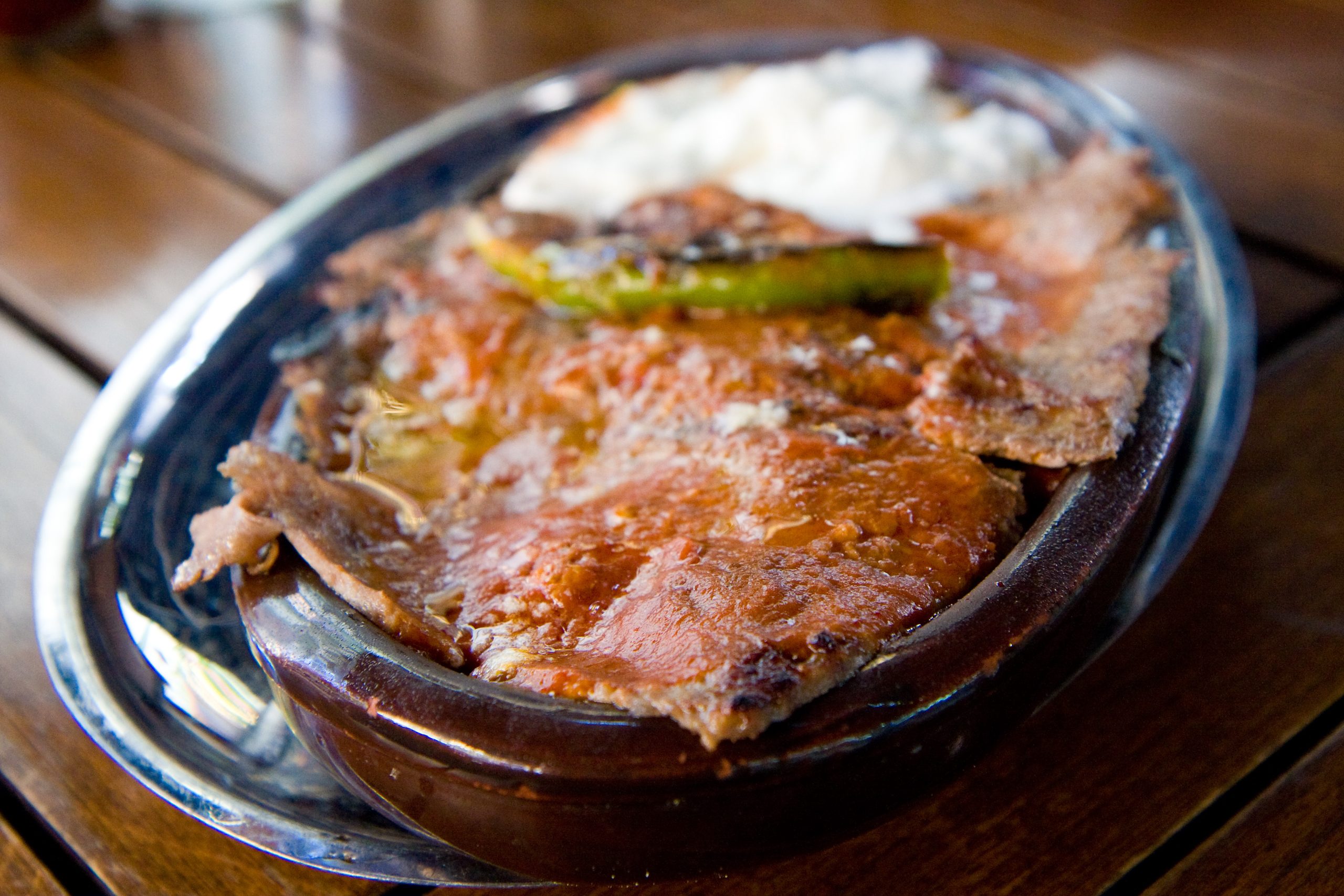
Iskender kebab is the dish that turns döner into a knife-and-fork occasion. Thin ribbons of döner meat are laid over a bed of buttered pita pieces, blanketed in hot tomato sauce, flanked by cool thick yogurt, and then, at the table, doused with sizzling browned butter poured from a small pan. The bread underneath drinks the sauce and the meat juices and becomes, by broad agreement, the best part of the plate. Born in Bursa, in northwestern Turkey, it remains that city’s culinary signature and one of the most famous dishes in Turkish cuisine.
The Man Named Iskender
The dish carries its inventor’s name. İskender Efendi, a cook in late nineteenth-century Ottoman Bursa, is credited with turning the traditional horizontal meat spit upright, creating the vertical rotisserie that made döner as the world knows it, and with composing this plate of döner over pita with tomato sauce, yogurt, and burnt butter. His descendants still run restaurants in Bursa serving the dish under the family name, and Bursa treats Iskender the way Naples treats pizza: as property, heritage, and a standing challenge to imitators. Ordering “a portion of Iskender” in Bursa involves no menu reading; everyone knows what arrives.
The Döner Question at Home
Real döner is a marinated stack of lamb or beef roasted on a vertical spit and shaved as it crisps, and no home kitchen replicates the spit. Two honest routes exist. The first is store-bought: Turkish and Middle Eastern groceries in many cities sell sliced cooked döner, refrigerated or frozen, and a Turkish restaurant may sell you plain döner by weight. The second is homemade: thinly slice well-marbled beef or lamb, marinate it in onion juice, yogurt, oregano, and black pepper for a few hours, then sear it fast in a hot cast-iron pan until the edges char. Both produce a very good plate. What matters is thin slices with crisped edges, since limp gray meat sinks the dish.
The Tomato Sauce and the Bread
The sauce is deliberately simple: tomato puree loosened with a little water, warmed with butter and a pinch of pul biber, Turkish red pepper flakes, and seasoned with salt. It stays bright and fresh-tasting rather than cooked-down, because its job is to soak the bread, not to dominate the meat. The bread is pide, the flat chewy Turkish loaf; cut it into bite-size squares and toast the pieces in butter until their edges color. Ordinary pita or any sturdy flatbread substitutes fine. Assemble immediately: warm bread down first, meat over it, sauce over the meat, so the soaking begins while everything is hot.
Yogurt and the Butter Finale
A generous spoonful of thick plain yogurt sits beside the meat, not under it, staying cool against the hot sauce; in Turkey it is often lightly salted strained yogurt. Then comes the moment the dish is famous for. Melt real butter in a small pan until it foams, turns golden, and smells nutty, then pour it, still audibly sizzling, over the meat and bread at the table. Restaurants in Bursa perform this tableside as a rule. The browned butter ties the tomato, yogurt, and meat together, and skipping it produces a decent plate that is simply not Iskender.
What Belongs Alongside
In Bursa the plate arrives essentially complete, sometimes with a grilled green pepper and a piece of grilled tomato on top. The traditional drink beside it is şıra, a lightly fermented grape juice local to the region, with ayran, the salted yogurt drink, as the everyday alternative anywhere in Turkey. A shepherd’s salad of tomato, cucumber, onion, and parsley cuts the richness if you want a side. Portion sizes in Bursa run legendary, and “one and a half portions” is a standard order for the hungry.
Common Questions
What yogurt comes closest to the Turkish original?
Turkish süzme, strained yogurt, is thick, tangy, and full-fat. Whole-milk Greek yogurt is the nearest supermarket match; stir in a small pinch of salt and let it stand at room temperature for twenty minutes so it lands beside the hot meat cool rather than cold. Thin, low-fat yogurt waters out on the plate and is worth avoiding here.
Beef or lamb?
Traditional Bursa döner leans on lamb or a lamb-beef blend. Pure beef is common in home versions and abroad, and it works well; look for marbling, since lean meat dries out over the high heat.
Can I assemble it ahead?
No, and that is the one hard rule. The dish depends on hot meat, hot sauce, sizzling butter, and bread caught mid-soak. Prep every component ahead, but the final build takes two minutes and happens at serving time.
Is Iskender spicy?
No. Pul biber adds fragrance and mild warmth rather than heat. Diners who want fire add more pepper flakes at the table, where a shaker of them customarily sits.
Iskender Kebab is a celebrated dish from Bursa, Turkey, named after its inventor, Iskender Efendi, who created it in the late 19th century. He was the first to cook lamb on a vertical spit, a technique that later became known as döner kebab. What makes Iskender Kebab unique is its presentation: thin slices of succulent döner meat are laid over pieces of warm pita bread, then generously drenched in a rich tomato sauce and sizzling melted butter. A dollop of creamy yogurt on the side provides a cooling contrast to the savory, warm flavors. It\'s a truly iconic and indulgent Turkish meal.