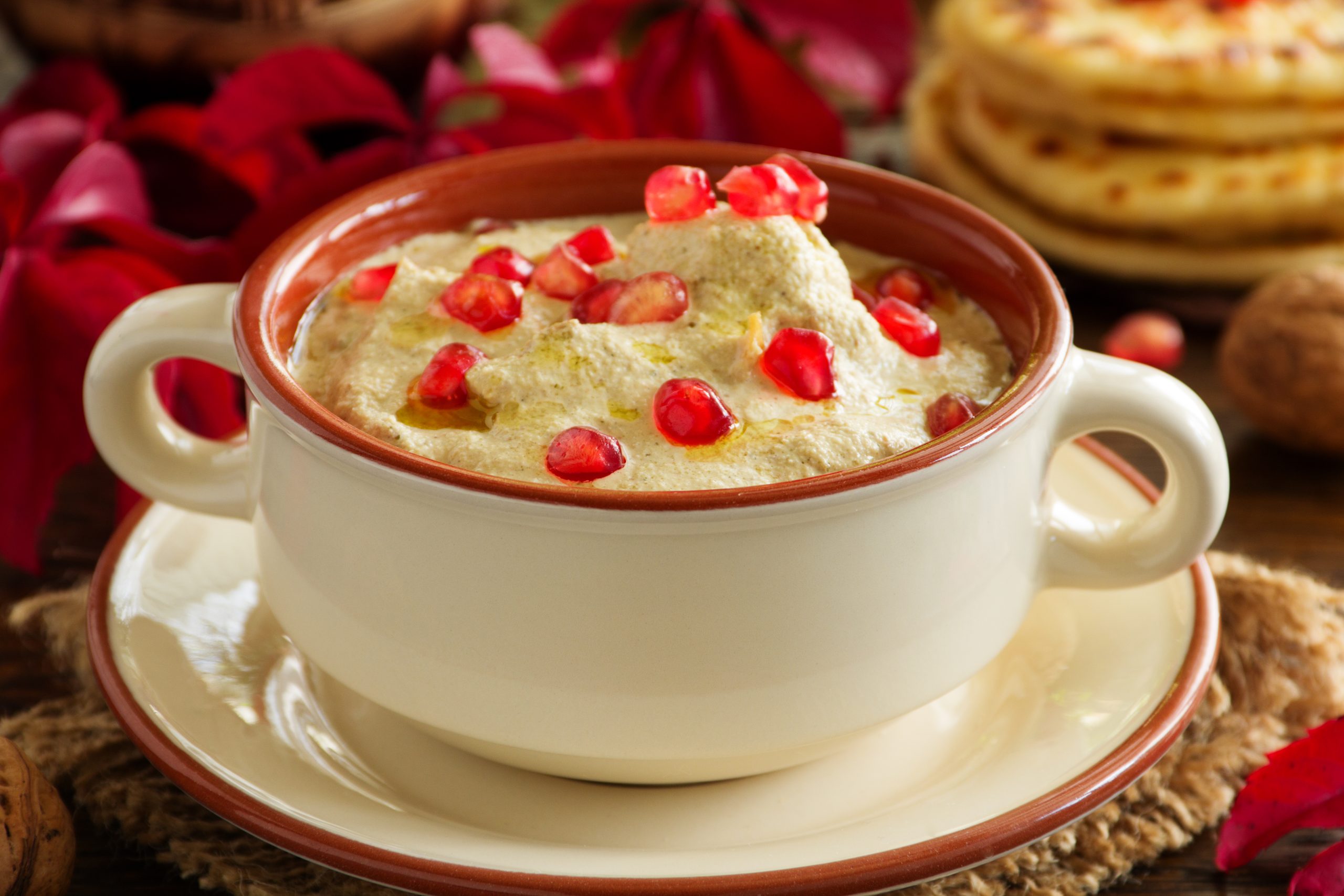
Satsivi is one of Georgia’s great festive dishes: pieces of poached chicken or turkey napped in a thick, cold walnut sauce spiced with garlic, coriander, and the country’s signature herbs. Its name comes from the Georgian word for cold, and that is the key to the dish. It is served cool or at room temperature, never hot, which makes it perfect party food you prepare entirely ahead. Rich, garlicky, and deeply nutty, satsivi appears on nearly every Georgian table at New Year and Christmas.
A Holiday Dish
Satsivi is tied to celebration, above all the Georgian New Year and Orthodox Christmas, when turkey satsivi in particular graces the holiday table. The rest of the year chicken is the common choice, being easier to handle than a whole turkey. Because it is served cold and improves after resting, it fits the logic of a feast perfectly: made a day or two ahead, it frees the cook on the day itself. The walnut sauce that defines it, called bazhe in its standalone form, is a cornerstone of Georgian cooking that dresses poultry, fish, and vegetables alike.
The Walnut Sauce
Everything rests on the walnut sauce. Walnuts are ground with garlic and spices into a paste, then loosened with the broth from poaching the bird into a thick, pourable sauce. The single most important step is grinding the walnuts well enough that they release their natural oil, which enriches the sauce and gives satsivi its characteristic silky, slightly grainy texture; in Georgia the oil that separates out and pools on top is considered a mark of a good satsivi. A food processor handles the grinding. Use fresh walnuts, since stale ones turn the whole sauce bitter.
The Spicing
Satsivi uses the familiar Georgian spice set, coriander, blue fenugreek, and dried marigold, but adds a warm note of cinnamon and cloves that sets it apart from everyday walnut dishes and suits its holiday role. Garlic is generous and sharp, and a little raw garlic grated into the finished sauce keeps that pungent edge alive against the richness. White wine vinegar, or sometimes pomegranate, brings the acidity that balances the fat of the walnuts. Keep the spicing assertive, since the dish is eaten cold, and cold mutes flavors, so season it a touch more boldly than seems necessary while warm.
Cooking the Bird
The poultry is poached gently in salted water with an onion until tender, which cooks it through and, just as importantly, produces the broth that thins the walnut sauce. Save that broth; it carries flavor into the sauce that plain water never would. Many cooks then lightly roast or brown the poached bird for color and a little extra depth before saucing it. Chicken poaches in under an hour; turkey pieces take longer. The bird must be fully cooked and tender, since it will be served cold and there is no second cooking to save an underdone piece.
Bringing It Together
Soften minced onions in butter until they nearly melt, then add the walnut paste and the reserved broth and simmer gently, stirring often, until the sauce thickens to coat a spoon. Watch it closely, since a walnut sauce catches and scorches on the bottom easily. Off the heat, stir in the vinegar and the raw garlic, then let the sauce cool. Cut the cooked bird into serving pieces, arrange them in a dish, and pour the cooled sauce over to coat every piece. Then it goes into the fridge to set and cool completely, which is where the flavors marry.
Serving Satsivi
Serve satsivi cold or at cool room temperature, with fresh Georgian bread or gomi, a cornmeal porridge, to scoop up the thick sauce. It is a centerpiece of the supra, the Georgian feast, sitting among many other dishes rather than as a solo plate. Made a day ahead and chilled, it only improves as the flavors deepen and the sauce sets, so it is genuinely better as a make-ahead. It keeps three days refrigerated. Bring it to just below room temperature before serving, since fridge-cold dulls the walnut and garlic flavors that make the dish.
Common Questions
Chicken or turkey?
Both are traditional. Turkey satsivi is the classic holiday version, while chicken is the everyday choice and easier to manage. The walnut sauce and method are the same for either bird.
Why is it served cold?
The name satsivi comes from the Georgian word for cold, and the dish is defined by being served cool or at room temperature. This also makes it ideal to prepare ahead for a feast, freeing the cook on the day.
My sauce turned bitter. Why?
Stale walnuts are the usual cause, since rancid nuts taste bitter and the sauce is mostly walnut. Use fresh walnuts, and avoid scorching the sauce on the bottom of the pot, which also adds a burnt bitterness.
Satsivi is a Georgian dish of poultry in a cold walnut sauce, its name coming from the word for cold, and it is a fixture of the Georgian New Year and Christmas table.