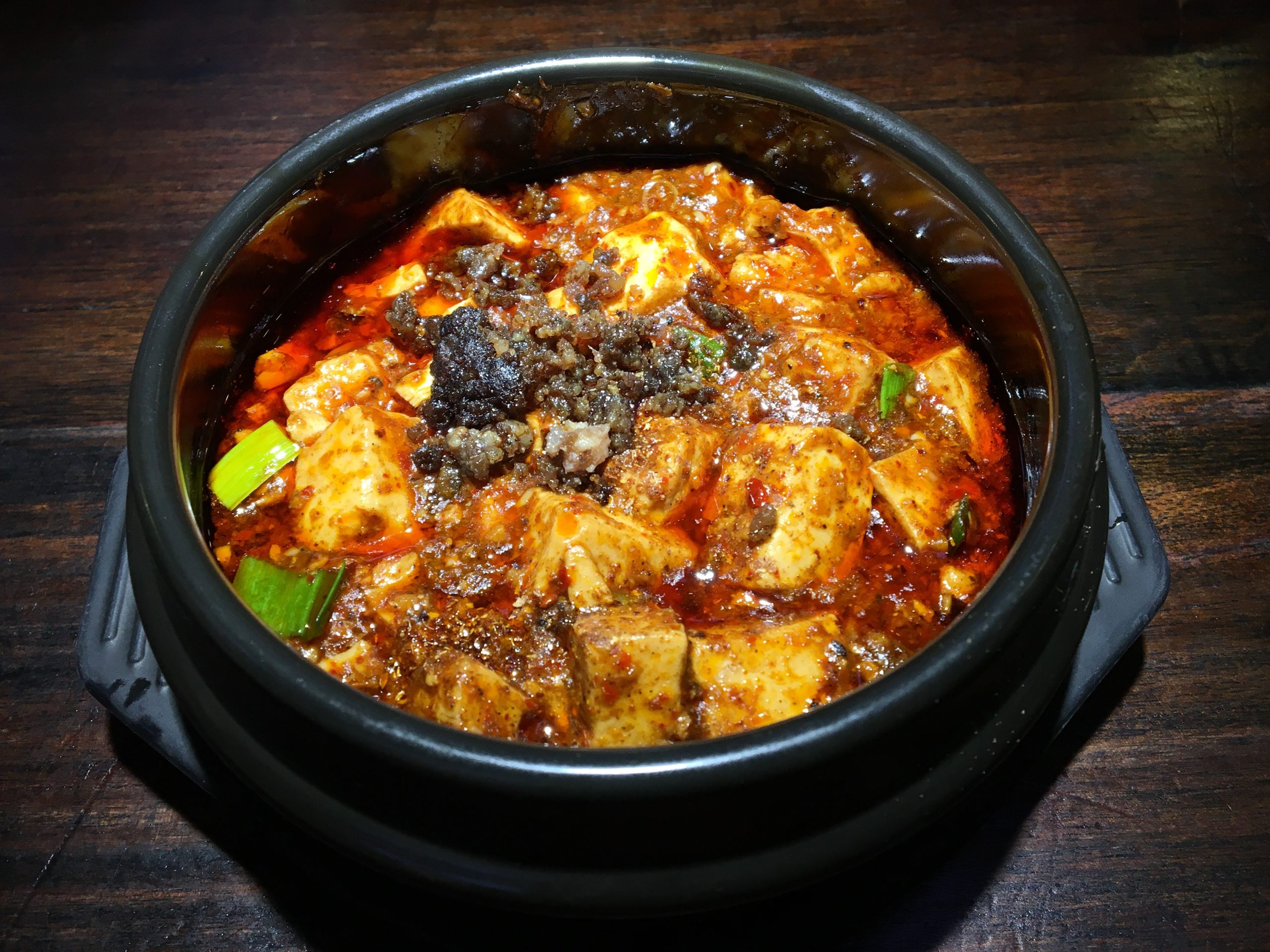
Mapo tofu is Sichuan cooking in a single bowl: cubes of silken tofu and minced pork in a glistening red sauce that hits salty, savory, hot, and then, a beat later, numbing, as the ground Sichuan peppercorns land on your lips. The combination of chili heat and peppercorn tingle is called mala, and this dish is its most famous ambassador. It cooks in twenty minutes, costs little, and over a bowl of steamed rice it delivers more flavor per spoonful than dishes that take all day.
The Pockmarked Grandmother of Chengdu
The name means “pockmarked grandmother’s tofu,” and it honors a real cook. In the late nineteenth century, a woman known as Chen Mapo ran a small restaurant near a bridge in Chengdu, the capital of Sichuan province, feeding laborers a tofu dish so good it took her nickname and outlived her by more than a century. Restaurants bearing the Chen Mapo Tofu name still operate in Chengdu today. The dish spread across China and then the world, softening as it traveled; the version in this recipe stays close to the Sichuan original, where the peppercorns are a feature, not a garnish.
Doubanjiang, the Soul of the Sauce
One ingredient carries this dish: doubanjiang, the fermented broad bean and chili paste of Sichuan. The best versions come from Pixian, near Chengdu, aged until brick red and deeply funky. Fry it in oil over medium heat at the start until the oil itself turns red; this step, done patiently, is where the sauce’s color and its fermented depth come from. There is no substitute that gets you to mapo tofu, though in an emergency a mix of miso and chili flakes produces a different, still tasty braised tofu. A jar keeps for a year refrigerated and improves fried rice, noodles, and braises well beyond this recipe.
The Supporting Cast
Douchi, fermented black soybeans, add pops of salty intensity; rinse and rough-chop a tablespoon. Garlic and ginger fry with the pastes. The Sichuan peppercorns toast in a dry pan until fragrant, then grind to a coarse powder, half for the sauce and half for the top. Buy peppercorns that smell citrusy and alive; stale ones deliver dust instead of tingle. Ground pork is traditional in Sichuan, beef is common and older than many assume, and the meat plays a supporting role by design: this is a tofu dish with meat, not the reverse.
Handling Silken Tofu Without Destroying It
Silken or soft tofu gives mapo tofu its signature custardy texture, and it is fragile. Two techniques protect it. First, slide the cubes into simmering salted water for two minutes before they meet the sauce; this seasons them lightly and firms their surface so they survive the wok. Second, once the tofu is in the sauce, stop stirring. Push the cubes gently with the back of the spoon or shake the pan instead. Broken tofu still tastes right, but intact, wobbling cubes coated in red sauce are the dish at its best.
Thickening and Finishing
Chicken broth loosens the fried pastes into a sauce, and a cornstarch slurry, added in two or three stages rather than all at once, tightens it until it clings to the tofu. Sichuan cooks often add the slurry in rounds precisely because tofu keeps releasing water; staged thickening lets you stop at the right consistency. The finished sauce needs to coat the cubes glossily without being gluey. Off the heat, scatter the reserved ground peppercorns and the chopped scallions over the top. Some Chengdu versions add a handful of chopped garlic sprouts at the end, worth trying when you find them.
Serving It Properly
Mapo tofu goes over freshly steamed white rice, full stop; the rice tames the mala and carries the sauce. In Sichuan it appears as one dish among several at a shared table, often beside something cooling like smashed cucumbers or stir-fried greens. It reheats well for two to three days, gently and with a splash of water, though the peppercorn numbing fades by day two. Add a fresh pinch of ground Sichuan peppercorn when reheating and the dish wakes right back up.
Common Questions
How hot is real mapo tofu?
Assertively hot, with the numbing peppercorn amplifying the sensation. Control it through the doubanjiang quantity and the peppercorn dose rather than skipping either, since both carry flavor along with the fire.
Can I make it vegetarian?
Easily. Replace the pork with finely chopped shiitake mushrooms and use vegetable broth. Check the doubanjiang label, as nearly all versions are already vegan, and the dish loses surprisingly little.
Firm tofu or silken?
Silken or soft is traditional and gives the melting texture the dish is famous for. Firm tofu survives clumsy stirring better and some cooks prefer the chew; both are legitimate, and the sauce forgives the choice.
Mapo Tofu is a classic Sichuan dish renowned for its \'ma la\' flavor—a combination of numbing (ma) and spicy (la) sensations. Legend has it that the dish was created by a pockmarked old woman (Mapo) in Chengdu during the Qing Dynasty. The dish\'s complexity comes from the interplay of several key ingredients: fermented broad bean paste (doubanjiang) for savory depth, fermented black beans (douchi) for umami, chili oil for heat, and a generous amount of Sichuan peppercorns for the signature numbing sensation. It\'s a bold and addictive dish that perfectly represents Sichuan cuisine.