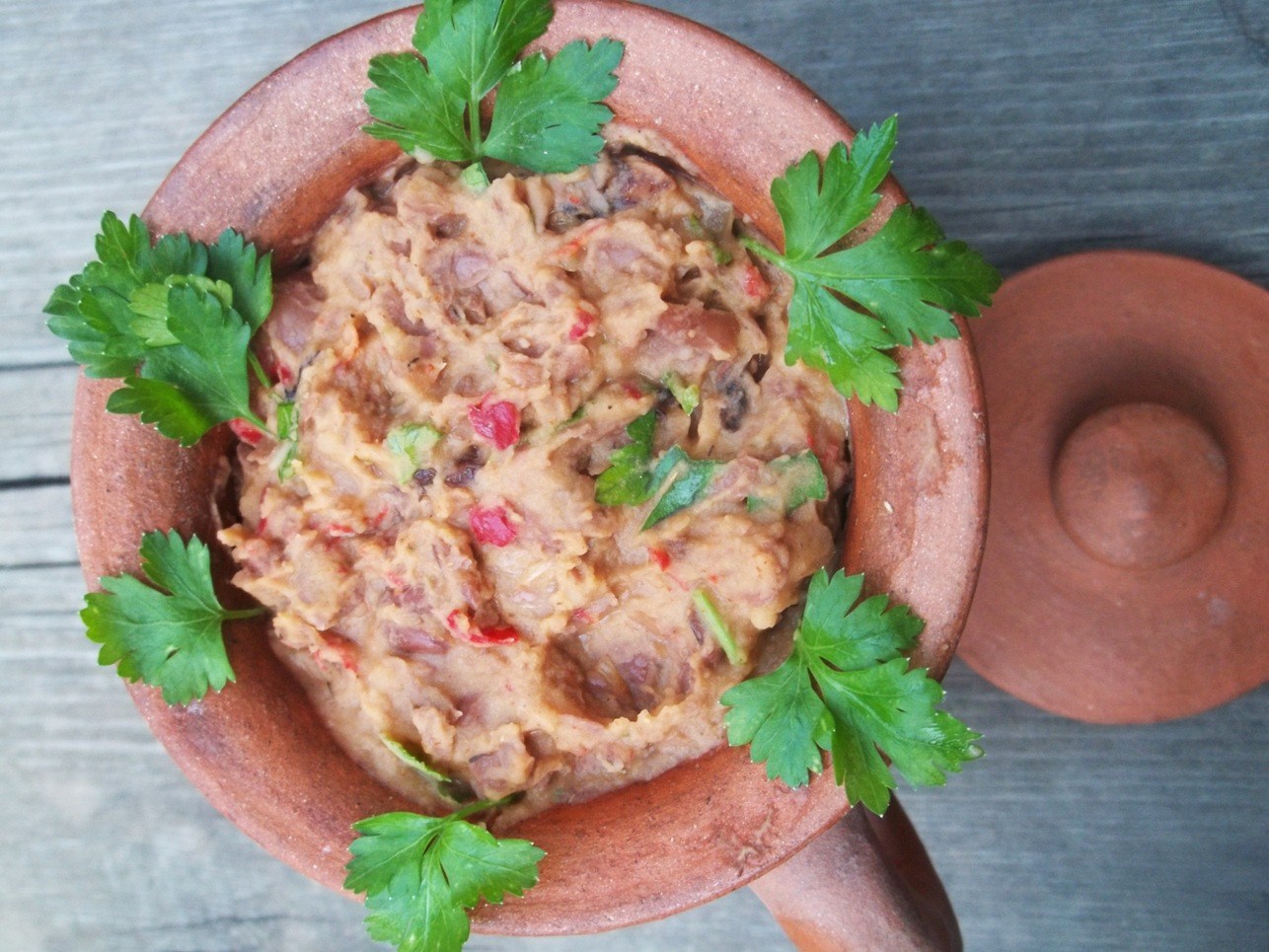
Lobio is Georgia’s bean pot, a thick stew of red kidney beans cooked soft with onion, garlic, walnuts, and a set of distinctive Georgian spices, then sharpened with vinegar and loaded with fresh herbs. It is vegan by nature, cheap, and deeply satisfying, the kind of dish that shows up constantly in Georgian homes and taverns. Served in a little clay pot with wedges of cornbread and a pile of pickles, it is comfort food that asks almost nothing and gives a great deal back.
An Everyday Staple
The word lobio simply means beans, and the dish is everywhere in Georgia, from roadside canteens to home kitchens. It owes some of its ubiquity to the Georgian Orthodox calendar, which sets aside many fasting days when no meat or dairy is eaten, and lobio is the reliable, filling answer on those days. It comes in more than one form: a thick, mashed, spiced version like this one, and a soupier version with whole beans in a thinner broth. Both are traditional, and Georgian cooks make whichever suits the meal.
The Beans
Red kidney beans are the standard, giving lobio its color and its hearty, meaty body, though other beans appear in regional versions. Dried beans soaked overnight and simmered fresh give the best texture and a cooking liquid you will use to build the stew, so do not drain it away entirely. Canned beans work for a faster pot; use their liquid or a little water, and simmer them with the aromatics to let the flavors sink in. Either way, cook them until fully soft, since firm beans in a lobio taste underdone.
The Georgian Spices
What makes lobio taste Georgian rather than like any bean stew is the spicing. Ground coriander is the base. Blue fenugreek, a milder cousin of ordinary fenugreek grown in Georgia, adds the distinctive savory-nutty note found throughout the country’s cooking, and dried ground marigold, sometimes sold as Imeretian saffron, lends warmth and a golden tint. These are worth ordering from a spice shop or online if you cook Georgian food more than once. In a pinch, regular fenugreek and turmeric approximate them, though the result drifts from the true flavor.
Walnuts and Body
Walnuts run through Georgian cooking, and lobio is no exception. Finely ground walnuts stirred into the pot add richness, a subtle bitterness, and body, thickening the stew and rounding out the beans. Grind them fine so they melt into the sauce rather than sitting as chunks. The other thickening trick is to mash about a third of the cooked beans against the side of the pot, which turns some of them into a creamy base while leaving the rest whole for texture. Between the mashed beans and the walnuts, the stew comes together thick and spoonable.
Herbs and the Sour Finish
Fresh cilantro, in quantity, is not a garnish here but a main flavor, stirred in near the end so it stays green and fragrant. Fresh chili adds heat for those who want it, common in the western Samegrelo style where the food runs spicier. The final touch is acidity: a good splash of red wine vinegar, or sometimes the juice of pomegranate, which lifts the whole rich, earthy pot and keeps it from feeling heavy. Season with salt at the end, taste, and adjust the sourness, since the vinegar is what makes lobio sing rather than sit.
Serving Lobio
The classic partner is mchadi, a dense Georgian cornbread, torn and used to scoop up the thick beans, along with pickled vegetables and often pickled jonjoli flower buds, whose sharp crunch cuts the richness. A wedge of raw onion and some fresh herbs round out the plate. Lobio keeps three days refrigerated and tastes even better the next day once the flavors settle; thin it with a little water when reheating, as it thickens as it stands. It also freezes well, making a big pot a smart thing to cook.
Lobio in a Clay Pot
In Georgia, lobio often arrives at the table in a small clay pot called a ketsi, cooked and served in the same vessel so it stays hot and the flavors concentrate. The clay holds heat gently and gives the beans at the edges a slightly deeper, drier character than the creamy center. You do not need one at home; a heavy pot works. But if you cook Georgian food often, an earthenware dish is worth having, since several dishes, from lobio to the cheese bread and cornbread that go with it, are traditionally made in one. Served bubbling from the pot with pickles alongside, lobio becomes a small event rather than just a bowl of beans.
Common Questions
What are blue fenugreek and marigold, and can I skip them?
They are the signature Georgian spices behind lobio’s flavor, sold at spice shops and online. Regular fenugreek and turmeric are rough substitutes. You can make a decent lobio without them, but they are what makes it taste authentically Georgian.
Can I use canned beans?
Yes, for a faster version. Simmer them with the aromatics and spices so they take on flavor, and mash some to thicken. Dried beans cooked from scratch give a better texture and a useful cooking liquid, but canned work.
Is lobio always vegan?
The traditional fasting-day version is vegan, made with oil. Some cooks add butter on non-fasting days for richness. The bean-and-spice core stays the same either way.
Lobio is Georgia's everyday bean stew, a thick pot of kidney beans and herbs eaten on the many Orthodox fasting days and served with cornbread and pickles.