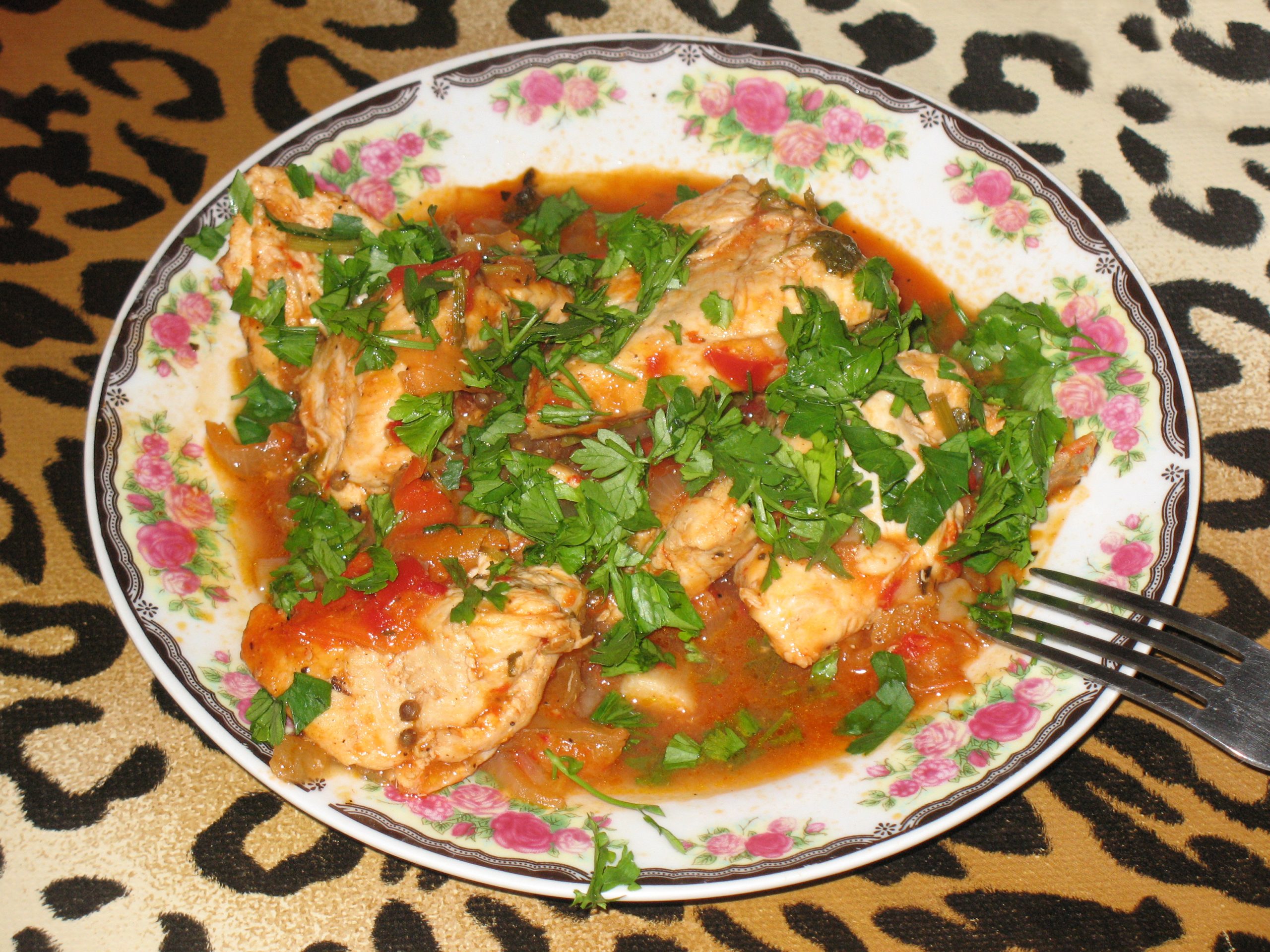
Chakhokhbili is a Georgian chicken stew that comes together fast and tastes like it took all day: chicken braised with a generous quantity of onions and tomatoes until the sauce turns thick and rich, then finished with a huge amount of fresh herbs. There is no cream, no long simmer, and no hard-to-find ingredient beyond a couple of Georgian spices. What it has instead is depth from slow-cooked onions and brightness from herbs added by the handful. Served with bread to soak up the sauce, it is a weeknight stew with real character.
A Stew Named for a Bird
The name chakhokhbili comes from khokhobi, the Georgian word for pheasant, because the dish was originally made with that game bird. Over time chicken replaced the pheasant, being cheaper and always available, and the name stuck even though the bird changed. It is a homey, everyday dish rather than a feast centerpiece, the kind of thing a Georgian cook throws together with a chicken, a few onions, and whatever herbs the garden holds. That practicality is part of why it has stayed popular: good ingredients, simple method, big flavor.
Onions Do the Heavy Lifting
Chakhokhbili uses a lot of onions, more than seems reasonable, and they are the secret to its body. Sliced and cooked down slowly until soft and lightly golden, they collapse into the sauce and give it a natural sweetness and thickness without any flour or cream. Do not rush them; pale, barely cooked onions leave the stew thin and sharp. Some cooks brown the chicken first and build the onions in its rendered fat, which deepens the flavor further. The onions and tomatoes together form the entire sauce, so treat them as the main event, not the background.
Tomatoes and Spice
Ripe fresh tomatoes are ideal in summer, but good canned tomatoes make an excellent chakhokhbili year-round, so this is not a seasonal dish. A spoon of tomato paste alongside them deepens the color and flavor. The Georgian spicing is restrained here compared to some dishes: dried ground marigold or paprika for warmth and color, coriander, and a little blue fenugreek for that characteristic savory note. Garlic goes in generously. The tomatoes should cook down until they are jammy and the sauce clings to the chicken rather than sitting as thin liquid around it.
Herbs by the Handful
What lifts chakhokhbili from a simple braise into something distinctly Georgian is the sheer volume of fresh herbs stirred in at the end. Cilantro, parsley, and often fresh basil go in by the cupful, not the sprig. Add most of them during the last few minutes of cooking so they perfume the sauce, then a final handful right before serving for freshness. The herbs are not a garnish; they are a defining ingredient, and a timid amount leaves the dish tasting flat and unfinished. Georgians are generous with herbs across their whole cuisine, and this stew shows why.
The Chicken
Bone-in, skin-on chicken pieces, thighs and drumsticks, give the best result, staying juicy through the braise and lending flavor to the sauce from their bones. Brown them first for color and depth, then let them finish cooking gently in the sauce until tender and nearly falling off the bone. Breast meat can be used but dries out more easily, so keep the simmer short if you go that way. A whole chicken cut into pieces is traditional and economical. The chicken turns tender enough to pull apart with a fork by the time the sauce has thickened around it.
Serving Chakhokhbili
Chakhokhbili is a saucy stew, and the point is the sauce, so serve it with plenty of bread, Georgian shoti or any crusty loaf, for scooping and mopping. It does not need rice or potatoes, though it takes them fine if you want a heartier plate. A sharp salad of tomatoes, cucumbers, and onion alongside is the usual Georgian accompaniment. It keeps three days and, like most braises, deepens overnight, though refresh it with a handful of fresh herbs when reheating, since the first herbs fade. Cook it in a wide pot and bring it to the table to share.
Common Questions
Can I use chicken breast?
You can, but thighs and drumsticks stay juicier and give the sauce more flavor from the bones. If using breast, keep the simmer short so it does not dry out, and consider adding a few bone-in pieces for depth.
Fresh or canned tomatoes?
Ripe fresh tomatoes shine in summer, but good canned tomatoes make an excellent version any time of year. A spoon of tomato paste alongside either one deepens the color and flavor of the sauce.
What herbs are traditional?
Cilantro and parsley always, and fresh basil often, all used generously. Georgian cooks add them by the handful. Use whatever mix of soft green herbs you have, keeping cilantro as the lead.
Chakhokhbili is a Georgian chicken and tomato stew whose name comes from the word for pheasant, the bird it was originally made with before chicken took over.