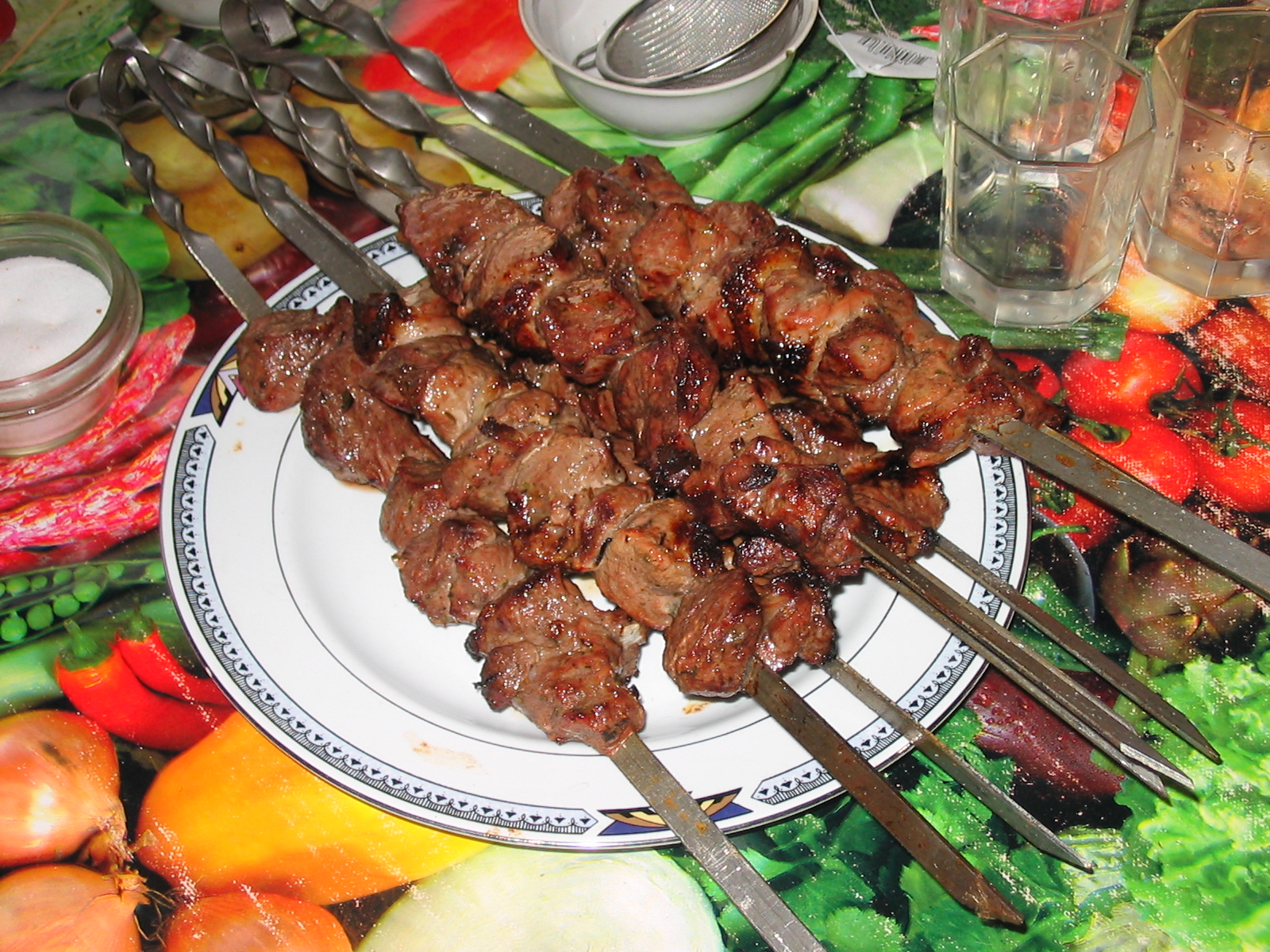
Mtsvadi is Georgia’s barbecue: chunks of pork or veal threaded onto skewers and grilled over glowing embers until browned outside and juicy within, then served simply with raw onion, fresh herbs, and sharp sour plum sauce. It is picnic food, celebration food, and the centerpiece of any Georgian gathering around a fire. There is almost nothing to it, which is exactly the point: good meat, real embers, salt, pepper, and a tart sauce. The skill is in the fire and the cut, not in any complicated seasoning.
Georgia’s Grilled Meat
Mtsvadi is known internationally by its Russian name, shashlik, and grilled skewered meat is popular across the whole Caucasus and beyond. The Georgian version is not much different from its neighbors in form, but it carries a strong regional identity, especially in Kakheti, the eastern wine country, where the meat is traditionally grilled over the embers of grapevine cuttings that lend a distinctive aroma. It is the dish Georgians cook outdoors, at picnics, garden parties, and countryside gatherings, and it pairs naturally with the wine the region is famous for.
The Cut
Pork neck is the favorite cut for mtsvadi, prized because its marbling keeps it juicy and forgiving on the grill even if you slightly overcook it. Veal and lamb are also used. Cut the meat into large cubes, bigger than you might think, since small pieces dry out fast over high heat while large ones stay succulent inside as the outside chars. Trim off excess hard fat but leave the marbling, which bastes the meat as it cooks. A well-marbled cut in generous chunks is the single biggest factor in juicy mtsvadi, more than any marinade.
To Marinate or Not
Georgians differ on marinades. Purists, especially in Kakheti, argue that good pork neck needs nothing but salt, pepper, and sliced onion, whose juices season the meat as it rests for an hour or a few. Others marinate in dry red wine, pomegranate juice, or onion and herbs for more flavor and tenderness. Both approaches are traditional. If your meat is high quality, the minimalist route lets it shine; a longer wine or pomegranate marinade suits tougher cuts or a preference for more flavor. Avoid heavy, sugary marinades, which burn over the fire and mask the meat.
The Fire Matters Most
Mtsvadi is defined by its fire. The meat cooks over glowing embers, not open flames, which is the key technique. Build a fire and let it burn down until the flames die and you have a bed of hot, glowing coals, then grill over that steady, radiant heat. Open flames char and blacken the outside before the inside cooks and cause flare-ups from dripping fat. Grapevine cuttings are the prized fuel in wine country for the aroma they give, but any hardwood charcoal or wood coals work. Patience with the fire, waiting for true embers, is what separates good mtsvadi from burnt skewers.
Grilling
Thread the meat onto skewers, leaving a little space between the cubes so the heat reaches all sides, and grill over the embers, turning regularly, until the outside is browned and the inside is just cooked through, around fifteen to twenty minutes depending on the size of the cubes. Move the skewers away from any spot that flares up. Let the meat rest for a few minutes off the heat when it comes off the fire, so the juices settle before you pull the cubes from the skewers. The goal is a browned, savory crust over juicy, tender meat.
Serving Mtsvadi
Mtsvadi is served simply, and the sides are as fixed as the method. Raw onion, thinly sliced into rings, cuts the richness of the grilled meat, and tkemali, the sharp Georgian sour plum sauce, is the essential condiment, its tartness balancing the fat. A pile of fresh herbs and Georgian bread round out the plate, and sometimes the hot meat is slid off the skewers onto flatbread or lavash to rest, so the bread soaks up the juices. A glass of Georgian wine completes it. Serve it hot off the fire, straight from the skewer to the plate.
Common Questions
What meat is best for mtsvadi?
Pork neck is the favorite for its marbling and forgiving juiciness. Veal and lamb are also traditional. Cut whatever you use into large cubes and keep some fat on for basting during grilling.
Do I need grapevine embers?
They are traditional in Kakheti and add a distinctive aroma, but any hardwood charcoal or wood coals work well. The important thing is grilling over glowing embers rather than open flames, whatever the fuel.
What is tkemali?
Tkemali is a Georgian sour plum sauce, tart and herby, used as a condiment across the cuisine and the classic partner to grilled meat. It is sold at Georgian and Eastern European groceries, or made from sour plums.
Mtsvadi is Georgian grilled meat on skewers, cooked over embers, especially grapevine embers in the wine country of Kakheti, and eaten at picnics and gatherings across the country.