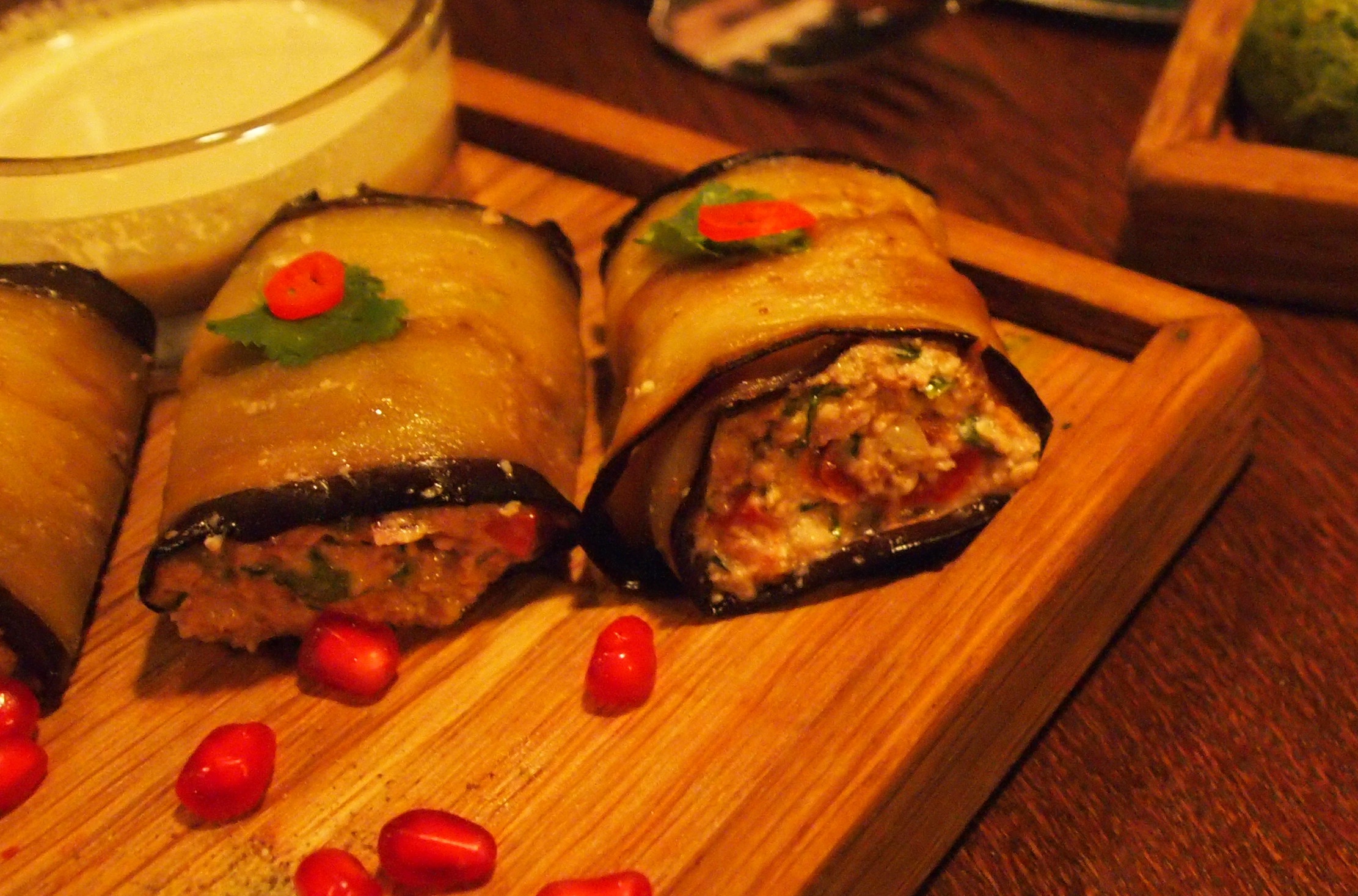
Badrijani nigvzit are Georgia’s eggplant rolls: soft, fried slices of eggplant wrapped around a thick, garlicky walnut paste and scattered with pomegranate seeds. They look elegant, taste rich and savory with a sweet-tart pop from the pomegranate, and they are entirely vegan. The name is plain description, eggplant with walnuts, and the dish is one of the most popular starters in the whole Georgian repertoire. Made ahead and served at room temperature, they are as good for a dinner party as for an everyday spread.
Eggplant and Walnuts, Again
Badrijani belongs to the same walnut-rich tradition as pkhali and satsivi, showing how central nuts are to Georgian cooking. Here the walnut paste is nearly identical to the one that binds pkhali, but instead of mixing it into a vegetable, you spread it onto fried eggplant and roll it up. That small change in form makes an entirely different dish: neat, handheld rolls rather than a rustic pate. It is a fixture of the supra, the shared feast, and one of the dishes that converts eggplant skeptics, since the frying and the rich filling transform it completely.
Preparing the Eggplant
Slice the eggplants lengthwise into planks about a quarter inch thick, thin enough to roll but sturdy enough to hold the filling. Salt them and let them drain for twenty minutes, which draws out moisture and some bitterness and, more practically, helps them fry golden instead of drinking up all the oil like a sponge. Pat them dry before they hit the pan. This salting step is the difference between crisp, golden slices that roll neatly and greasy, floppy ones that fall apart, so give it the time even though it slows you down.
Frying
Fry the drained slices in oil over medium heat until golden and fully soft on both sides. They need to be tender enough to roll without cracking, so cook them through rather than just coloring the surface. Drain them on a rack or paper to shed excess oil, and let them cool before filling, since a hot slice makes the walnut paste slide off. Some cooks grill or bake the slices instead for a lighter version, and that works, though frying gives the richest, most traditional result. Either way, aim for soft and pliable, not firm.
The Walnut Filling
The filling is the Georgian walnut paste: walnuts ground with garlic, coriander, blue fenugreek, marigold, cilantro, and vinegar into a thick mixture. For rolls, it needs to be spreadable rather than stiff, so loosen it with a little water until it spreads smoothly across an eggplant slice without tearing it. Grind it well so the walnuts release their oil and the paste turns cohesive. The garlic and vinegar should come through clearly, since they cut the richness of the nuts and the eggplant. Taste and balance the salt, garlic, and acidity before you start filling.
Rolling and Topping
Spread a spoonful of the walnut paste over each cooled eggplant slice, covering it evenly, then roll the slice up from one end into a neat cylinder. Set the rolls seam side down on a serving plate so they hold their shape. The finish is pomegranate seeds scattered over the top, whose bright color and sweet-tart burst are the traditional and near-essential garnish, along with a few cilantro leaves. The contrast of the dark fried eggplant, pale walnut filling, and red pomegranate is part of why the dish looks as good as it tastes. Serve them at room temperature.
Make Ahead and Serve
Badrijani are ideal party food precisely because they are made ahead. Assemble the rolls a few hours or even a day in advance and keep them chilled, then bring them to room temperature and add the pomegranate just before serving so it stays fresh. They keep two or three days refrigerated. Serve them as a starter or as one dish among a spread of Georgian small plates, with bread alongside. Their neat shape and striking look make them a natural centerpiece for a platter, and they travel well to a potluck or gathering.
Common Questions
Can I bake or grill the eggplant instead of frying?
Yes. Brush the slices with oil and bake or grill them until soft and pliable for a lighter version. Frying gives the richest, most traditional result, but baked or grilled slices roll just as well.
Why does my eggplant soak up so much oil?
Unsalted eggplant drinks oil like a sponge. Salt the slices and let them drain, then pat them dry before frying. The salting draws out moisture so they fry golden rather than greasy.
Can I make them ahead for a party?
Yes, and they are better for it. Assemble the rolls up to a day ahead and chill them, then bring to room temperature and add the pomegranate seeds just before serving so they stay bright.
Badrijani nigvzit are Georgian eggplant rolls filled with walnut paste, a beloved starter whose name simply describes the dish: eggplant with walnuts.