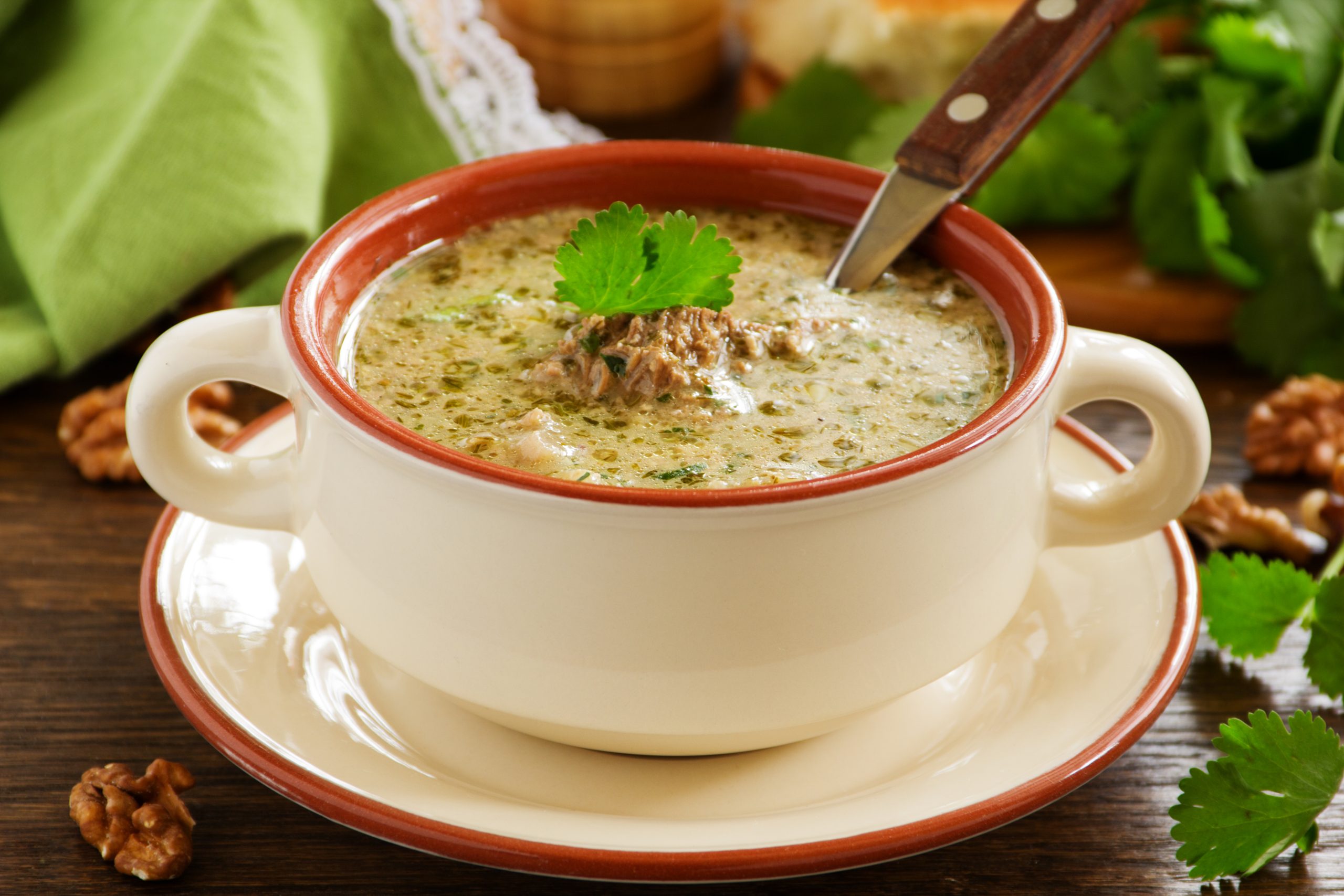
Kharcho is a thick, sour, deeply spiced beef soup from western Georgia, built on beef and its broth, thickened with rice and ground walnuts, and soured with tart plum. It is a soup with real body, closer to a stew, hearty enough to be a meal on its own. The version made in the Samegrelo region is richer and spicier than the thin, tomato-heavy kharcho that spread across the former Soviet Union, and it is worth knowing the difference, because the Georgian original is a far better soup.
Two Kharchos
Many people outside Georgia know kharcho as a thin, reddish, tomato-based soup served across Russia and the post-Soviet world, a simplified adaptation. The Georgian original, especially the Megrelian version from Samegrelo in the west, is a different and better dish: thicker, sourer, richer with walnuts, and more heavily spiced. It leans on sour plum rather than tomato for its tang and on ground walnuts for its body. Knowing this distinction matters, because a recipe promising a quick, tomato-heavy kharcho is describing the Soviet-era version, not the western Georgian one this recipe follows.
The Beef and Broth
Kharcho starts with beef simmered slowly in water until tender, which cooks the meat and builds the broth that is the soup’s foundation. Use a cut with some connective tissue, like shank or chuck, so it turns tender and gives the broth body; skim the foam that rises early to keep the soup clean. The beef and its broth carry the whole dish, so do not rush the simmer or use a lean, flavorless cut. An hour and a half of gentle cooking gives tender meat and a rich stock, both of which the rest of the soup is built on.
Rice and Walnuts for Body
Two ingredients thicken kharcho and set it apart from a plain beef soup. Rice, cooked right in the broth, adds substance and helps turn the soup into a near-meal. Ground walnuts, stirred in toward the end, add richness, a subtle bitterness, and the characteristic body of western Georgian cooking. Add the walnuts near the end rather than at the start, since long cooking can turn them bitter. Between the rice and the walnuts, kharcho comes out thick and substantial, a soup you eat with a spoon that stands up in the bowl, not a thin broth.
The Sour and the Spice
Sourness is essential to kharcho, and in the Georgian version it comes from tkemali, the sour plum sauce, or from fresh sour plums, not from a pile of tomatoes. That plum tang, against the rich beef and walnuts, is what makes the soup distinctive. The spicing is generous: coriander, blue fenugreek, dried marigold, plenty of garlic, and fresh chili for heat, since Megrelian food runs spicier than the rest of Georgia. The finished soup should hit thick, sour, and spicy all at once. Taste and push the plum and the herbs, since a mild kharcho misses the point entirely.
Finishing With Herbs
As in most Georgian dishes, fresh herbs go in at the end and in quantity. Cilantro and parsley, chopped and stirred in during the last minutes, keep their color and add a green freshness that lifts the rich, dark soup. This final flourish is not optional garnish; it is part of the flavor and part of what marks the dish as Georgian. Taste one last time for salt and sourness after the herbs go in. The soup comes out aromatic with fresh herbs on top of its deep, spiced, sour base, layered rather than one-note.
Serving Kharcho
Kharcho is hearty enough to be a full meal, served hot in deep bowls with plenty of Georgian bread for dipping. Its thickness and richness make it winter food and hangover food alike, the kind of restorative bowl that fills and warms. It keeps three days refrigerated and deepens overnight, though it thickens as it stands and as the rice absorbs liquid, so loosen it with a little broth or water when reheating. Refresh it with a handful of fresh herbs at the same time, since the first herbs fade after a day.
Common Questions
Is kharcho a soup or a stew?
It sits between the two. The Georgian version is thick and substantial, closer to a stew than a broth, thanks to the rice and ground walnuts. It is eaten as a hearty soup that can stand as a meal on its own.
What gives kharcho its sourness?
Sour plum, in the form of tkemali sauce or fresh sour plums, not tomato. This plum tang is a defining feature of the authentic Georgian version, unlike the tomato-based Soviet-era adaptation.
Can I use lamb instead of beef?
Beef is the standard for kharcho, and lamb versions exist too. Use a cut with some connective tissue that turns tender over a long simmer and gives the broth body, whichever meat you choose.
Kharcho is a thick, sour beef soup from the Samegrelo region of western Georgia, richer and spicier than the simplified version that spread across the former Soviet Union.