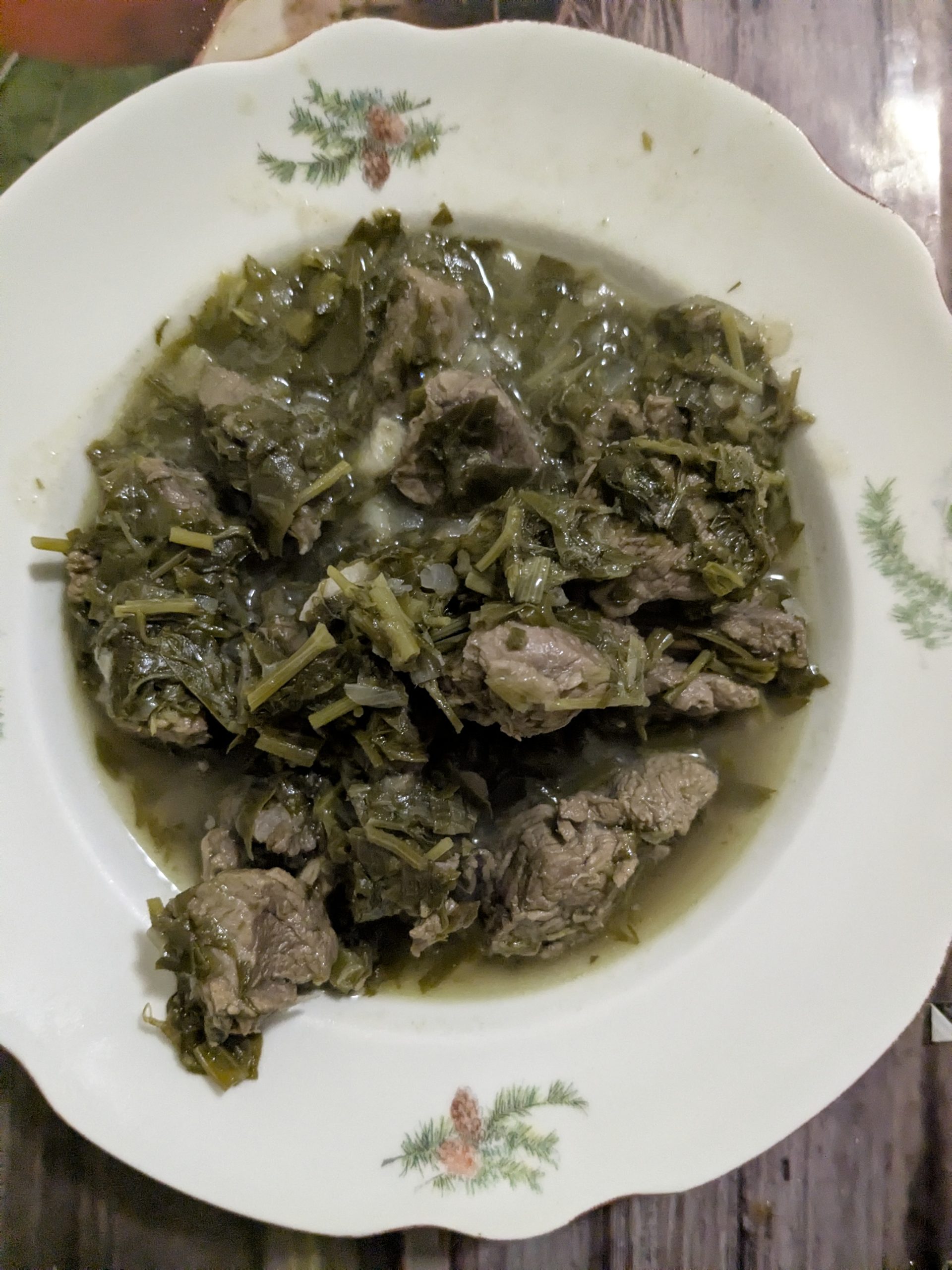
Chakapuli is Georgia’s stew of spring: lamb simmered with an enormous quantity of fresh tarragon, sour green plums, white wine, and a mass of other herbs into a bright, tart, intensely green broth. It tastes nothing like a heavy winter braise. It is light, sour, and aromatic, the flavor of tarragon carrying the whole pot. Made when the first herbs and unripe plums appear, it is a seasonal dish traditionally eaten around Easter, and it comes together with almost no technique beyond putting everything in a pot.
A Stew of the Season
Chakapuli is tied to spring in a way few dishes are. It depends on young, tender lamb, the first flush of fresh tarragon and other soft herbs, and sour unripe green plums, all of which arrive together in the Georgian spring. That timing links it to Easter, when it appears on many tables. The dish captures the season on a plate: green, sharp, and fresh rather than rich and brown. Some versions use young goat instead of lamb, and the herbs and plums shift with what the season offers, but tarragon and sourness are constant.
Tarragon Leads
Most stews treat herbs as a finishing touch. Chakapuli treats tarragon as a main ingredient, used by the large bunch, so its distinctive anise-like fragrance perfumes the entire dish. This is not the place for a cautious sprinkle; a timid amount of tarragon leaves the stew tasting incomplete. Cilantro and parsley join it in quantity, and scallions or green onions go in too, reinforcing the green, fresh character. Add most of the herbs during cooking and a final handful near the end, so the broth has both cooked depth and fresh top notes. The color should stay green.
The Sour Element
Sourness defines chakapuli as much as tarragon does, and it comes from sour green plums, tkemali, the unripe plums that give the dish its tang. Whole green plums soften in the pot and are partly mashed into the broth to sour and lightly thicken it. When fresh sour plums are out of season or unavailable, Georgian cooks reach for tkemali sauce, the bottled sour plum sauce that is a staple condiment across the country, which delivers the same tartness. Either way, the broth should taste clearly sour, since that acidity is what makes chakapuli refreshing rather than heavy.
The Lamb and the Method
Lamb shoulder, cut into chunks, is the usual cut, with enough fat and connective tissue to turn tender over a gentle simmer. The method could hardly be simpler: everything goes into the pot together, the lamb, scallions, garlic, herbs, plums, and white wine, with just a splash of water, and it simmers covered until the meat is tender, around an hour. There is no browning and no fuss. The wine and plums keep the braise bright and slightly sour, and the low, gentle heat lets the lamb soften while the herbs release their fragrance into the broth.
Heat and Balance
Whole green chilies go into the pot for a mild warmth that plays against the sour, herby broth without overwhelming it; left whole, they lend flavor more than fierce heat. Taste toward the end and balance the three forces that define the dish: the tarragon fragrance, the plum sourness, and the salt. If it tastes flat, it usually needs more sourness or more herbs rather than more salt. The finished broth is green, tart, aromatic, and light, with tender lamb suspended in it. It is a stew you drink as much as eat.
Serving Chakapuli
Serve chakapuli hot in bowls, with plenty of Georgian bread to soak up the tart green broth, which is the best part of the dish. It suits the spring table it comes from, light enough to open a meal or stand as a main with bread alone. A glass of Georgian white wine matches it naturally, echoing the wine in the pot. It keeps two days refrigerated, though the bright green color fades, so stir in a handful of fresh tarragon and herbs when reheating to bring it back to life.
Common Questions
What if I cannot find sour green plums?
Use tkemali, the bottled Georgian sour plum sauce sold at Georgian and some Eastern European groceries. It gives the same tartness. In a pinch, a squeeze of lemon or some green gooseberries approximates the sour note.
Can I use a different meat?
Lamb is traditional, and young goat is a classic alternative. The tarragon-and-plum broth is the point, so any tender cut that simmers well works, though lamb gives the most authentic result.
Is it supposed to be this sour and herby?
Yes. Chakapuli is defined by its tartness and its heavy load of tarragon and fresh herbs. If it tastes mild or flat, it needs more sour plum and more herbs, not more salt or longer cooking.
Chakapuli is a Georgian spring stew of lamb with tarragon and sour green plums, traditionally made when the first herbs and unripe fruit appear and served around Easter.