Tibs is the dish Ethiopians cook when there is something to celebrate: cubes of beef or lamb seared fast in niter kibbeh until browned outside and juicy within, tossed with thick-cut onion, sliced jalapeno, garlic, and a sprig of rosemary, and rushed to the table still sizzling. It is the steak-and-onions instinct expressed through Ethiopian seasoning, and it cooks in fifteen minutes flat. Against the long-simmered wats of the cuisine, tibs is the sprinter, and the contrast is exactly why a shared platter wants both.
A Dish of Honor and Occasion
Across Ethiopia, tibs carries a social meaning beyond its ingredients. It is the dish prepared to honor a guest, to mark a holiday, or to celebrate good news, in part because fresh meat seared quickly has long been festive food. Butcher houses in Addis Ababa sell cuts that go straight to a hot pan on the spot. The dish spans a spectrum from dryish, deeply seared versions to saucier ones running with butter and pepper, and every region and restaurant defends its own point on that line. This recipe lands in the juicy middle.
Choosing and Cutting the Meat
Beef sirloin or tender lamb leg are the standard choices, cut into cubes a bit smaller than dice you would stew, since they cook in minutes rather than hours. Trim heavy fat but keep some, because fat under fierce heat is flavor. Dry the cubes thoroughly with paper towels; surface moisture is the enemy of the sear, and a steamed gray tibs is the most common home failure. Season with salt just before the pan. Everything else about the dish is forgiving, but dryness and heat are not negotiable.
Niter Kibbeh and the Rosemary Signature
The cooking fat is niter kibbeh, the Ethiopian spiced clarified butter, which browns the meat while layering in its garlic, ginger, and korarima aromatics. Plain clarified butter or ghee substitutes at some cost in depth. The herb is rosemary, and it is not optional decoration: a sprig fried in the hot butter is one of tibs’ defining aromas, a piney note that reads unmistakably Ethiopian once you have had the dish twice. Jalapeno stands in well for the green Ethiopian peppers used at home, sliced into rings so it stays present in every few bites.
Sear First, Vegetables Second
Order of operations decides the result. The meat goes into the very hot butter first, in a single layer with space between cubes, and in batches if your pan is small, because crowding drops the temperature and trades sear for steam. Brown two sides and pull the cubes while their centers stay pink; they finish later. The onion, jalapeno, garlic, and rosemary then cook in the same pan, picking up the browned residue, only until the onion softens at its edges while keeping some bite. Berbere blooms in the fat for thirty seconds, the meat returns with its juices, tomato wedges join, and two minutes of high-heat tossing marries everything.
Serving It Sizzling
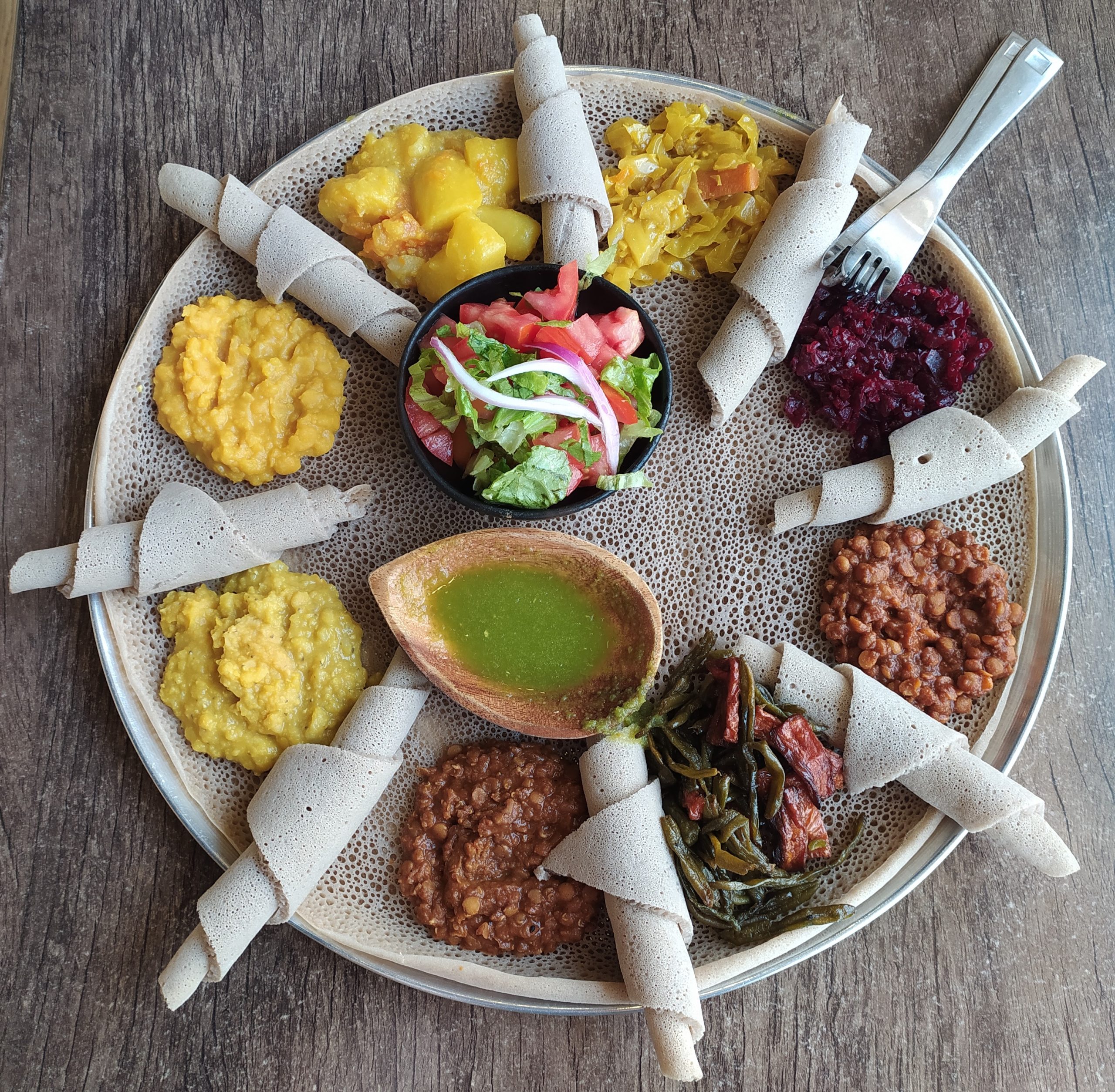
Restaurants often deliver tibs in a small cast-iron pan or clay dish set over coals, still audibly cooking, and the theater is functional: the dish is best in its first hot minutes. At home, serve it straight from the pan onto injera, with the buttery juices poured over so the bread underneath starts soaking immediately. A side of cool ayib cheese or a simple tomato salad balances the richness. Beer or honey wine, tej, are the traditional companions. Leftovers keep two days and reheat fast in a hot pan, landing closer to the drier end of the tibs spectrum, which is its own pleasure.
The Tibs Family
Tibs is less a single recipe than a method with named branches. Zilzil tibs uses long strips of beef instead of cubes, seared until their edges frill and crisp. Awaze tibs tosses the meat in awaze, the berbere paste, for a saucier, hotter plate. Derek tibs, the dry style, pushes the sear further until the cubes turn deeply browned with little sauce at all, a favorite with beer. Lega tibs stays soft and juicy. Once the base technique in this recipe is comfortable, each branch is one adjustment away, and trying them in turn is a fine way to eat for a month.
Common Questions
What cut of beef works best?
Sirloin balances tenderness and flavor at a fair price. Ribeye makes a luxurious tibs, and tender leg cuts of lamb work beautifully. Avoid stew cuts like chuck, which need hours this dish does not give.
How spicy is tibs?
Mild to medium as written; the jalapeno and one spoon of berbere warm rather than burn. Awaze, a berbere paste loosened with a little water or tej, served alongside for dipping, is the traditional way to escalate.
Can I make it without niter kibbeh?
Ghee or clarified butter with an extra clove of garlic and a crushed cardamom pod gets close. Plain oil works mechanically but loses the buttery depth that makes tibs taste like tibs.
Tibs is the sizzling saute of Ethiopian cooking, cubes of beef or lamb fired hot with onion and pepper, a dish tied to celebration and to honoring guests.