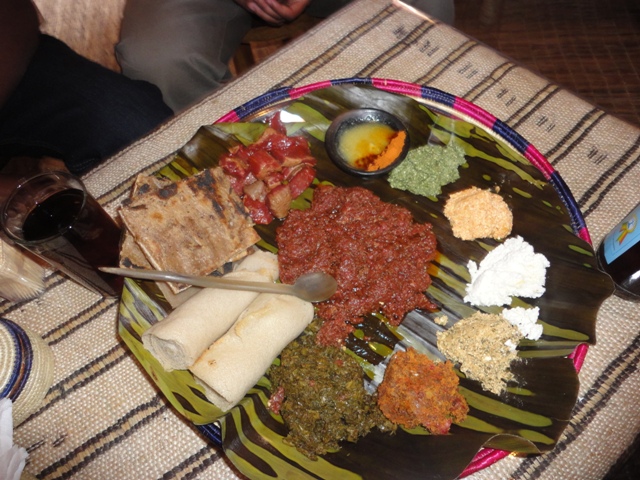
Kitfo is Ethiopia’s great beef dish: lean meat minced fine, folded through warm niter kibbeh, the spiced clarified butter, and seasoned with mitmita, a hot chili blend with a floral edge of Ethiopian cardamom. In its classic form the beef is served essentially raw, just warmed by the butter, with cool crumbly cheese and cooked greens alongside to balance the heat. Diners who prefer it cooked order it leb leb, lightly seared, or fully done, and all three versions are legitimate. This is a dish about the quality of the meat and the character of two seasonings, and nothing else.
A Gurage Specialty Gone National
Kitfo belongs to the Gurage people of southern Ethiopia, among whom it is the centerpiece of celebration, especially at the Meskel festival in September. From there it spread across the country, and dedicated kitfo houses, kitfo bets, operate in Addis Ababa and in Ethiopian communities abroad. Ordering involves a vocabulary: tere means raw, leb leb means lightly cooked, and yebesele means fully cooked. Servers expect the question and nobody blinks at any answer, though the raw version is the one the dish was built around.
The Meat, and the Honesty It Demands
Raw beef leaves no room for compromise on sourcing. Use the freshest lean beef you can buy, from a butcher you trust, purchased and eaten the same day, trimmed of every scrap of fat and sinew, and minced fine by hand with a sharp knife or ground fresh in a clean grinder. Pre-ground supermarket beef is not appropriate for raw or leb leb kitfo. Raw and undercooked meat carries real foodborne illness risk, and pregnant women, young children, older adults, and anyone immunocompromised belongs firmly in the fully cooked camp. Fully cooked kitfo remains an excellent dish, so nobody is exiled from the table.
Niter Kibbeh and Mitmita
Two preparations define kitfo’s flavor. Niter kibbeh is clarified butter simmered with aromatics, commonly garlic, ginger, korarima, fenugreek, and besobela, the Ethiopian sacred basil, then strained golden and fragrant. Mitmita is the fierce orange-red chili blend built on bird’s eye chilies with korarima and salt, hotter than berbere and used where berbere would be too coarse. Both are sold at Ethiopian groceries and online, and both keep for months. Berbere substitutes for mitmita in a pinch with a different, earthier result; there is no substitute for niter kibbeh worth the name, though plain clarified butter warmed with a crushed garlic clove and a cardamom pod limps close.
Warming, Not Cooking
The technique is a single gentle motion. Melt the niter kibbeh over the lowest flame your stove offers; it must stay quiet in the pan, never sizzling. Stir in the mitmita, korarima, and salt, then add the minced beef and fold patiently until every strand is coated and the meat is warmed through to roughly body temperature. That is traditional kitfo, glistening and barely changed in color. For leb leb, continue folding over low heat until the meat turns gray outside while staying pink within, a matter of one or two minutes. For yebesele, cook it through completely. In every version the butter stays low and slow.
The Plate Around It
Kitfo rarely travels alone. Its fixed companions are ayib, a fresh, mild, crumbly cheese similar to a dry cottage cheese, and gomen, collard greens cooked down with garlic; the cool cheese and the mineral greens are the counterweights to the hot, rich meat. In Gurage tradition the trio comes with kocho, a dense flatbread made from the enset plant, while elsewhere injera does the carrying. A spoonful of extra mitmita on the plate’s edge lets each diner push the heat further. Eat it fresh and warm, since kitfo is not a leftovers dish in its raw form; cook any remainder through before storing it.
Kitfo at the Table
At a kitfo house the dish arrives as a glistening mound flanked by ayib and gomen, and eating it follows the same rhythm as any Ethiopian meal: tear injera, wrap a bite, alternate hot meat with cool cheese and greens. Regulars judge a kitchen by the freshness of the grind and the balance of the butter, not by heat alone. A first-timer does well ordering leb leb, which shows the dish’s character with a margin of comfort, then deciding at the second visit whether the raw original calls. At home, the same progression works: start lightly cooked, learn your butcher, and let the tere version be a decision rather than a default.
Common Questions
Is eating kitfo raw safe?
Raw beef always carries some risk, which is why sourcing and same-day freshness are non-negotiable and why vulnerable groups take it fully cooked. Ethiopians manage the risk through trusted butchers; treat the fully cooked version as the default if you have any doubt about your supply.
What replaces ayib cheese?
Dry cottage cheese, well-drained ricotta, or crumbled fresh farmer cheese are all close. The role is a cool, mild, milky counterpoint, so any fresh unsalted crumbly cheese serves.
How hot is mitmita really?
Noticeably hotter than berbere; it is built on bird’s eye chilies. Start with less than the recipe states if you are heat-shy, taste, and add. The cheese and greens exist precisely to cool the palate between bites.
Kitfo comes from the Gurage people of southern Ethiopia and is eaten across the country, minced beef dressed in spiced butter and mitmita, ordered raw, lightly warmed, or fully cooked.