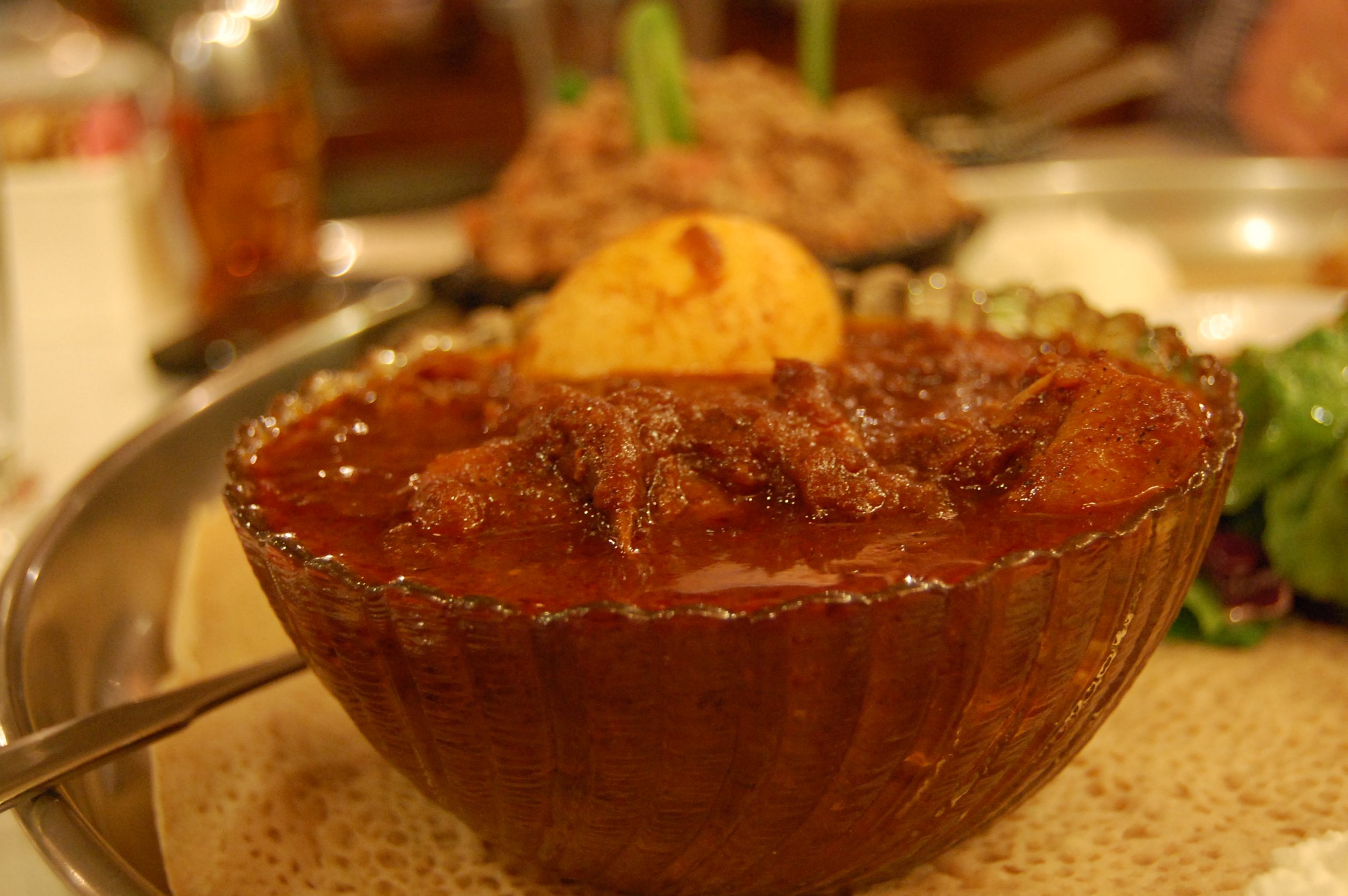
Misir wat is the brick-red lentil stew that no Ethiopian vegan platter appears without. Red lentils collapse into a thick, spoonable mass carrying the full force of berbere, built on a base of onions cooked slowly in a dry pot until sweet. It is inexpensive, naturally vegan when made with oil, and deeply satisfying in the way only well-spiced legumes manage. Half an hour of mostly unattended simmering, one pot, and dinner for four lands on the injera.
The Wat Method
Wat is the Ethiopian word for stew, and the family shares one foundation: a large amount of minced onion cooked first in a completely dry pot, no oil, stirred until its water drives off and its sugars concentrate. Fat enters only after the onion has softened, followed by garlic, ginger, and berbere bloomed briefly in that fat. Everything else in the pot changes by recipe, chicken in doro wat, lentils here, but that opening sequence is the constant, and it is where the flavor of the whole dish is decided. Rush it and the stew tastes thin no matter what follows.
Red Lentils, the Fast Legume
Misir means lentils, and the red split kind is the traditional and practical choice. Red lentils cook in under half an hour without soaking and break down on their own into the thick, almost pureed texture the dish wants. Rinse them until the water runs clearer to shed surface starch. Brown or green lentils are not a substitute here; they hold their shape stubbornly and produce a different dish. If your pantry only holds those, cook them separately until fully soft and mash a portion before combining with the base.
Berbere Sets the Temperature
The stew’s color and character come from berbere, the Ethiopian chili-spice blend with fenugreek, coriander, and korarima behind its heat. Two tablespoons gives a medium burn that most tables enjoy; Ethiopian home cooking often runs hotter. Fry the berbere in the fat for a minute before liquids arrive, which wakes its aromatics, and add a spoon of water if it starts to catch. For a mild table, split the difference: use one spoon in the pot and serve extra berbere or awaze paste alongside so heat-seekers can escalate privately.
Simmering to the Right Body
Once the lentils and water join the base, the stew simmers uncovered, and your job is a stir every few minutes that grows more frequent toward the end. Red lentils thicken abruptly in the last ten minutes and stick eagerly to a thin pot bottom, and scorched lentils flavor the entire batch. The finished texture mounds softly on injera without running; adjust with water in either direction. Like every legume stew, misir wat deepens overnight, and the pot you cook on Sunday tastes better on Monday.
Its Place on the Platter
On a fasting-day or vegan spread, misir wat holds the platter’s warm-red corner, usually beside the yellow of kik alicha, the mild split pea stew, the green of gomen, and a mound of shiro. That color logic is real: an Ethiopian vegetarian combination plate is composed like a painter’s palette, and misir is its strongest pigment. Serve it hot over injera with those companions, or alone with rice on a weeknight, which is not traditional and is still very good. It keeps four days refrigerated and freezes for three months without complaint.
Misir Wat and Kik Alicha, the Pair
On Ethiopian menus, misir wat travels with a gentler twin: kik alicha, yellow split peas simmered with turmeric, garlic, and ginger and no berbere at all. The two stews share the same method and split the platter’s temperature between them, red and hot beside yellow and mild. Cooking them the same afternoon costs little extra effort, since the onion base doubles, and it gives a table where every eater finds a lane. Children and chili-shy guests settle into the alicha; everyone else reaches red. That pairing, more than any single stew, is what a home Ethiopian spread looks like.
A Word on Texture Preferences
Households differ on how far the lentils go. Some pull the pot while individual lentils are still visible in the thick mass; others simmer on until the stew turns nearly smooth. Both are served across Ethiopia. The variable is simply time and stirring, so taste at the 25 minute mark and decide. What does not vary is the finish: thick enough to hold its shape on the bread, glossy from the fat, and colored a deep rust red from berbere that had its minute in the pan.
Common Questions
My stew tastes flat. What went wrong?
Almost always the onion stage was cut short or the berbere is stale. Give the dry-pot onions their full ten minutes, buy berbere from a store with turnover, and salt at the end until the flavors snap into focus.
Can I make it in a pressure cooker?
You can, though red lentils barely need it. Build the onion-spice base on saute mode, add lentils and slightly less water, and pressure cook briefly before reducing to the right thickness. The stovetop version is nearly as fast.
Oil or niter kibbeh?
Oil keeps it vegan and fasting-appropriate, which is the dish’s traditional role. Niter kibbeh, the spiced butter, makes a richer non-fasting version. Both are authentic; choose by the table you are feeding.
Misir wat is the red lentil stew that anchors vegan Ethiopian platters, its color and depth coming from berbere bloomed in slow-cooked onion.