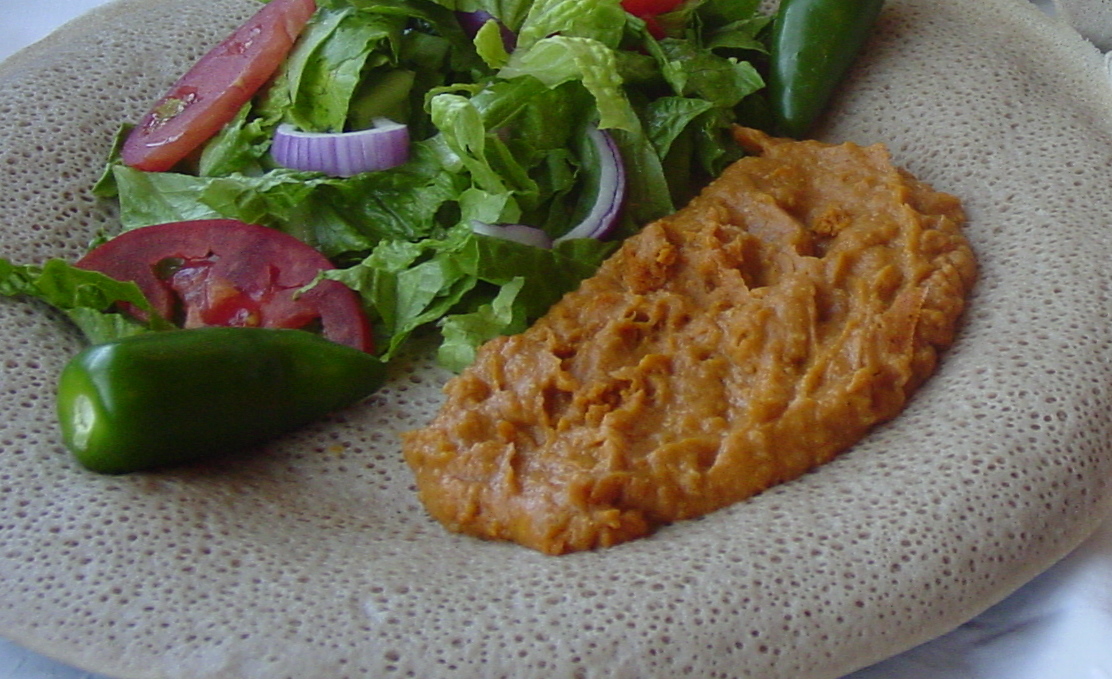
Shiro wat is the stew Ethiopians actually eat most days: a smooth, spoon-coating porridge made from seasoned chickpea flour, simmered with onion, garlic, and berbere until it turns silky and deep red-brown. It costs little, cooks in under half an hour, and delivers a depth of flavor out of proportion to its ingredient list. Poured hot over injera, it is comfort food of the first order, and because it contains no animal products in its basic form, it anchors the meatless fasting days that shape much of the Ethiopian calendar.
The Everyday Stew
Every Ethiopian household keeps shiro powder in the kitchen the way other pantries keep pasta. The powder is legume flour, usually chickpea, sometimes broad bean or a blend, ground together with dried spices so that much of the seasoning work is already done. Stir it into simmering water with fried onion and garlic and dinner exists. Restaurants serve refined versions, including shiro tegamino, a thicker style cooked and served bubbling in a small clay pot, but the home version in this recipe is the daily bread of the cuisine.
Finding or Making Shiro Powder
Ethiopian and Eritrean groceries sell shiro powder in bags, in mild and hot versions, and buying it is the authentic move, not a shortcut. If none is available, build a substitute: chickpea flour (besan from an Indian grocery works) toasted briefly in a dry pan, plus berbere, garlic powder, and a pinch of ground ginger. It lacks the long-blended character of the real powder but makes a genuinely good stew. Taste your powder first; if it already burns pleasantly, skip the extra berbere in the recipe.
The Dry Onion Start
Ethiopian stews begin with a technique that surprises cooks trained elsewhere: minced onion goes into a dry, oil-free pot first and cooks alone, stirred, until soft and beginning to color. Fat joins only afterward. The method drives off the onion’s water and concentrates its sweetness, building the base that carries the whole wat family. It works in a home pot exactly as written; just keep the heat moderate and the spoon moving. Garlic and berbere fry briefly in the oil that follows, blooming the spices before any liquid arrives.
Whisking to Silk
The only technical moment in shiro is adding the powder. Pour it into the simmering liquid gradually, whisking hard the whole time, because chickpea flour lumps on contact and lumps formed in the first ten seconds survive to the bowl. Once it is in smoothly, drop the heat low and let it simmer 10 to 15 minutes, stirring often as it thickens and the raw flour taste cooks out. The finished texture runs from pourable to nearly set depending on the house; this recipe lands in the middle, thick enough to mound softly on injera. Water adjusts it in either direction at any point.
Fasting Food and Feast Food
Ethiopian Orthodox practice sets aside a large share of the year as fasting days on which observers eat no meat, dairy, or eggs, and shiro is the backbone of that table, cooked in oil rather than the spiced butter niter kibbeh. On non-fasting days, the same stew made with niter kibbeh gains a rounder, richer character; both versions are fully traditional. This flexibility is why shiro appears everywhere from student kitchens to holiday spreads, and why a vegan guest at an Ethiopian restaurant never goes hungry.
Serving It
Shiro goes over injera, always, either as the single dish of a quick meal or as one mound among several on a shared platter. A side of gomen, the garlicky collard greens, and some misir wat beside it make a complete vegan spread with three distinct colors and textures. Shiro thickens firmly as it cools; loosen leftovers with a splash of water over low heat and they return to silk. It keeps three days refrigerated and, like most legume stews, tastes a shade deeper on the second day.
Shiro Tegamino, the Restaurant Cousin
Order shiro at a restaurant in Addis Ababa and you will often meet tegamino: a thicker, richer version cooked and served in a small two-handled clay pot, arriving at the table still bubbling. The pot holds heat so the stew keeps cooking as you eat, and the last spoonfuls at the bottom turn concentrated and almost fudgy. Making it at home is a matter of using less water, more fat, and a longer simmer, then serving straight from the cooking vessel. Try the standard version a few times first; tegamino rewards a cook who already knows how the powder behaves.
Common Questions
Is shiro spicy?
As spicy as its powder and your berbere make it. Mild shiro powder with a small spoon of berbere gives gentle warmth; hot powder plus extra berbere reaches serious heat. You control the dial completely.
Can I use plain chickpea flour?
Yes. Toast it lightly in a dry pan first, then season the stew with berbere, garlic, and a pinch of ginger. It will not fully match a long-blended Ethiopian shiro powder, but it makes a very good pot.
What consistency is correct?
Anywhere from a thick soup to a soft set, by household preference. On injera it needs enough body not to run. Adjust with water at the end and trust your own spoon.
Shiro is Ethiopia's daily stew, a smooth porridge of seasoned legume flour that feeds households cheaply and anchors the meatless fasting days of the Orthodox calendar.