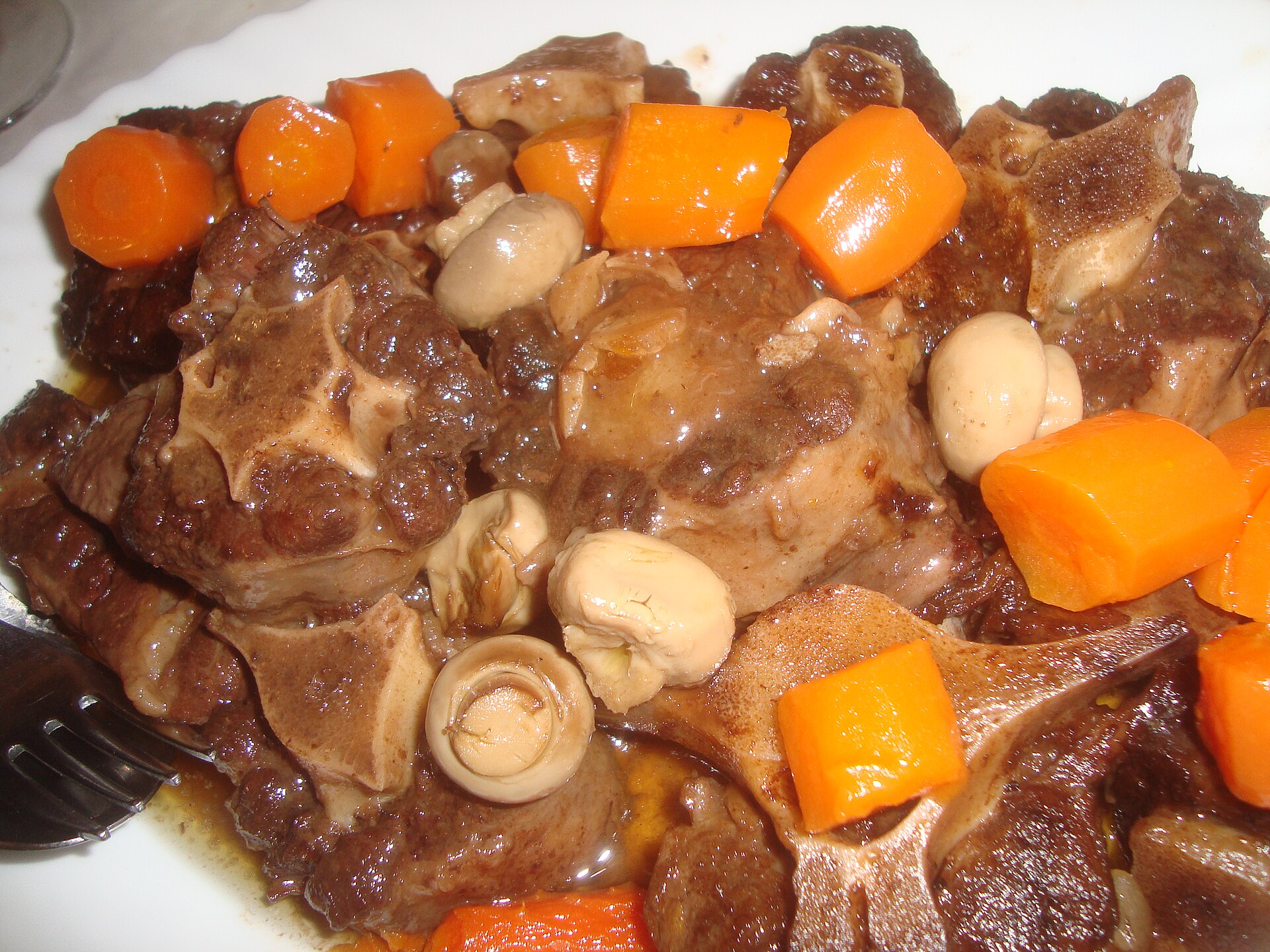
Rabo de toro is oxtail braised so long that the meat falls away at the touch of a fork, sitting in a dark, glossy sauce built from red wine, sofrito, and a splash of sherry. It is the signature dish of Cordoba and one of the great cold-weather plates in Spain, usually served with a heap of fried potatoes to mop up the sauce. Nothing about it is technically difficult; it simply asks for a hard initial sear and then several unhurried hours.
From the Bullring
The name means bull’s tail, and the connection is literal rather than decorative. In Cordoba, tails from the bulls killed in the corrida went to the kitchens of the city, and cooking them slowly into a stew was the resourceful use of a tough, gelatinous cut that nobody else wanted. What began as poor food became one of Cordoba’s defining recipes and then an elegant one, served in the taverns of the Juderia and defended by a local gastronomic brotherhood. Oxtail stews are ancient and widespread, with versions found from Rome onward and across Asia and Latin America, but this particular treatment is Andalusian.
The Cut
Modern demand far exceeds anything the bullring could supply, so the oxtail in almost every kitchen today is beef. Buy it cut into thick sections through the joints, ideally in a range of sizes, and choose pieces with a good proportion of meat around the bone. Oxtail is heavily marbled with connective tissue, which is the whole reason it works: that collagen dissolves over hours into gelatin and gives the sauce its body and shine. There is no substitute cut that behaves the same way, since leaner beef would simply dry out over the same cooking time.
Browning and Sofrito
Season the oxtail generously, dust it lightly with flour, and brown it hard in olive oil, working in batches so the pot never crowds. This step decides the color and depth of the finished stew, and pale, steamed meat produces a thin, grey sauce that no amount of simmering will rescue. Set the meat aside, then build the sofrito in the same pot: onion, carrot, leek, celery, and garlic cooked slowly until soft and sweet, followed by grated tomato and sweet pimenton. Scrape up everything stuck to the bottom, since that is concentrated flavor.
Wine and Time
Return the oxtail to the pot, pour in a full bottle’s worth of dry red wine or close to it, and let it bubble hard for a few minutes to cook off the raw alcohol. Then add water or stock to nearly cover, drop in bay leaves, and settle the pot at the barest simmer for three to four hours. The meat is ready when it comes away from the bone with no effort and the liquid has thickened noticeably. Skim the fat that rises, and if the pot dries out, add hot water rather than letting the bottom catch.
The Sherry Finish
Near the end, many Cordoban cooks add a splash of Pedro Ximenez, the intensely sweet sherry from the Montilla-Moriles region nearby, or a dry fino. The sweet version dissolves into the sauce and adds a depth that people notice without being able to identify until told what it is. Then reduce: lift out the oxtail, boil the sauce down until it coats the back of a spoon, and return the meat to warm through. Some cooks strain the sauce for a silky finish, while others leave the vegetables in, and both are common in Andalusia.
Serving Rabo de Toro
Serve it hot with a pile of fried potatoes, which is the standard accompaniment in Cordoba, or with mashed potato and crusty bread. A light starter first is traditional, and salmorejo is the local choice. Drink something with structure alongside: a Montilla-Moriles wine or a full red, since a delicate bottle disappears against the richness. Like all braises it improves overnight, so making it a day ahead and reheating gently is an advantage, and the fat is easier to lift off once the stew has been refrigerated.
Common Questions
Is rabo de toro actually made with bull?
Historically yes, using tails from the corrida in Cordoba, which is where the name comes from. Today demand far outstrips that supply, so almost all rabo de toro is made with beef oxtail, cooked exactly the same way.
How long does it need to cook?
Three to four hours at a gentle simmer, and longer does no harm. The meat is ready when it separates from the bone without resistance and the sauce has thickened and turned glossy from the dissolved collagen. Rushing it gives tough meat and thin sauce.
Can I make it in a pressure cooker?
Yes, and many Spanish households do, cutting the time to under an hour. Brown the meat and build the sofrito first exactly as described, then pressure cook and reduce the sauce afterwards on the stove to get the right consistency.
Rabo de toro is a slow-braised oxtail stew from Cordoba, eaten across Andalusia, whose name and origin are tied to the bulls of the corrida, whose tails went to the city's kitchens.