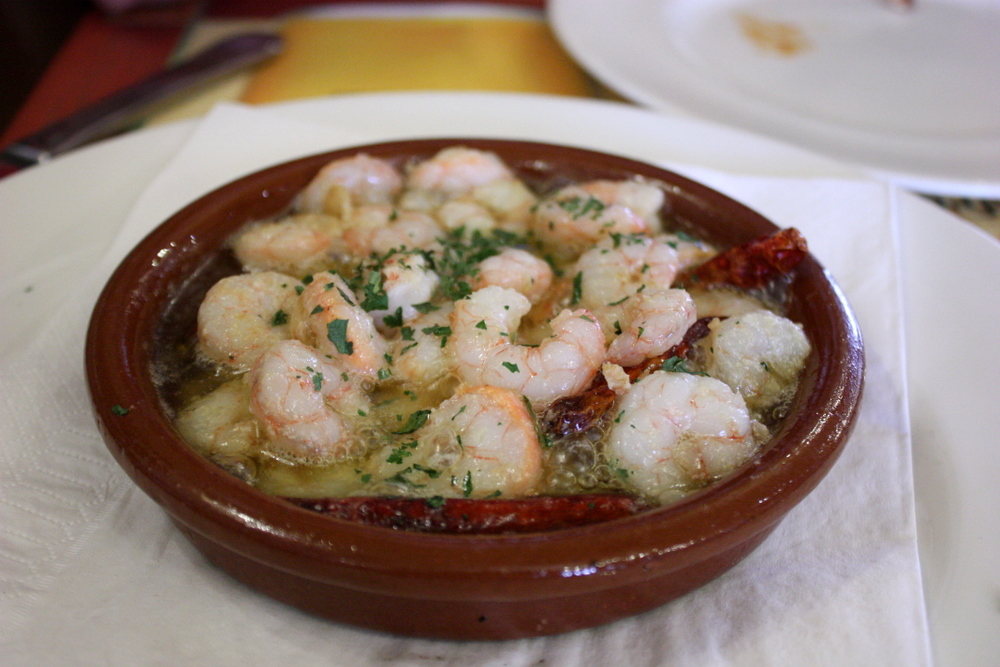
Gambas al ajillo is the tapa that proves speed and greatness can share a pan: shrimp cooked in olive oil crowded with sliced garlic and warmed by a dried chile, brought to the table still sizzling, with bread standing by for the oil. It takes about fifteen minutes from cutting board to table, and most of that is slicing garlic. The dish lives or dies on small judgments, oil temperature, garlic color, shrimp timing, and once your hands learn them, this becomes the fastest luxury your kitchen produces.
A Tapas Bar Standard
Gambas al ajillo, garlic shrimp, is one of the most popular tapas in Spain, strongly associated with the south and with Madrid’s old taverns but found in bars across the whole country. The traditional vessel is the cazuela, the glazed clay dish that goes from flame to table and keeps the oil audibly sizzling in front of the eater; the sound is part of the dish. It belongs to a family of Spanish preparations al ajillo, in which garlic and olive oil do the heavy lifting over quick heat. Order it in Spain and it arrives dangerous, fragrant, and gone in minutes.
The Ingredients Are Everything
Four ingredients carry the dish, so each one counts. The shrimp want to be good and not overcooked; fresh or well-thawed frozen both work, peeled, and patted truly dry so they sear instead of steaming. The olive oil is a main ingredient rather than a medium, so use one you would eat from a spoon. The garlic goes in generously, sliced thin so it flavors the oil evenly, and the heat comes from a dried guindilla or arbol chile, or a pinch of flakes, warming the oil without taking it over. Parsley and, in many kitchens, a splash of sherry finish it.
Garlic First, Gently
The defining move is how the garlic meets the oil. Warm the olive oil over medium heat, add the sliced garlic and the chile, and let them cook gently, swirling, until the garlic is pale gold and the kitchen smells like a Spanish bar. Do not rush this with high heat: garlic scorches fast, and burnt garlic is bitter beyond rescue, so the pan starts again if it browns. This slow infusion is what turns plain olive oil into the sauce of the dish. When the garlic is just golden and fragrant, the pan is ready for the shrimp.
Shrimp for Seconds, Not Minutes
Raise the heat, lay the shrimp in a single layer, and cook them briefly, a minute or so per side, until they blush pink and curl loosely. Then stop. Shrimp carry over in the hot oil after the pan leaves the flame, and the line between succulent and rubbery is under a minute wide. A splash of dry sherry or brandy at the end, bubbling for a few seconds, adds a Spanish depth many bars swear by, and a pinch of sweet paprika tints the oil. Scatter parsley over everything and get the pan moving toward the table while it still talks.
The Bread Is Not a Side
What remains in the pan when the shrimp are gone, the garlic-chile oil stained with their juices, is the second course of the same dish, and bread is the tool built for it. Serve gambas al ajillo with a basket of crusty bread and let everyone mop the cazuela until it shines; in Spain, leaving that oil behind borders on scandal. This is also why the olive oil quality matters so much, since you end up eating all of it. A squeeze of lemon at the table brightens each bite for those who want it, though many purists decline.
Serving Gambas al Ajillo
Serve it the moment it stops cooking, sizzling in the cazuela or straight from the skillet, as a tapa among others, a starter, or, with a salad and enough bread, a fast dinner. A cold beer, a dry fino sherry, or a crisp white wine belongs beside it. The dish does not hold, reheat, or wait, which is its only demand; cook it when people are seated. For a tapas night at home, prep the garlic and shrimp ahead and fire the pan between courses, since eight minutes of cooking buys a table full of applause.
Common Questions
Can I use frozen shrimp?
Yes, and most kitchens do. Thaw them fully, peel, and pat them very dry so they sear in the oil rather than steaming. Quality matters more than fresh versus frozen; good frozen shrimp beat tired fresh ones every time.
My garlic burned. What went wrong?
The oil was too hot when the garlic went in. Start it in warm oil over medium heat and let it color slowly to pale gold. Once garlic browns it turns bitter, and the honest fix is fresh oil and fresh garlic.
Do I need a clay cazuela?
No. A cazuela keeps the sizzle going at the table and looks the part, but any heavy skillet cooks the dish identically. Warm the serving dish if you want the tableside drama without the clay.
Gambas al ajillo is a Spanish tapa of shrimp cooked in olive oil with abundant garlic and a touch of chile, served sizzling, traditionally in a clay cazuela, with bread for the oil.