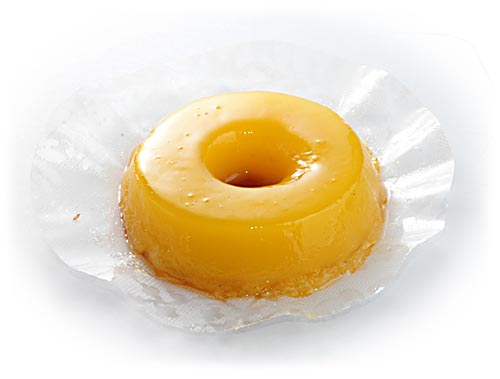
Quindim is a small, intensely yellow custard with a glassy, mirror-bright top and a layer of coconut underneath, made from little more than egg yolks, sugar, and coconut baked slowly in a water bath. It is sweet, dense, and chewy at the base, and it looks far more elaborate than the four-ingredient list suggests. Turning one out of its mold successfully, so it stands glossy and intact on the plate, is one of the small satisfactions of Brazilian baking.
A Portuguese Inheritance
Brazil’s dessert tradition leans heavily on eggs and sugar, and that comes directly from Portugal, where convent kitchens developed an entire family of sweets built on egg yolks. Quindim belongs to that lineage, and its Brazilian contribution is the coconut, which grew abundantly along the northeastern coast and was folded into an existing Portuguese idea. The word itself is thought to come from a Central African language, reflecting the Afro-Brazilian hands that shaped so much of the country’s cooking. It appears at birthday parties, festivals, and bakery counters across Brazil.
Yolks Only
Quindim uses egg yolks alone, and a dozen of them for a modest batch, which is what produces the deep saturated yellow and the dense custard texture. Separate the eggs carefully and remove the chalazae, the white cords attached to each yolk, which otherwise show as pale threads in the finished sweet. Then stir the yolks into the sugar rather than whisking them, since beating air into the mixture creates bubbles that surface during baking and destroy the smooth mirror finish. Straining the mixture afterwards catches anything left behind and is worth the extra minute.
The Coconut Layer
Grated coconut is stirred into the yolk and sugar mixture along with melted butter and a little coconut milk, and then the whole thing is left to rest for around half an hour before baking. That resting period matters more than it seems: the coconut floats toward the top of the mold while the custard settles below, and when the baked quindim is turned out upside down, the coconut ends up as a chewy base beneath the glossy custard. Freshly grated coconut gives the best flavor, and desiccated coconut works well if you soak it briefly in the coconut milk.
The Water Bath
Butter the molds heavily and dust them with sugar, which forms a thin caramelized layer that helps the quindim release cleanly. Individual molds or a single ring mold both work. Set them in a roasting tin and pour in hot water until it reaches halfway up the sides, then bake at a moderate temperature. The water bath keeps the heat gentle and even, which is what allows an all-yolk custard to set smoothly instead of curdling or puffing. It is ready when the center is just set and the top is golden without having browned.
Turning It Out
Cool the molds completely, then chill them for a few hours, which firms the custard and makes unmolding far easier. Run a thin knife around the edge, place a plate on top, and invert with a decisive motion. What was the bottom in the oven becomes the glossy yellow dome on the plate, with the coconut layer beneath it. If one sticks, dip the base briefly in warm water and try again. Rushing this step while the custard is still warm is the most common way a batch ends up broken.
Serving Quindim
Serve quindim cold, on its own or with a little unsweetened whipped cream to offset the sweetness, since it is emphatically sweet and small portions are the norm. In Brazil the individual version is standard at parties and bakeries, while the large ring version, sometimes called quindao, is cut into wedges for a crowd. It keeps up to five days covered in the fridge and is best eaten cold straight from it. A cup of strong coffee alongside is the traditional Brazilian pairing, and the bitterness does the same balancing work that whipped cream does on the plate.
Common Questions
Why is my quindim full of bubbles?
The yolks were whisked too vigorously. Stir them gently into the sugar rather than beating, then strain the mixture and let it rest before baking so any air escapes. A water bath also keeps the custard from puffing in the oven.
What do I do with all the leftover egg whites?
They freeze well in a sealed container and keep for months. Otherwise use them for meringues, pavlova, macarons, or an egg white omelet. Brazilian bakers producing quindim commercially have exactly this problem on a much larger scale.
Can I use desiccated coconut?
Yes. Soak it in the coconut milk for a few minutes first so it hydrates and softens. Freshly grated coconut gives a better flavor and moister texture, but desiccated is far easier to find and produces a very good quindim.
Quindim is a Brazilian dessert of egg yolks, sugar, and grated coconut baked in a water bath and turned out to reveal a glossy surface, part of the egg-rich sweet tradition inherited from Portugal.