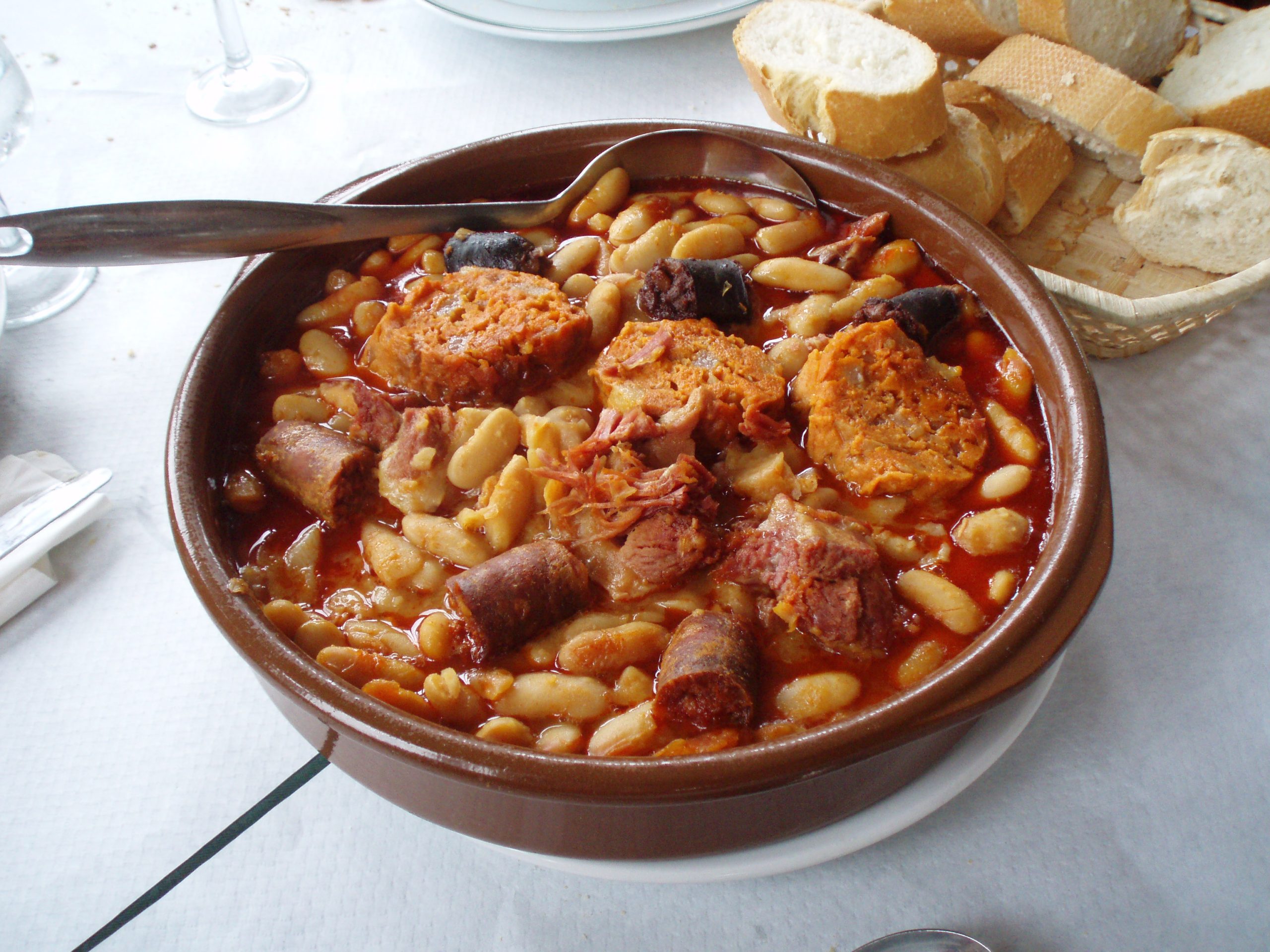
Fabada asturiana is Spain’s greatest bean stew: huge, creamy white fabes simmered for hours with chorizo, morcilla, and pork until the broth turns silky and stained gold with saffron and paprika. It is rich, smoky, and profoundly comforting, the kind of dish built for cold, wet weather. The method is patience itself, a bare simmer and a shaken pot, and the reward is beans so tender they dissolve against the roof of the mouth, in a broth that tastes like everything that swam in it.
The Pride of Asturias
Fabada comes from Asturias, the green, rainy principality on Spain’s northern coast, where cool weather breeds serious cooking and this stew is the region’s hallmark dish. Its foundation is the faba, a large, flat white bean grown in Asturias and prized for its thin skin and buttery flesh. Around the beans goes the compango, the trio of cured meats, chorizo, morcilla, and pork, that flavors the pot. Fabada has long since conquered the rest of Spain as a winter favorite, sold even in cans in every supermarket, and it draws frequent comparison to the French cassoulet, its bean-and-pork cousin across the mountains.
The Beans and the Compango
True fabes de la Granja are worth seeking from Spanish importers, and large dried butter beans or other big white beans stand in honorably. Soak them overnight. The compango does the seasoning: Spanish chorizo, the cured paprika sausage, not the fresh Mexican kind; morcilla, the blood sausage, ideally the Asturian style; and a piece of pork belly, bacon, or a ham hock for depth. These meats release smoke, paprika, and fat into the broth as everything cooks together, which is why fabada needs almost no other seasoning beyond saffron, paprika, and restraint with salt until the end.
The Gentlest Simmer
Start the soaked beans in cold water with the onion, garlic, olive oil, and the meats except the morcilla, bring the pot just to a boil, and skim it well. Then drop the heat until the surface barely trembles and hold it there for two to three hours. Hard boiling is the enemy: it rattles the beans against each other, splits their skins, and turns the stew to porridge. The pot stays uncovered or half-covered, the simmer stays shy, and the beans emerge whole, creamy, and intact. Asturian cooks judge a fabada first by whether the fabes kept their shape.
Shake, Startle, Season
Two habits protect the beans. First, never stir with a spoon; grip the pot and shake it in a gentle circle, which moves the beans without breaking them. Second, startle them: every so often, add a small splash of cold water, a trick Asturian cooks call asustar las fabas, frightening the beans, credited with keeping the skins tender as the temperature dips and recovers. Saffron, steeped in a spoonful of hot broth, and sweet smoked paprika go in early to tint the stew gold and deepen it. Salt waits until the last half hour, after the cured meats have declared how much they brought.
The Morcilla and the Rest
Morcilla is delicate and joins the pot only for the final thirty to forty minutes, long enough to flavor the broth and heat through while staying whole. When the beans are fully tender, pull the meats out, slice the chorizo, morcilla, and pork into generous pieces, and either return them to the pot or lay them over each served bowl in the traditional manner. Then let the fabada rest off the heat for fifteen minutes, which settles the broth to its silky best. Better still, make it a day ahead; fabada reheated gently the next day is famously superior to fabada eaten in a hurry.
Serving Fabada
Serve fabada hot in shallow bowls, beans and golden broth first, the sliced meats crowning the top, with crusty bread and nothing else required. In Asturias it is a midday dish, eaten slowly and followed by very little, because it is gloriously heavy; portion with mercy. Asturian hard cider is the local pour beside it, and a full-bodied red wine serves as well. Leftovers keep for days and freeze well, thickening as they sit, loosened with a little water on reheating. On a cold day, few pots on earth make a house smell more like a promise.
Common Questions
What beans substitute for fabes?
Large dried butter beans, gigantes, or big lima beans come closest, soaked overnight and simmered gently. The goal is a big, creamy, thin-skinned white bean. Spanish importers sell true fabes, and for a special pot they are worth it.
Where do I find morcilla?
Spanish groceries and online importers carry it, often alongside proper chorizo. If morcilla is out of reach, another blood sausage works, or simply increase the chorizo and pork; the fabada loses one voice but still sings.
Why did my beans split and fall apart?
The pot boiled too hard or was stirred with a spoon. Keep the simmer barely trembling, shake the pot instead of stirring, and add occasional splashes of cold water. Old beans also break more easily, so buy from a shop that turns stock over.
Fabada asturiana is the hallmark stew of Asturias in northern Spain, large white fabes beans simmered slowly with chorizo, morcilla, and pork, often compared to the French cassoulet.