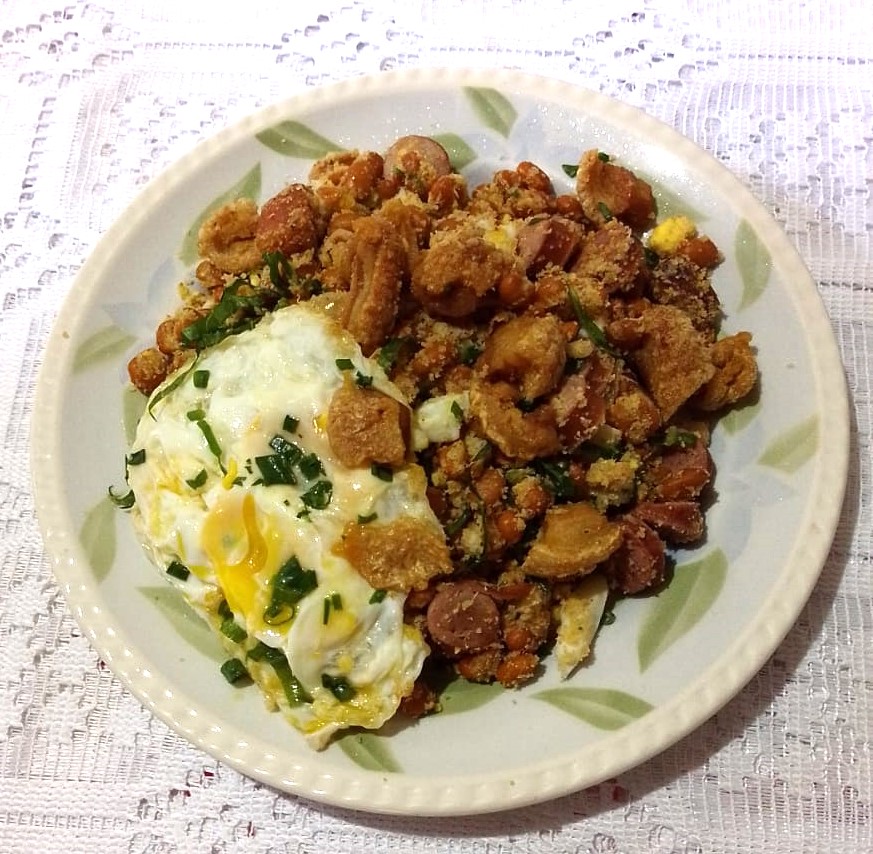
Feijao tropeiro is beans without the broth: cooked beans drained completely and tossed in a hot pan with crisp bacon, browned sausage, scrambled egg, finely shredded collard greens, and enough cassava flour to coat everything. The result is crumbly and dry rather than soupy, salty and smoky, and substantial enough to be a meal on its own. It is the defining dish of Minas Gerais and one of the most direct expressions of Brazilian country cooking.
The Mule Drivers
The name refers to the tropeiros, the men who moved goods on the backs of mules and horses across the Brazilian interior, supplying the mining settlements of the colonial period and connecting distant regions long before roads existed. They needed food that travelled well and kept without spoiling, and beans, cured meat, and cassava flour met that requirement exactly. The mixture they cooked on the road became known as feijao tropeiro, and it spread with them through the interior, taking root above all in Minas Gerais and Goias, where it remains a staple of home cooking.
The Beans
Carioca beans, the speckled tan variety used across Brazil, are traditional, with pinto beans the closest widely available substitute. Cook them until tender but still holding their shape, because beans that have collapsed turn the whole dish into a paste. Then drain them completely and let them sit to dry out further; this is the step that decides the texture, since any residual liquid combines with the cassava flour and makes it gluey rather than crumbly. Leftover beans from a previous meal work perfectly and are the traditional starting point.
Bacon, Sausage, Egg
The meat does most of the seasoning. Fry diced bacon until crisp and the fat has rendered out, then brown slices of calabresa, the smoky Brazilian sausage, in the same pan. Cook the onion and plenty of garlic in that fat. Then push everything to one side and scramble beaten eggs directly in the pan so they break into small pieces and distribute through the dish rather than sitting on top. Chorizo or another smoked sausage substitutes for calabresa, and some cooks add torresmo, crisp pork rinds, at the end.
Collards and Cassava Flour
Couve, collard greens, are stacked, rolled tightly, and sliced into the finest possible ribbons, then added near the end and cooked only until they wilt and turn bright, which takes under a minute. Cooking them longer makes them grey and heavy. Last comes the cassava flour, added gradually while stirring so it toasts in the rendered fat and coats every bean, egg piece, and sliver of green. Add it in stages and stop when everything is coated but the mixture still looks loose, since too much flour makes it dry and dusty.
Getting the Texture
What separates feijao tropeiro from every other Brazilian bean dish is that it is dry. The beans stay whole and identifiable, the flour clings to them without turning to porridge, and a spoonful holds together loosely rather than pouring. That texture is why the beans must be drained hard, why the flour goes in gradually, and why the pan needs to be wide enough to toss everything rather than deep enough to steam it. A crowded pot traps moisture and the flour turns claggy instead of coating each bean separately. Taste as you add the flour and stop while the mixture still looks moist, since it dries as it sits.
Serving Feijao Tropeiro
Serve it warm, finished with scallions and parsley, either as a main dish or as a substantial side. In Minas Gerais it appears alongside white rice, more collard greens, a fried egg on top, and often torresmo and a piece of grilled meat, which turns it into a full plate. Hot pepper sauce goes on the table. It reheats well in a pan over medium heat and keeps three or four days refrigerated, though the flour absorbs moisture as it sits and the mixture tightens. A knob of butter melted through it on reheating loosens everything again and brings back some of the original crunch.
Common Questions
How is it different from feijoada?
Feijoada is a long-simmered black bean stew with many cuts of pork, served wet with rice. Feijao tropeiro uses lighter beans drained dry and tossed with cassava flour, bacon, egg, and greens. One is a stew, the other is closer to a hash.
Which beans should I use?
Carioca beans are traditional, and pinto beans are the closest substitute outside Brazil. Cook them until tender but intact, then drain them thoroughly. Leftover cooked beans work very well and are how the dish is often made at home.
Can I make it without meat?
Yes, using olive oil or butter with plenty of onion, garlic, and smoked paprika for depth. The eggs, collards, beans, and toasted cassava flour carry the dish. It loses the smokiness but keeps the texture that defines it.
Feijao tropeiro is named for the tropeiros, the mule drivers who carried goods across the Brazilian interior; the mixture of beans and cassava flour they carried became a dish of Minas Gerais.