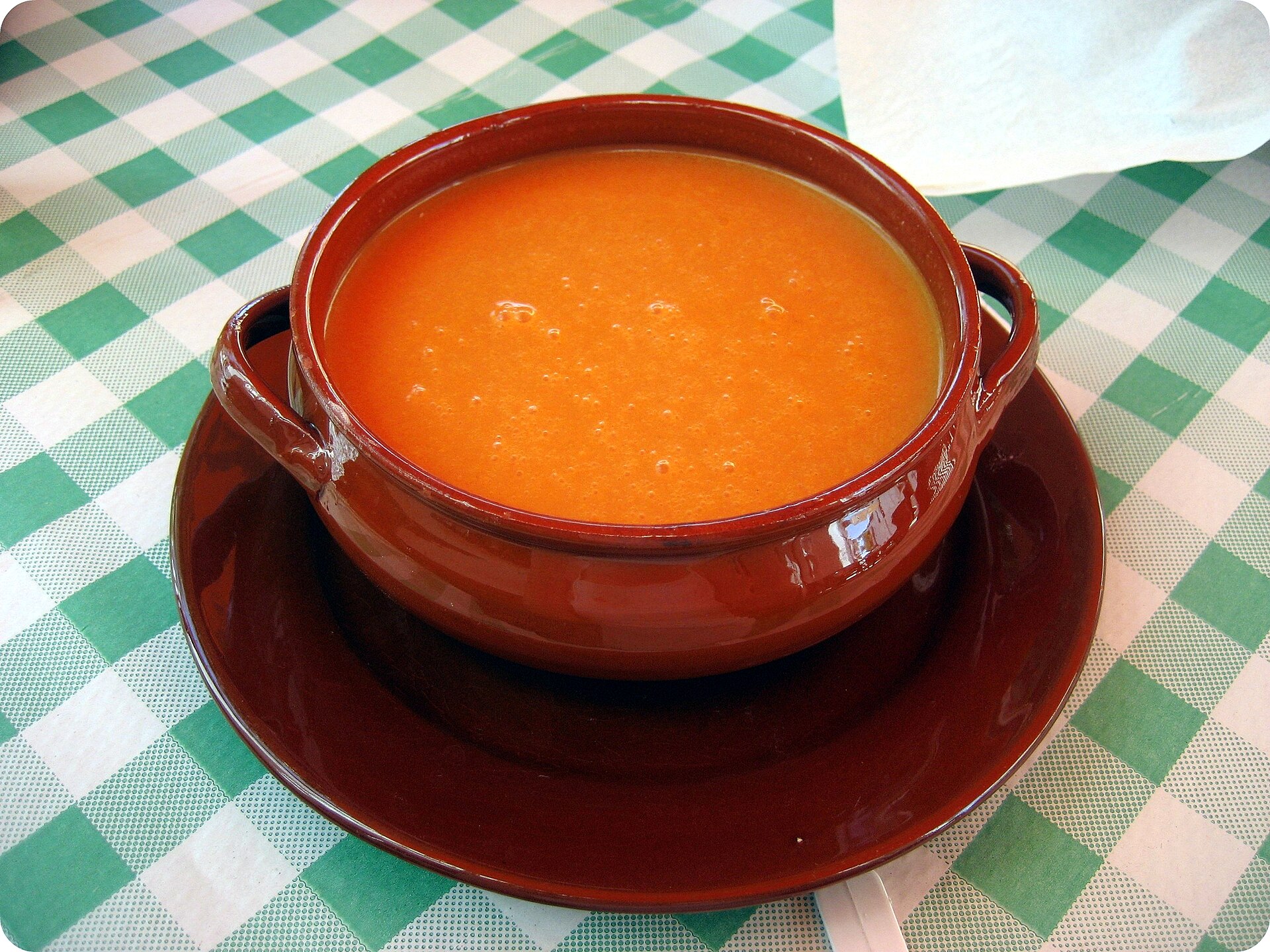
Gazpacho is summer in a bowl: a cold soup of raw tomatoes, peppers, cucumber, and garlic blended smooth with good olive oil and a splash of vinegar. It is not cooked at all, which makes it one of the easiest things to make and one of the most refreshing things to eat on a hot day. It comes from Andalusia, in Spain’s hot south, where it was born of necessity and ripe produce. Make it with excellent tomatoes and it tastes like nothing else; make it with pale ones and it falls flat.
An Andalusian Cold Soup
Gazpacho comes from Andalusia, the sun-baked region of southern Spain, where a cold, refreshing soup made sense for field workers in the heat. Its roots are old, and it began as a bread-based soup with garlic, olive oil, and vinegar, before tomatoes and peppers, which came to Spain from the Americas, became central to the version known today. It carries Moorish influence in its use of bread and olive oil. Related cold soups exist across the region, including the almond-based ajoblanco and the thicker salmorejo, but tomato gazpacho is the most famous.
Tomatoes Are Everything
Because gazpacho is raw, there is nowhere for poor ingredients to hide, and the tomatoes carry the whole soup. Use the ripest, most flavorful summer tomatoes you can find, the kind that are soft and fragrant and almost too ripe to slice. Pale, hard, out-of-season tomatoes make a thin, sour, disappointing gazpacho no matter what else you do. This is a dish for the height of tomato season, a way to use a glut of perfect tomatoes. If your tomatoes are not good, wait for ones that are, because they are the difference between a great gazpacho and a forgettable one.
The Other Vegetables and Bread
Alongside the tomatoes go cucumber, green pepper, and garlic, which add freshness, a little bite, and depth. Traditional gazpacho also includes bread, a slice of stale bread soaked and blended in, which gives the soup body and helps it emulsify into something smooth rather than watery. The bread is a nod to the soup’s origins as a way to use up stale loaves. Go easy on the garlic, since raw garlic is strong and grows stronger as the soup sits, and one clove often does more than you expect. Balance the vegetables so the tomato still leads.
Blending and the Olive Oil
Everything goes into a blender: the vegetables, soaked bread, garlic, vinegar, and salt, blended until smooth. The step that turns it from a vegetable slush into a proper gazpacho is the olive oil. With the blender running, pour the oil in a slow stream so it emulsifies into the soup, giving it a creamy body and a paler, orange-pink color. Use a good extra virgin olive oil, since its flavor comes through clearly. Sherry vinegar is the traditional acid, sharp and distinctive. For a silky texture, pass the blended soup through a sieve, though many leave it as is.
Chilling and Seasoning
Gazpacho must be served cold, so chill it for at least a couple of hours, which also lets the flavors meld and mellow. Taste it after chilling and adjust, since cold mutes flavors and it will need more salt, vinegar, or oil than it seemed to when warm. Adjust the thickness with cold water to the consistency you like, from a drinkable soup to a thicker spoonable one. The balance of tomato, acid, salt, and oil is what you are after, bright and savory and refreshing. Serve it the day it is made for the freshest flavor.
Serving Gazpacho
Serve gazpacho cold in bowls or glasses, since in Spain it is often drunk from a glass as a refreshment as much as eaten as a soup. The classic garnish is a scattering of finely diced vegetables, cucumber, pepper, tomato, and onion, plus croutons and a final drizzle of olive oil on top. These add texture to the smooth soup. It keeps two or three days refrigerated and only gets more flavorful, making it a fine thing to have ready in the fridge through a hot spell. A cold bowl on a hot day needs nothing more than bread alongside.
Common Questions
Do I have to use bread?
Traditional gazpacho includes bread for body and to help it emulsify, but you can leave it out for a lighter, gluten-free version. The soup will be a little thinner. The bread is part of the classic recipe and its history.
What is the difference between gazpacho and salmorejo?
Salmorejo, from Cordoba, is thicker and creamier, made mainly of tomato, bread, garlic, and oil, with no cucumber or pepper, and usually topped with egg and ham. Gazpacho is thinner and includes more vegetables. Both are cold Andalusian soups.
Can I make it ahead?
Yes. Gazpacho needs chilling anyway, and it keeps two to three days refrigerated, with the flavors deepening. Make it a few hours to a day ahead. Add the fresh diced garnishes just before serving so they stay crisp.
Gazpacho is a cold soup from Andalusia in southern Spain, made from raw summer vegetables blended with bread, olive oil, and vinegar, served chilled to beat the heat.