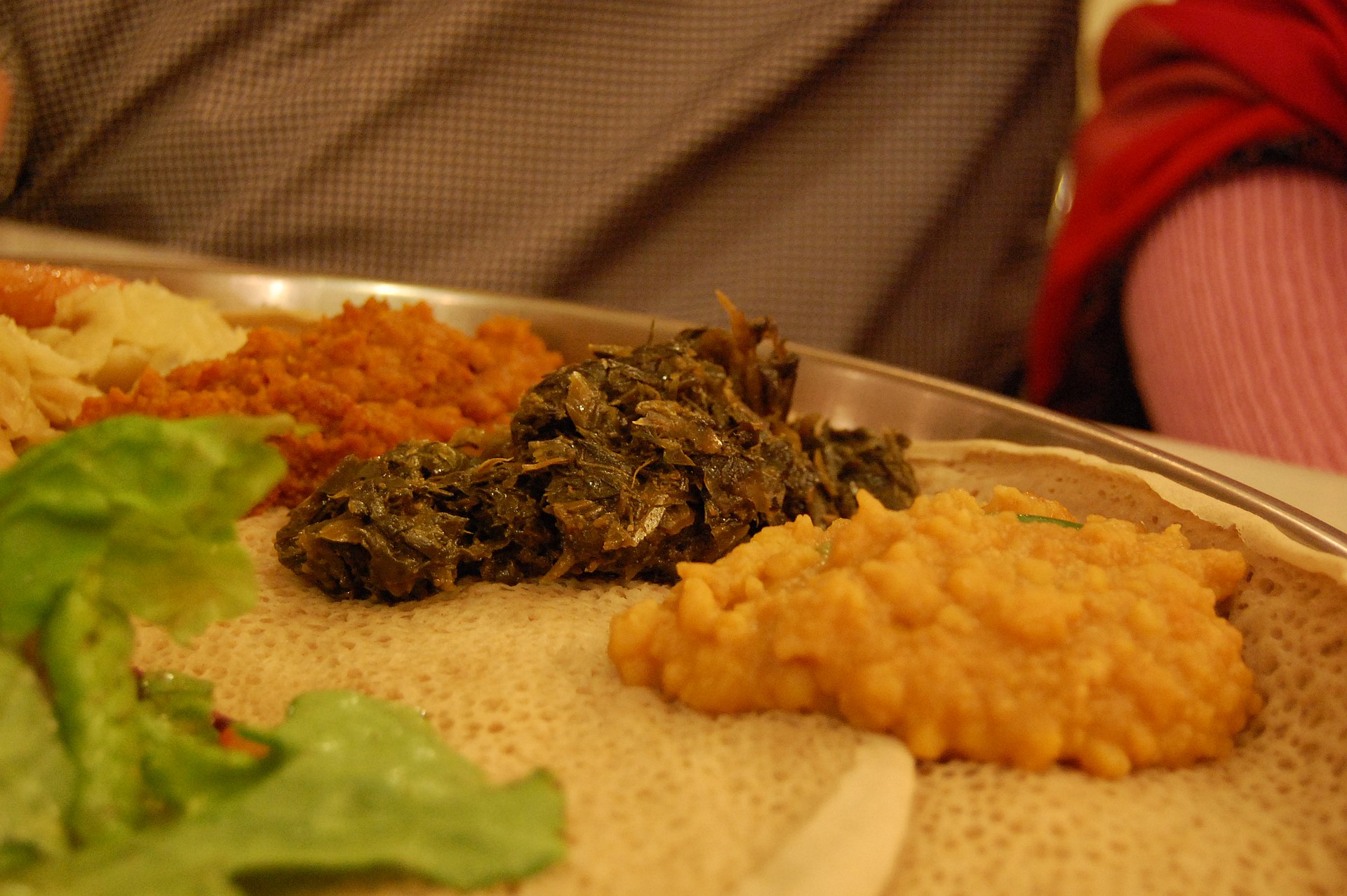
Tikil gomen is Ethiopian cabbage cooked the patient way: shredded cabbage stewed with carrot and potato in turmeric-stained oil until every piece turns soft, sweet, and faintly golden. There is no chili heat and no berbere, just turmeric, garlic, ginger, and a spoonful of spiced butter, which makes it the quiet, comforting corner of the platter. It costs almost nothing, feeds a crowd, and converts people who thought they had no interest in cabbage.
Cabbage on the Platter
Gomen means cabbage in Amharic, though in practice the word covers other leafy brassicas too, including kale and collard greens, which appear in the separate braised greens dish of the same family. Tikil gomen specifically is the version built around head cabbage cooked with carrots and potatoes. It is sometimes called atakilt wat, from the Amharic word for vegetable, although that name properly covers any vegetable stew rather than this particular one. Whatever it is called, it holds a fixed place on the Ethiopian vegetarian platter, where its mildness balances the fierce red stews arranged around it.
Cutting the Vegetables
Three vegetables, three different cooking times, so the knife work matters. Cut the potatoes into chunks and the carrots into sticks or thick coins, both substantial enough to survive a long stew without disintegrating. Shred the cabbage coarsely rather than finely, since very thin shreds vanish into the pot. The carrots and potatoes go in first with a splash of water and get a head start, and the cabbage joins only once they have begun to soften. Reversing that order gives mushy cabbage sitting on top of hard potato, which is the usual way this dish goes wrong.
Turmeric and Aromatics
The seasoning follows the alicha style, mild dishes colored by turmeric instead of berbere. Soften sliced onion first, then add plenty of garlic and fresh ginger, and stir in the turmeric while the pan is hot so it blooms in the oil and stains it a deep yellow. Every piece of vegetable added afterwards picks up that color, which is why the turmeric belongs at this stage rather than sprinkled over at the end. Some cooks add a slit jalapeno for a whisper of warmth, and a little cumin or korarima appears in some households, but restraint is the point.
The Slow Cook
Western instincts say to keep vegetables crisp, and those instincts are wrong here. Tikil gomen is cooked covered on low heat, stirred now and then, until the cabbage is completely soft and almost melting, the potatoes yield to a spoon, and the whole pot has gone silky. That takes considerably longer than feels natural, often the better part of an hour. The cabbage releases its own moisture as it collapses, so very little added water is needed. Near the end, take the lid off and let any excess liquid cook away, since the finished dish wants to be moist but not soupy.
Niter Kibbeh at the End
A spoonful of niter kibbeh, the spiced clarified butter of Ethiopian and Eritrean cooking, stirred in during the last minutes is what lifts this from a plain vegetable stew into something recognizably Ethiopian. Its aromatics, among them fenugreek, nigella, cardamom, and korarima, perfume the cabbage without adding heat. Adding it late preserves that fragrance, which fades if it simmers for a long time. During Orthodox fasting periods, when animal products are avoided, oil takes its place and the dish remains entirely vegan, which is one reason it appears so often on fasting platters.
Serving Tikil Gomen
Serve it warm as part of a shared platter lined with injera, spooned beside kik alicha, misir wat, shiro, and gomen, with everyone tearing off pieces of the sour flatbread to scoop directly from the communal plate. On its own it also works as a simple side with rice or bread. Like most stewed vegetable dishes, it improves overnight as the flavors settle, and it reheats without complaint, so cooking a large pot at the start of the week is common practice. Leftovers hold four or five days refrigerated.
Common Questions
Is tikil gomen the same as atakilt wat?
The names overlap in everyday use. Tikil gomen refers specifically to the cabbage dish with carrot and potato, while atakilt wat comes from the Amharic word for vegetable and can describe any vegetable stew, including versions built on green beans or other vegetables.
Is this dish spicy?
No. It belongs to the mild alicha family, seasoned with turmeric instead of berbere, so it carries warmth and aroma rather than heat. A slit jalapeno adds a gentle kick if you want one, but the dish exists precisely to balance the spicier stews beside it.
Can I use kale or collards instead?
Those greens make a different dish in the same family, closer to the braised greens known as gomen. Head cabbage is what gives tikil gomen its particular sweetness and silky texture, so the substitution changes the result noticeably.
Tikil gomen is an Ethiopian dish of cabbage cooked with carrots and potatoes, seasoned with turmeric and niter kibbeh; gomen means cabbage in Amharic, and the dish is a fixture of the vegetarian platter.