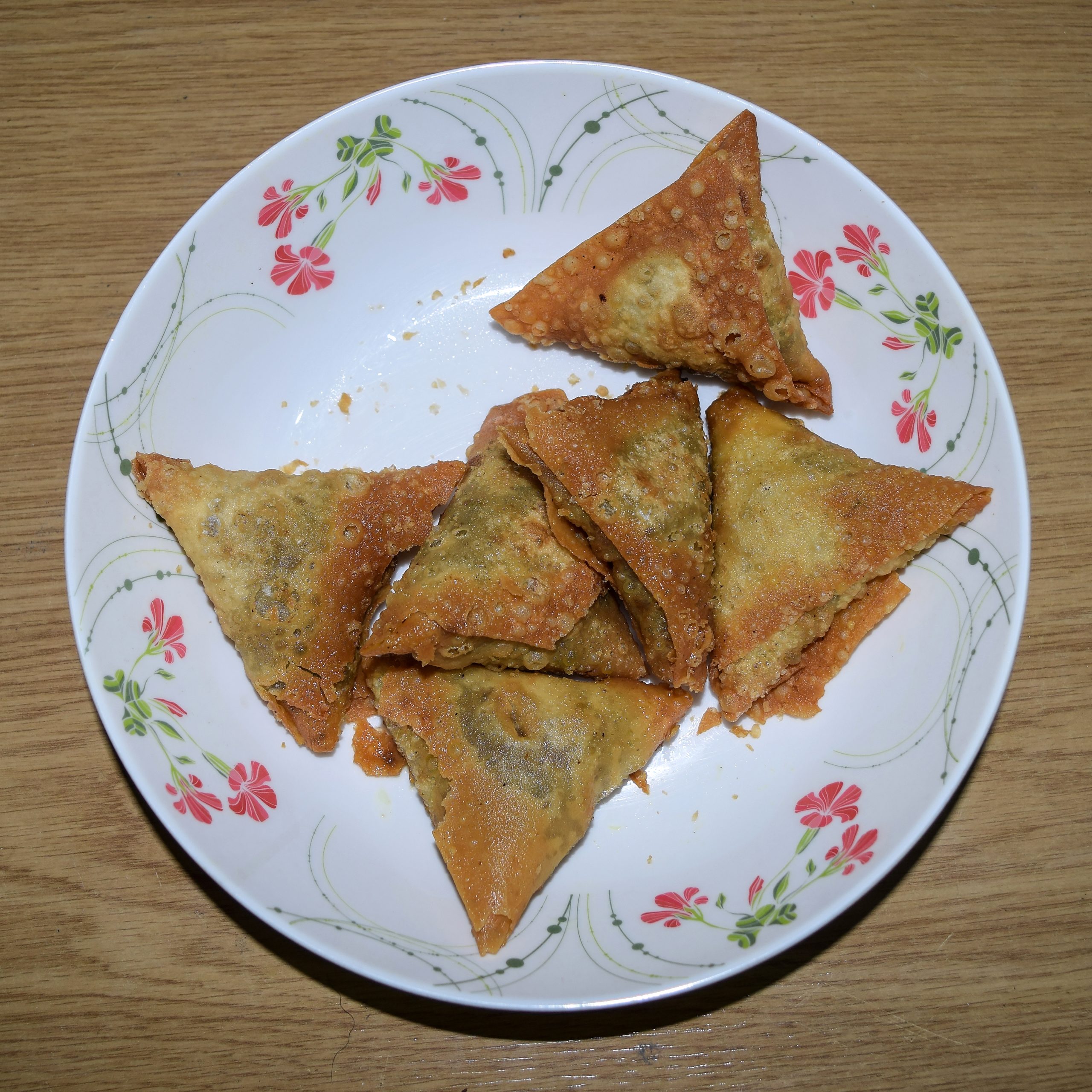
Sambusa are the crisp fried triangles sold from Ethiopian street carts, bakeries, and family kitchens: thin pastry folded around spiced lentils or seasoned ground beef, fried until blistered and golden, and eaten hot with a squeeze of lemon and a fiery green chili sauce. They turn up at holidays, at the end of fasting periods, at gatherings of every kind, and they disappear immediately. The folding takes a little practice, and after that the recipe is simple enough to make in large batches.
An East African Cousin
Sambusa is the Ethiopian and Somali version of the South Asian samosa, and the shared name gives away the connection. Ethiopian and Indian cooking overlap in a number of striking ways, from clarified butter used as the everyday fat to lentil stews and griddled flatbreads, the result of long trade contact across the Indian Ocean and the Red Sea. In Ethiopia the pastry took its own direction: the wrapper is typically thinner and crisper than a samosa’s, and the filling is seasoned with berbere and local aromatics rather than the garam masala and potato of the Indian version.
Lentil or Beef
Two fillings dominate. The lentil version uses red lentils cooked soft and then fried down with onion, garlic, ginger, chili, and berbere until thick and dry, and it is the one that appears during the many Orthodox fasting periods when animal products are set aside. The beef version uses seasoned ground beef cooked with the same aromatics. Either way the filling wants to be dry rather than saucy, because moisture is the enemy of crisp pastry. Cook it down further than seems necessary, then spread it out and let it cool completely before you begin folding.
Seasoning the Filling
Berbere gives sambusa their Ethiopian character, and how much goes in depends entirely on your tolerance. Start with a modest spoonful, since the blend carries real heat along with its warm, complex background of chili, fenugreek, ginger, and korarima. Onion, garlic, and fresh ginger form the base, minced jalapeno adds a green sharpness, and a squeeze of lemon at the end lifts everything. Taste the filling before folding, because there is no correcting it afterwards. It needs to taste assertive and slightly salty, since the plain pastry around it dilutes the seasoning.
Folding and Sealing
Sambusa wrappers are sold at Ethiopian and Middle Eastern groceries; spring roll wrappers cut into long strips work perfectly well and are easier to find. Take a strip, fold one corner across to form a cone, hold it open in your palm, spoon in the filling, then fold the flap over and continue folding to a neat triangle. Seal every edge with a paste of flour and water, pressing firmly. A single unsealed corner lets hot oil in and the pastry fills with grease, so check each one before it goes near the pan.
Frying Them Right
Heat the oil until a scrap of wrapper sizzles immediately on contact, then fry the sambusa in batches without crowding, turning them so they color evenly. Hot oil sets the surface at once and forces the pastry to blister and crisp; oil that is merely warm gets absorbed, and the result is heavy and greasy. They take only a few minutes to reach a deep golden brown. Drain them on a rack rather than flat paper so steam escapes from underneath and the bottoms stay crisp. Baking is possible for a lighter version, though the texture differs.
Serving Sambusa
Serve them hot, straight from the oil, with lemon wedges and a green chili sauce or awaze, the berbere-based condiment, for dipping. They are a fixture of Ethiopian celebrations and holiday tables, and they are equally at home as a snack with tea. Assembled uncooked sambusa freeze beautifully on a tray and go straight from the freezer into hot oil, which makes them ideal for entertaining. Fried ones lose their crispness within an hour or two, so fry close to serving and expect to make more than you planned.
Common Questions
How is sambusa different from samosa?
They share an ancestry and a name. The Ethiopian sambusa usually has a thinner, crisper wrapper and a filling seasoned with berbere and local aromatics, often lentils or ground beef, while the Indian samosa commonly uses a thicker pastry and a spiced potato and pea filling.
Can I bake them instead of frying?
Yes. Brush them with oil and bake at high heat until golden, turning once. They come out lighter and less rich, with a drier, more brittle pastry rather than the blistered crispness that frying produces. Both versions are eaten in Ethiopia.
Can I freeze sambusa?
Freeze them assembled but unfried, spread on a tray so they do not stick, then bag them once solid. Fry straight from frozen, allowing an extra minute or two. This is how most people manage the folding, doing it once for many batches.
Sambusa is the Ethiopian and Somali version of the samosa, a baked or deep-fried pastry pocket filled with lentils or seasoned ground beef and sold widely as street food.