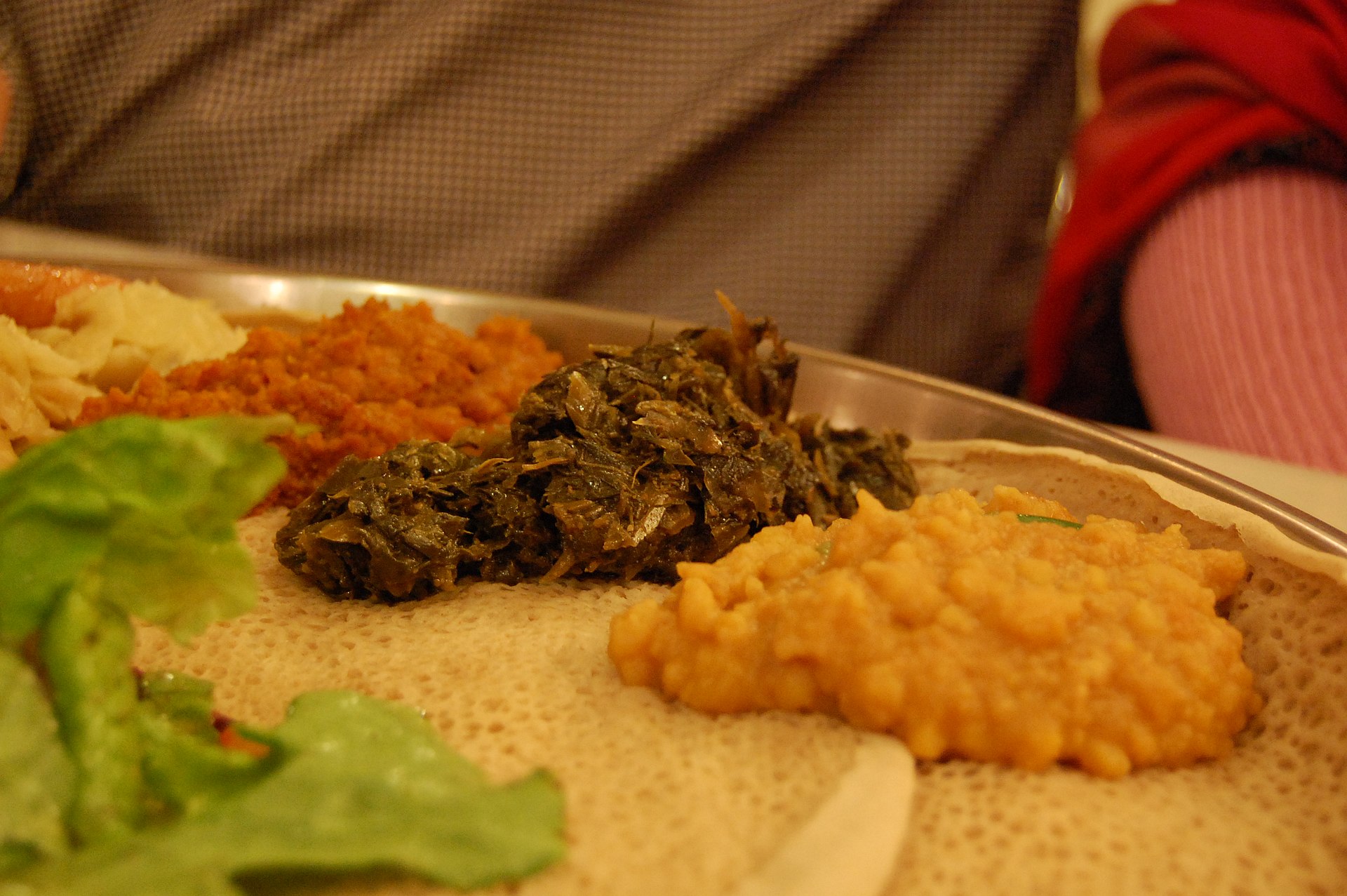
Kik alicha is the calm one on the platter: yellow split peas simmered until they collapse into a soft golden puree, seasoned with nothing sharper than turmeric, garlic, ginger, and a spoonful of spiced butter. Against the fierce red stews that surround it, this gentle, buttery dish is where most people rest between bites. It is inexpensive, filling, naturally vegetarian, and easy to make well, which explains why it appears on nearly every Ethiopian combination plate from Addis Ababa to the diaspora restaurants abroad.
Alicha Means Mild
Ethiopian stews divide broadly into two families. The wat dishes built on berbere, the fiery red spice blend, include doro wat and misir wat, and they carry real heat. The alicha dishes are their mild counterparts, made without berbere and colored instead by turmeric, which gives them a soft yellow tone and a gentle, aromatic flavor. Kik means split peas in the languages of Ethiopia, so kik alicha is simply the mild split pea stew. This pairing of hot and mild across a shared platter is deliberate: the two kinds of dish are eaten together, each making the other easier to enjoy.
The Split Peas
Yellow split peas are the entire foundation, and they behave differently from lentils. They hold their shape longer, then break down all at once into a thick, creamy mass, so the cooking time runs longer than most bean dishes suggest. Rinse them well and soak them for about an hour, which shortens the simmering and helps them cook evenly rather than leaving hard centers. Some cooks dry-toast the peas briefly in a pan first, which deepens their flavor. Skim the foam that rises in the first minutes of boiling for a cleaner-tasting stew, and keep the heat gentle so the bottom does not catch.
Onion, Garlic, Ginger
The aromatic base is short and does a great deal of work. Ethiopian cooks traditionally start onions in a dry pan without oil, letting them soften and release their moisture before any fat goes in, which builds a sweeter, more concentrated flavor. Cook them until soft and pale gold rather than deeply browned, since dark caramelization would fight the delicate character of an alicha. Garlic and ginger follow, both used generously, and then the turmeric, which needs a moment in the heat to lose its raw edge. Fresh ginger is worth the trouble here, as its warmth is one of the flavors people notice most.
Niter Kibbeh
The ingredient that turns a plain pot of split peas into an Ethiopian dish is niter kibbeh, the clarified butter infused with spices such as korarima, fenugreek, nigella, and cardamom. Stirred in near the end, it coats everything with a silky richness and a distinctive perfume that plain butter or oil cannot supply. It is sold at Ethiopian groceries and online, and it is straightforward to make at home in a batch that keeps for months. For a fully vegan version, use oil instead, which many Ethiopian households do during Orthodox fasting periods when animal products are set aside entirely.
Getting the Texture Right
Kik alicha wants to be thick and creamy but still soft enough to scoop with a piece of injera, somewhere between a stew and a coarse puree. Split peas keep absorbing liquid as they sit, so the pot tightens quickly once it comes off the heat. Keep hot water at hand and loosen the stew as needed, stirring often near the end when it is thickest and most prone to sticking. Some cooks mash part of it against the side of the pot for a smoother finish while leaving some peas whole. Taste for salt late, once the peas have fully softened.
Serving Kik Alicha
Kik alicha is rarely eaten alone. It takes its place on a large shared platter lined with injera, the sour teff flatbread, spooned alongside misir wat, gomen, shiro, and other dishes, with everyone tearing pieces of injera to scoop directly from the communal plate. It is a mainstay of the vegetarian combination known as beyaynetu, especially during the many fasting days of the Ethiopian Orthodox calendar, when meat and dairy are avoided. It keeps several days refrigerated and freezes well, thickening as it cools, so warm it gently with a splash of water before serving again.
Common Questions
What is the difference between kik alicha and misir wat?
Kik alicha uses yellow split peas and turmeric with no berbere, so it is mild and golden. Misir wat uses red lentils and a generous amount of berbere, making it spicy and deep red. The two are usually served side by side on the same platter.
Can I make it vegan?
Yes. Replace the niter kibbeh with oil, which is exactly what Ethiopian households do during Orthodox fasting periods. The flavor loses some of its distinctive perfume, so a spoonful of the spices used in niter kibbeh added to the oil helps close the gap.
Do I have to soak the split peas?
Not strictly, but an hour of soaking shortens the cooking time noticeably and helps them soften evenly. Without soaking, simply simmer them longer and add water as needed until they break down into a creamy consistency.
Kik alicha is a traditional Ethiopian vegetarian stew of yellow split peas cooked with turmeric, garlic, ginger, and niter kibbeh; kik means split peas, and alicha marks the mild dishes made without berbere.