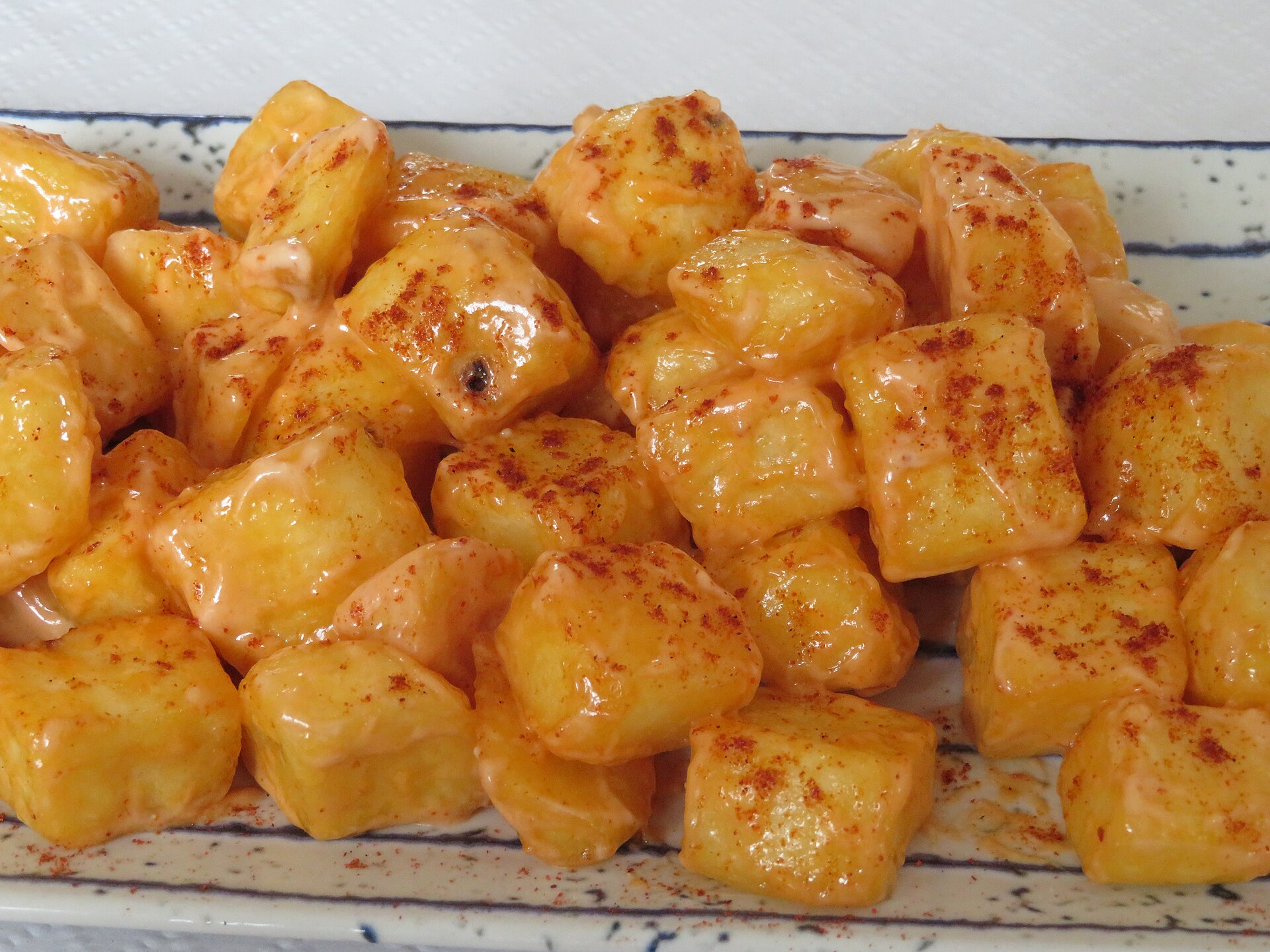
Patatas bravas are the tapa you order without thinking: crispy fried potato cubes under a spicy tomato sauce and a cool garlic aioli, found in every bar across Spain. The name means fierce potatoes, a nod to the sauce, which brings a rare hit of heat to a cuisine that mostly avoids it. They are cheap, simple, and deeply satisfying, the kind of thing that disappears fast with a cold beer. The whole game is getting the potatoes properly crisp and the sauce properly punchy, and neither is hard.
The Bar Classic
Patatas bravas are a staple of the tapas table, associated above all with Madrid, where various taverns claim to have made them first in the mid-twentieth century. The name comes from bravas, meaning fierce or brave, a reference to the spicy sauce rather than the potatoes themselves. In a country whose food generally shuns fiery heat, the brava sauce stands out as an exception, which is part of the appeal. They are among the cheapest and most common tapas, served in bars everywhere, shared over drinks. The dish is simple and endlessly variable from bar to bar.
Crispy Potatoes
Everything starts with the potatoes, which need to be crisp outside and fluffy within. Cut them into rough, bite-size cubes. For the crispest result, parboil them briefly first, then drain and dry them well before frying, which gives a fluffy interior that fries up crunchy. Then fry them in hot oil until deep golden and crisp all over. Drying the potatoes matters, since wet potatoes spit in the oil and fry up soggy. Salt them the moment they come out. You can also roast them for a lighter version, but frying gives the classic crisp cube that stands up to the sauce.
The Brava Sauce
The brava sauce is what gives the dish its name and its kick. It is a tomato-based sauce built on paprika, both smoked paprika for depth and hot paprika or cayenne for heat, with garlic and a splash of sharp sherry vinegar. Cook the garlic and spices briefly to bloom them, add the tomato, and simmer until thick. Every bar guards its own version, and the exact recipe is a point of pride, but it should have a genuine kick, since that heat is the whole point. Blend it smooth or leave it rustic. Taste and push the spice to where it earns the name.
The Aioli Question
Many bars serve patatas bravas with two sauces: the spicy brava and a cool, creamy garlic aioli, drizzled together over the potatoes so you get heat and richness in each bite. Purists in some regions argue that true bravas need only the brava sauce and that aioli is a Catalan addition, but the two-sauce version is by far the most common way they are served today. Make a proper aioli of garlic and olive oil emulsified, or a quick garlic mayonnaise as a shortcut. The contrast of the fiery red sauce and the pale garlic aioli is part of the look and the taste.
Putting It Together
Assembly is quick, and it happens at the last minute so the potatoes stay crisp. Pile the hot fried potatoes on a plate, spoon the warm brava sauce over them, and drizzle the aioli on top in stripes or dots. Do not sauce them until you are ready to serve, since the potatoes lose their crunch as they sit under the sauce. Serve immediately, while the potatoes are still hot and crisp and the contrast of textures is at its best. A sprinkle of chopped parsley finishes them. Bring them straight to the table to eat with toothpicks or forks, and drinks.
Regional Versions
Patatas bravas change as you cross Spain, and the sauce is where the differences show. In Madrid the brava sauce leans on paprika and a little heat, often served alone. In Catalonia and around Valencia the sauce is frequently made with olive oil, paprika, chili, and vinegar rather than a heavy tomato base, and aioli is standard alongside. Some bars use a spicy tomato sauce closer to a hot ketchup; others make a smooth emulsified sauce. There is no single official recipe, which is part of the fun: locals argue over which bar makes the best version, and a well-known saying holds that the grubbier the bar, the better its bravas. Try a few and settle on the balance of heat, tang, and creaminess you like.
Common Questions
Do I need to fry the potatoes?
Frying gives the classic crisp cube, but you can roast the potatoes in a hot oven with oil for a lighter version. Parboiling first and drying well helps either way. The goal is crisp outside and fluffy inside.
Brava sauce, aioli, or both?
Both is the most common way bars serve them today, though some purists insist on only the spicy brava sauce. The two-sauce version gives heat and creaminess together. Serve whichever you prefer; both are widely accepted.
How spicy should the sauce be?
It should have a real kick, since the name means fierce and the heat is the point in a cuisine that rarely uses much. Adjust the hot paprika or cayenne to your taste, but do not make it timid.
Patatas bravas are a Spanish tapa of fried potato cubes served with a spicy sauce, associated with Madrid, their name meaning fierce potatoes for the heat of the sauce.