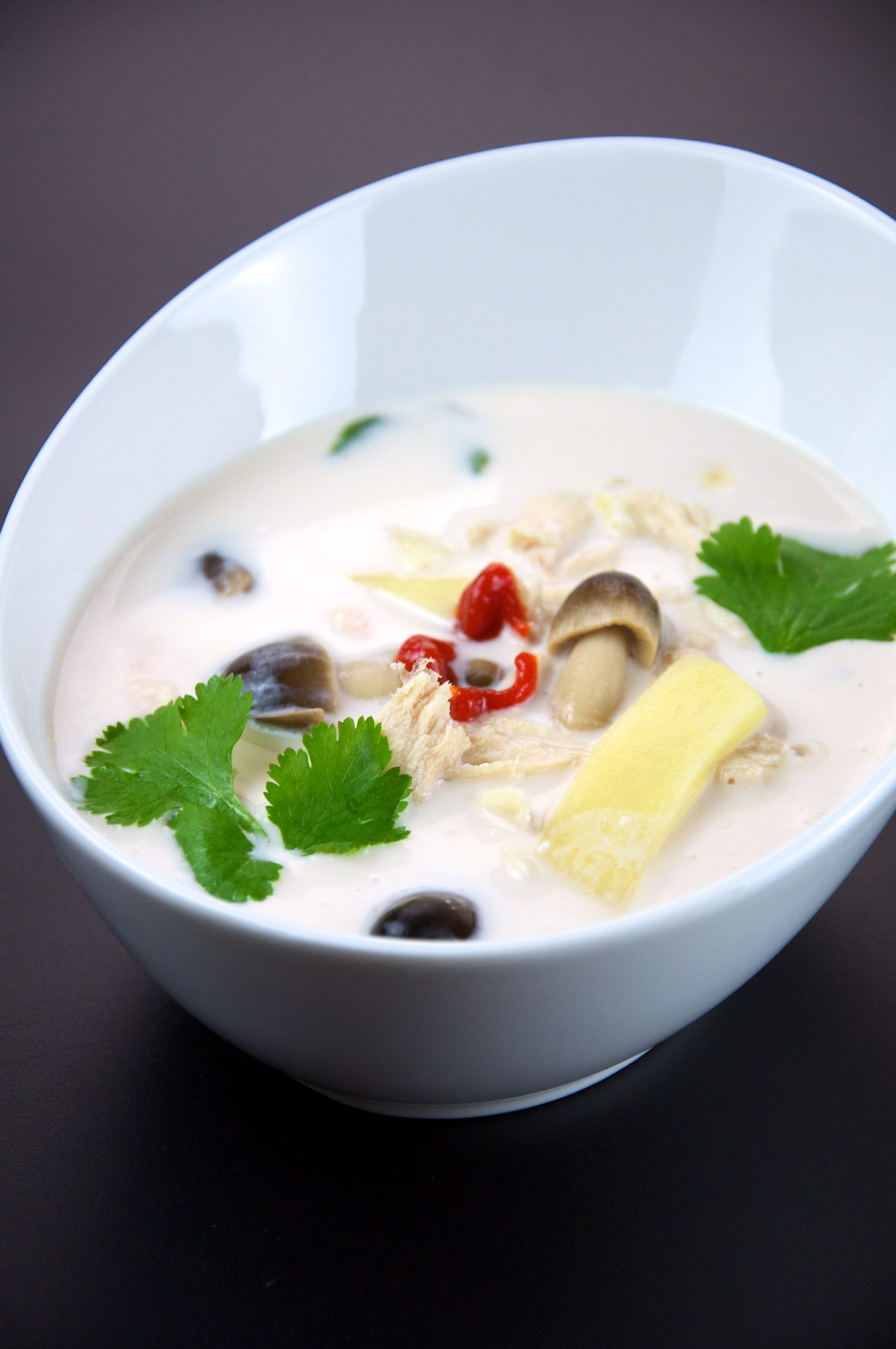
Tom kha gai is coconut milk turned into something bracing: chicken poached gently with slices of galangal, bruised lemongrass, and torn lime leaves, then pulled off the heat and sharpened with lime juice and fish sauce. It is creamy without being heavy, sour without being harsh, and only as hot as you decide to make it. Of all the Thai dishes worth learning at home, this is among the most forgiving, since almost everything happens in one pot in under half an hour.
Boiled Galangal Chicken
The name is a plain description of the dish: tom means boiled, kha is galangal, and gai is chicken. It is a traditional soup in both Thai and Lao cooking, part of the shared repertoire of the region where the two culinary traditions meet, and the earliest recorded relative is said to be a coconut milk preparation with duck and young galangal that appears in a Thai recipe book from around 1890. Alongside tom yum it is one of the two Thai soups best known abroad, and the two are frequently confused despite being built on completely different foundations.
The Three Aromatics
Galangal, lemongrass, and kaffir lime leaves carry this soup, and none of them is optional. Galangal looks like ginger but tastes nothing like it, sharper and more piney with a medicinal edge, and since the dish is named after it, ginger makes a different soup rather than a substitute. Slice it thinly across the grain. Bruise the lemongrass with the back of a knife to break open the fibers, then cut it into lengths, and tear the lime leaves rather than chopping them. None of these three are meant to be eaten, so leave them in large recognizable pieces that can be pushed aside in the bowl.
Handling Coconut Milk
Use full-fat canned coconut milk, since light versions give a thin, disappointing soup. The key is temperature: keep the pot at a gentle simmer throughout and never let it reach a hard rolling boil, which splits the coconut milk and leaves an oily film across the surface. Adding half the coconut milk at the start with the stock and the rest near the end keeps the flavor fresh and the texture smooth. Some cooks crack the thick cream from the top of the can first and fry the aromatics in it, which deepens the aroma considerably.
The Chicken and Mushrooms
Thigh meat is the better choice, staying tender through poaching where breast turns dry and stringy, though breast works if you slice it thinly and watch the timing. Slide it into the infused liquid and let it poach gently rather than boiling. Straw mushrooms are the traditional Thai choice and come canned, while oyster mushrooms are widely available and hold their shape well. Add them near the end so they keep some texture. A handful of cherry tomatoes or sliced onion is common in some versions and adds sweetness against the sour finish.
The Balance
Thai cooking is an exercise in balancing salty, sour, sweet, and hot, and this soup is a clear demonstration. Fish sauce brings the salt, lime juice the sour, palm sugar a small amount of sweetness to round the edges, and bruised Thai chilies the heat. All of it goes in off the heat at the very end, particularly the lime juice, which turns flat and slightly bitter if boiled. Then taste and keep adjusting, adding more of one thing at a time until it sits where you want it. No two cooks land in exactly the same place.
Serving Tom Kha Gai
Serve it hot in bowls, scattered with cilantro, with jasmine rice alongside; in Thailand a spoonful of rice often goes straight into the bowl. It works as one dish among several in a shared Thai meal rather than as a standalone course, balancing spicier dishes on the table. Warn anyone unfamiliar that the galangal, lemongrass, and lime leaves are there for flavor and are pushed to the side rather than eaten. Leftovers keep a couple of days, though the aromatics grow stronger, so reheat gently without boiling.
Common Questions
What is the difference between tom kha and tom yum?
Tom kha is built on coconut milk and galangal, making it creamy and mellow. Tom yum has a clear, sour broth with no coconut milk, usually built on chili paste and shrimp. They share lemongrass and lime leaves but taste completely different.
Can I use ginger instead of galangal?
The soup is named after galangal, and ginger tastes noticeably different, warmer and less piney. Fresh or frozen galangal is sold at Asian markets and freezes well. Ginger makes a pleasant soup, but it is no longer tom kha.
Why did my coconut milk separate?
It boiled too hard. Keep the soup at a gentle simmer and never let it reach a rolling boil, especially after the second addition of coconut milk. Full-fat canned coconut milk also holds together better than light versions.
Tom kha gai takes its name from its method and ingredients: tom means boiled, kha is galangal, and gai is chicken; it is a traditional soup in both Thai and Lao cooking.