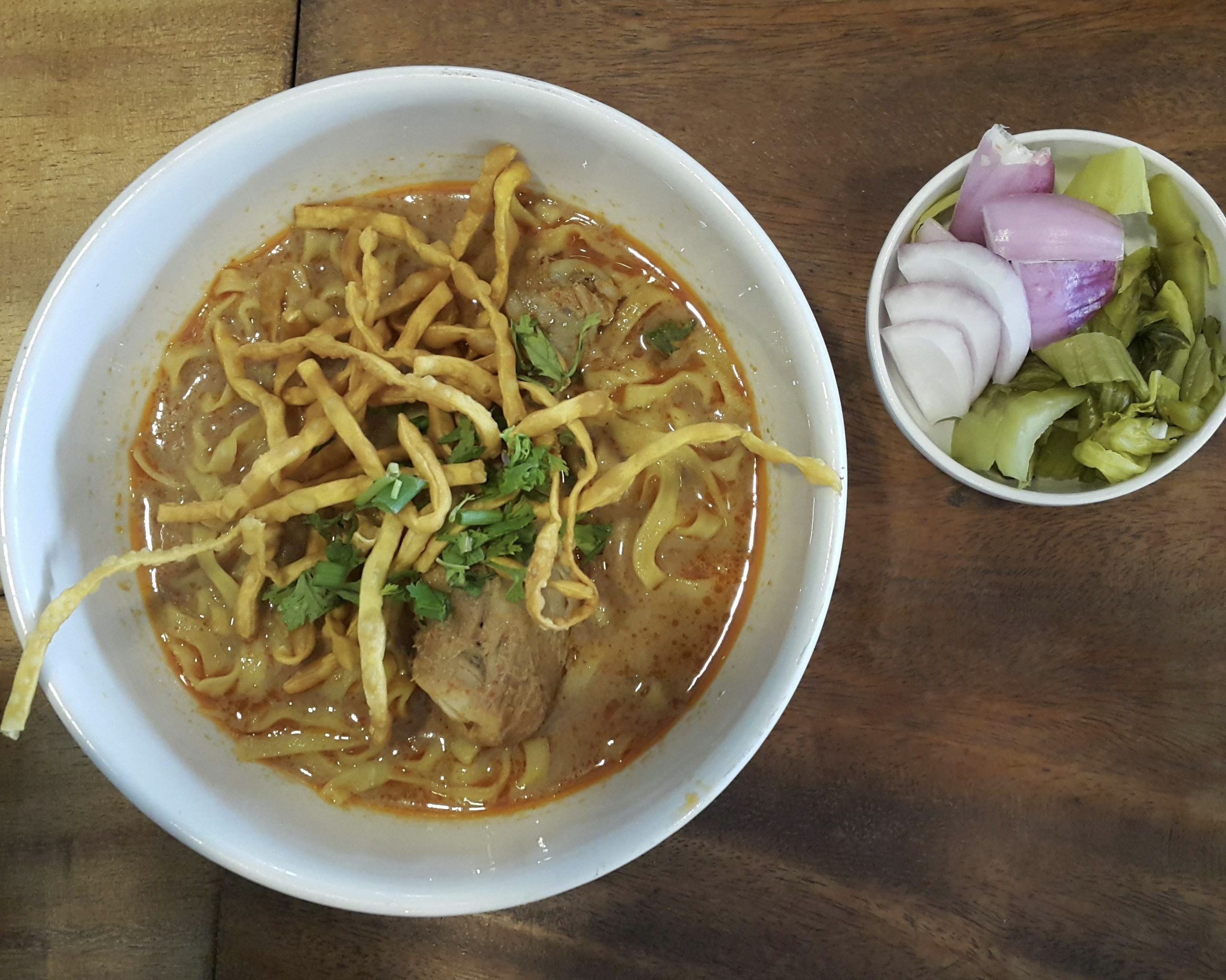
Khao soi is northern Thailand in a bowl: soft egg noodles in a rich, golden coconut curry broth, topped with tender chicken, a tangle of crispy fried noodles, and a bright pile of garnishes, pickled greens, raw shallot, and lime. It is creamy and deeply spiced, with crunch on top and a sharp, tangy edge that keeps it from feeling heavy. Less known abroad than pad thai but adored by those who find it, khao soi is the dish that defines Chiang Mai, and it is well worth making at home.
The Soul of Chiang Mai
Khao soi is the signature dish of northern Thailand, above all Chiang Mai, and its flavor tells the story of the region’s crossroads history. It is believed to have developed through the Chin Haw, Yunnanese Muslim traders who traveled the old caravan routes, and it shares roots with a Burmese coconut noodle dish, ohn no khao swè. That heritage shows in its curry-and-coconut base and its wheat egg noodles, different from the rice noodles of central and southern Thailand. The northern Thai version is usually made with chicken or beef, never pork, reflecting those Muslim origins, and it remains northern comfort food.
The Curry Broth
The heart of khao soi is its broth, a coconut curry richer and more aromatic than most Thai soups. It starts with a curry paste, ideally a proper khao soi paste with its warm spices, or red curry paste boosted with curry powder and turmeric for the golden color and northern character. Fry the paste in the thick cream that rises to the top of the coconut milk until the oil separates and the paste smells fragrant and cooked; this step builds the deep, layered flavor. Then the rest of the coconut milk and stock go in, seasoned with fish sauce, palm sugar, and soy. The result is creamy, spiced, and savory.
Two Kinds of Noodles
The defining trick of khao soi is its double noodles, and it is what makes the bowl special. Fresh egg noodles are used two ways: most are boiled and sit soft in the curry broth, while a handful are deep-fried until crisp and golden and piled on top as a crunchy nest. The contrast of soft noodles below and shattering crisp noodles above is the signature texture of khao soi, so do not skip the fried ones. Fry them first, in hot oil until they puff and crisp, and drain them well. Boil the rest just before serving so they stay springy in the broth.
The Chicken
Chicken is the classic protein, and bone-in thighs or drumsticks are traditional, simmered in the curry broth until the meat is tender and falling from the bone, lending flavor to the broth as they cook. Beef, cut into chunks and simmered longer, is the other common choice. Add the chicken after the paste is fried and cook it through gently in the coconut curry. The bone-in pieces give the richest result, though boneless thighs work for ease. However you go, let the chicken simmer long enough to turn tender and to season the broth, since the meat and the liquid flavor each other as they cook together.
The Garnishes
Khao soi is not complete without its garnishes, which are as important as the broth for balancing the rich coconut curry. The essentials are pickled mustard greens, chopped for a sour, funky bite; raw shallot, sliced for sharpness; a wedge of lime to squeeze in for acidity; and a spoon of chili oil or roasted chili paste for heat. Fresh cilantro is a common addition. These bright, sharp, crunchy toppings cut through the creamy richness so each bite stays lively, which is why they are served alongside for each eater to add. Set them out in little dishes and let people dress their own bowl to taste.
Serving Khao Soi
Assemble each bowl to order: boiled noodles in the base, hot curry and chicken ladled over, then the crispy noodles piled on top and the garnishes added or offered on the side. Serve it immediately, while the crisp noodles are still crunchy and the broth steaming, since the fried noodles soften as they sit. It is a satisfying one-bowl meal, rich enough to stand alone. The curry base can be made ahead and reheats well, so fry the noodle topping and boil the fresh noodles just before serving. A squeeze of lime at the table is the final touch that brings it all together.
Common Questions
What noodles does khao soi use?
Fresh wheat egg noodles, flat and springy, used two ways: boiled soft in the broth and deep-fried crisp for the topping. They differ from the rice noodles of other Thai dishes. Fresh egg noodles from an Asian market are ideal; otherwise use a good dried egg noodle.
Can I use store-bought curry paste?
Yes. A dedicated khao soi paste gives the most authentic flavor, but red curry paste boosted with curry powder and turmeric makes a good version. Fry whichever paste you use in coconut cream until fragrant and the oil separates for the best depth.
Can I make it vegetarian?
Yes. Use tofu or mushrooms in place of chicken, a vegetarian curry paste, and soy sauce instead of fish sauce, with vegetable stock. Keep the coconut broth, double noodles, and garnishes, which carry the character of the dish regardless of the protein.
Khao soi is a coconut curry noodle soup from northern Thailand, believed to have developed through Chin Haw Muslim traders and sharing roots with a Burmese dish, topped with soft and crispy egg noodles.