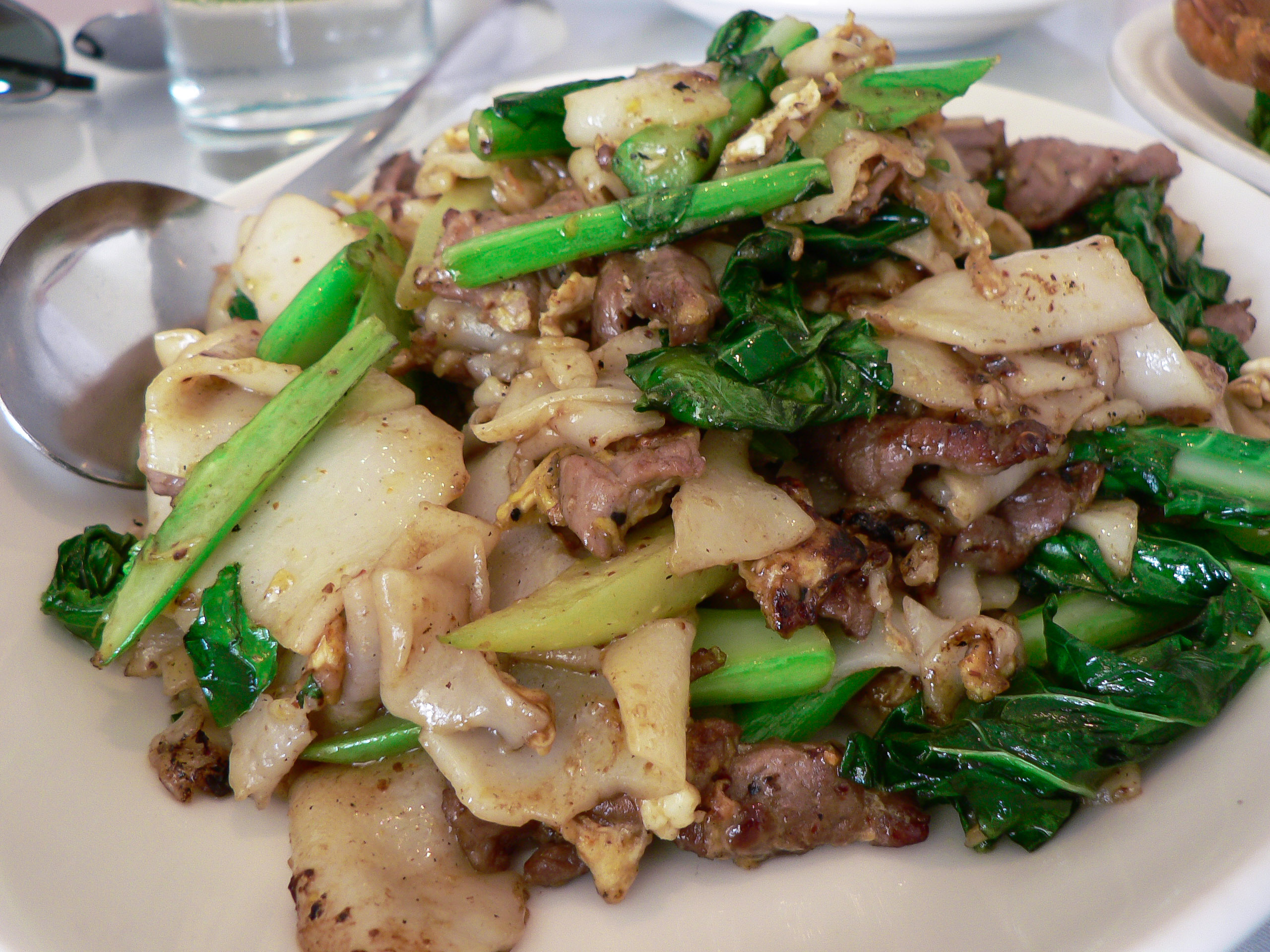
Pad see ew is wide rice noodles thrown into a blazing wok with dark soy sauce, garlic, egg, Chinese broccoli, and a little meat, then left still just long enough to blister and char against the metal. It is savory and smoky rather than sweet and tangy, which makes it the natural counterweight to pad thai on any Thai menu. It takes under ten minutes to cook, and every difficulty in the dish comes down to one thing: heat.
Fried With Soy Sauce
The name translates directly as fried with soy sauce, which is an honest description of what happens in the pan. Its origins trace to China, from where the technique of stir-frying noodles came into Thailand, and it now sits among the most ordered dishes at street stalls and in Thai restaurants worldwide. Its relatives are easy to spot: char kway teow in Malaysia and Singapore and Cantonese chow fun use the same wide rice noodles and similar handling. Its closest Thai cousin is rat na, which uses the same noodles but serves them under a thick gravy rather than dry.
The Noodles
Fresh wide rice noodles, sen yai, are what the dish is built on, sold in soft folded sheets or pre-cut ribbons at Asian markets. They are delicate and tear easily when cold, so let them come to room temperature or warm them briefly in the microwave before separating the layers gently by hand. Refrigerated noodles that crack when unfolded will break into short pieces in the wok. Dried wide rice noodles work when fresh are unavailable, soaked until pliable but not fully soft, though the texture is never quite the same as the fresh ones.
Two Soy Sauces
The sauce is short and depends on using two different soy sauces for two different jobs. Dark soy sauce, thick and molasses-like, provides the deep brown color that makes pad see ew look the way it should, while contributing relatively little salt. Light soy sauce does the seasoning. Oyster sauce adds savory depth and a little body, and a small amount of sugar rounds everything out. Mix the sauce before you start cooking, because once the wok is hot there is no time to measure anything. Using only dark soy makes it bitter and only light soy leaves it pale.
Wok Heat and Char
This dish lives or dies on heat. Get the wok as hot as your stove allows, then cook in a strict order: sear the meat, push it aside and scramble the eggs, add the gai lan stems and then leaves, and finally the noodles and sauce. The critical move comes last: spread the noodles across the surface and leave them completely still for fifteen seconds or so, letting them catch and blacken in spots before tossing. Those charred patches are the smoky flavor Thai cooks call wok hei, and constant stirring prevents them from ever forming.
Chinese Broccoli
Gai lan, Chinese broccoli, is the traditional vegetable and its slight bitterness cuts the sweetness of the dark soy. Separate the thick stems from the leaves and add the stems first, since they need longer, then the leaves at the last moment so they wilt rather than collapse. Slice the stems on a diagonal to expose more surface. If gai lan is unavailable, broccolini is the closest substitute, and regular broccoli florets work at a stretch. The vegetable is a real component here, not a garnish, so use a generous bunch.
Serving Pad See Ew
Plate it immediately, since it loses its texture as it sits, and cook in single portions rather than doubling the recipe, because a loaded wok steams instead of searing. On the table, Thai stalls set out the standard condiment caddy: dried chili flakes, sugar, fish sauce with sliced chilies, and chili vinegar, so each person adjusts their own plate. A dusting of white pepper and a splash of that vinegar are the usual additions. Leftovers reheat poorly in a microwave, so use a hot pan if you have any.
Common Questions
How is pad see ew different from pad thai?
Pad see ew uses wide rice noodles with dark soy sauce, giving a smoky savory dish. Pad thai uses thin rice noodles with tamarind, fish sauce, and palm sugar, giving a sweet and sour one topped with peanuts. They share almost nothing beyond rice noodles.
Why do my noodles break apart?
They were too cold or handled too roughly. Bring fresh noodles to room temperature or warm them briefly, separate the layers gently by hand, and toss with a spatula rather than stirring constantly once they are in the wok.
How do I get the smoky flavor at home?
Maximum heat and minimum stirring. Cook one portion at a time so the wok stays hot, and let the noodles sit undisturbed against the metal long enough to char in places before you toss them. A crowded pan will never produce it.
Pad see ew means fried with soy sauce; the noodle stir-frying technique behind it came to Thailand from China, and the dish is now a staple of Thai street food stalls.