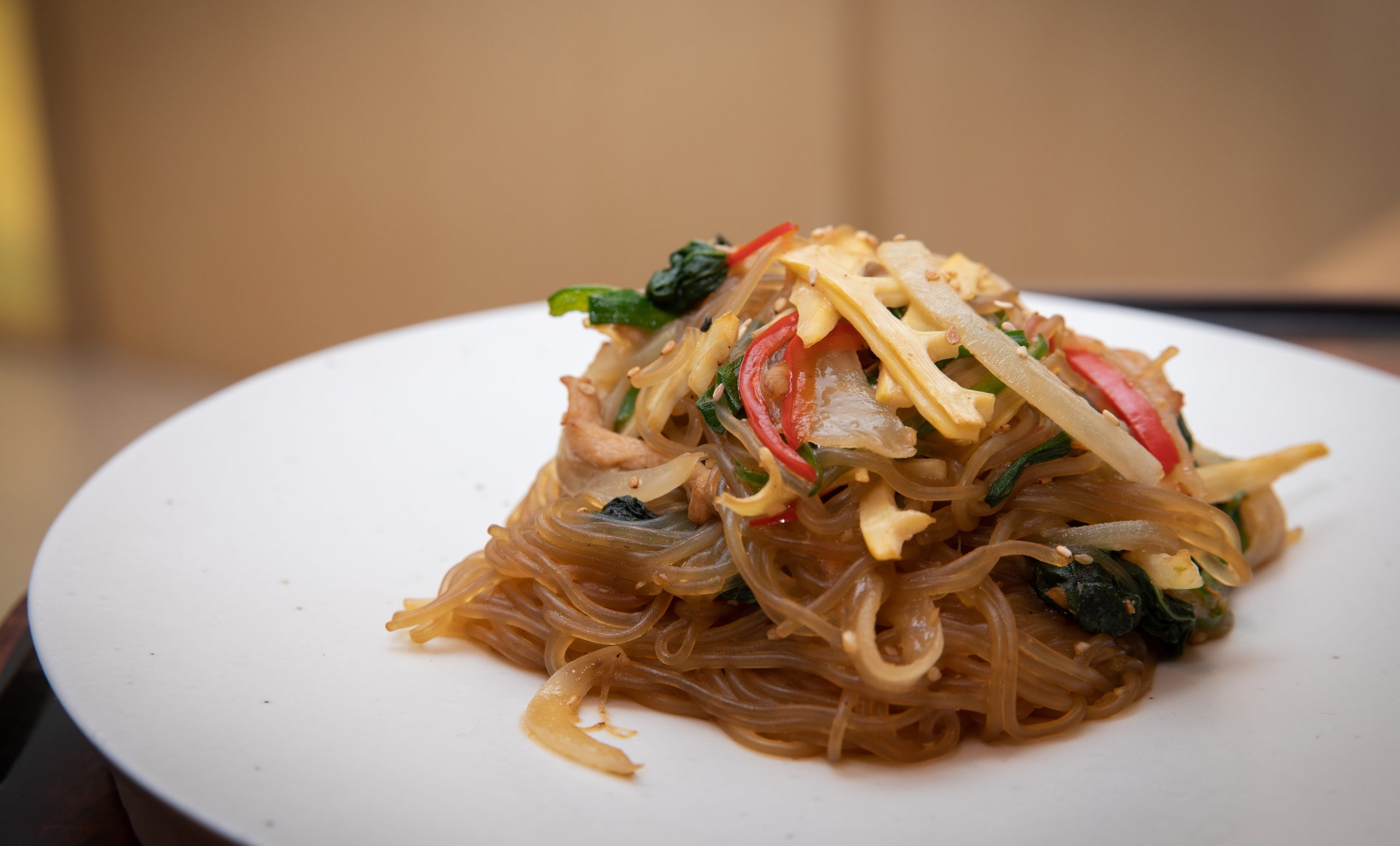
Japchae is a dish of glossy, chewy glass noodles tossed with a rainbow of stir-fried vegetables and tender beef in a sweet-savory soy dressing. It is a fixture at Korean celebrations and parties, loved for its springy noodles and the balance of colors and textures. The name means mixed vegetables, and like many great mixed dishes, its charm is in preparing the components well and bringing them together. It takes a bit of chopping and a few separate pans, but the result is a dish that pleases nearly everyone and holds well at room temperature.
Mixed Vegetables, Royal Roots
Japchae joins jap, meaning mixed, and chae, meaning vegetables, and the name reflects its origins as a vegetable dish. It traces back to the Joseon dynasty as a royal court dish, and interestingly the original version had no noodles at all; the glass noodles that now define it were added later. Today it is a celebration staple, served at birthdays, holidays, and gatherings, and it appears as a banchan side dish and a main alike. Its festive, colorful look and make-ahead friendliness are part of why it shows up whenever Koreans cook for a crowd.
The Glass Noodles
The noodles are the point, and they are specific: dangmyeon, made from sweet potato starch. Translucent and gray when cooked, they have a distinctive springy, chewy, slippery bite that no other noodle matches, and they soak up the sauce while staying resilient. Soak or boil them until they turn chewy and clear, then drain. Cut the cooked noodles into shorter lengths with scissors, which makes them far easier to mix and to eat, since full-length glass noodles tangle into an unmanageable clump. Do not substitute wheat or rice noodles here, because the sweet potato chew is the character of the dish.
Cooking the Vegetables Separately
Like bibimbap, japchae is built from components cooked one at a time. Stir-fry each vegetable separately, carrots, onion, mushrooms, and blanched spinach, seasoning each lightly, then set each aside. This keeps every vegetable at its best: the carrots stay bright, the spinach green, the mushrooms savory, rather than all of them softening into one muddled mix. It also lets each keep its own color, which gives japchae its signature look. Yes, it means several rounds in the pan and more bowls to wash, but the layered result is worth the extra effort and time.
The Beef and Seasoning
Thinly sliced beef, marinated in a little soy, sugar, and garlic and quickly stir-fried, adds savory depth, though japchae is easily made vegetarian by leaving it out. The seasoning that ties everything together is a simple sweet-savory mix of soy sauce, sugar, sesame oil, and garlic. Toss the cooked noodles in this seasoning first so they absorb it and turn glossy and brown, then combine them with the vegetables and beef. Sesame oil is generous here, giving japchae its nutty aroma and sheen. Taste and balance the soy and sugar, since japchae is meant to be gently sweet.
Bringing It Together
The final step is combining everything in a large bowl: the seasoned noodles, all the separately cooked vegetables, and the beef, tossed together thoroughly, ideally by hand so the seasoning coats everything evenly. Finish with a drizzle of sesame oil and a scatter of toasted sesame seeds. Taste one more time and adjust. The finished japchae comes out glossy, colorful, and evenly seasoned, with the chewy noodles carrying the sweet-savory sauce and the vegetables threaded throughout. Mixing well at the end is what turns the separate parts into one harmonious dish rather than noodles with toppings.
Serving and Storing
Japchae is one of the rare noodle dishes that is served warm or at room temperature, which is exactly why it suits parties and potlucks; it does not need to be hot off the stove. Make it ahead and it holds well for hours. It keeps three days refrigerated, though the noodles firm up when cold, so let it come to room temperature or warm it gently before serving again. A quick toss with a few drops of sesame oil revives leftovers. Serve it as a main, a side, or part of a spread of Korean dishes.
Common Questions
What noodles are used in japchae?
Dangmyeon, Korean sweet potato starch glass noodles. They have a springy, chewy texture that defines the dish and turn translucent when cooked. They are sold at Korean and Asian groceries. Other noodles do not give the same result.
Can I make it vegetarian?
Yes. Leave out the beef and add more mushrooms and vegetables. Japchae started as a vegetable dish, so a meatless version is traditional and delicious. The noodles and sweet-savory seasoning carry it.
Why cook the vegetables separately?
Cooking each vegetable on its own keeps its color, texture, and flavor distinct, which gives japchae its layered taste and colorful look. Cooked all together, they turn into a soft, uniform mix and lose that character.
Japchae means mixed vegetables, a Korean dish of chewy sweet potato starch noodles stir-fried with vegetables and meat in a sweet soy seasoning, with roots as a royal court dish.