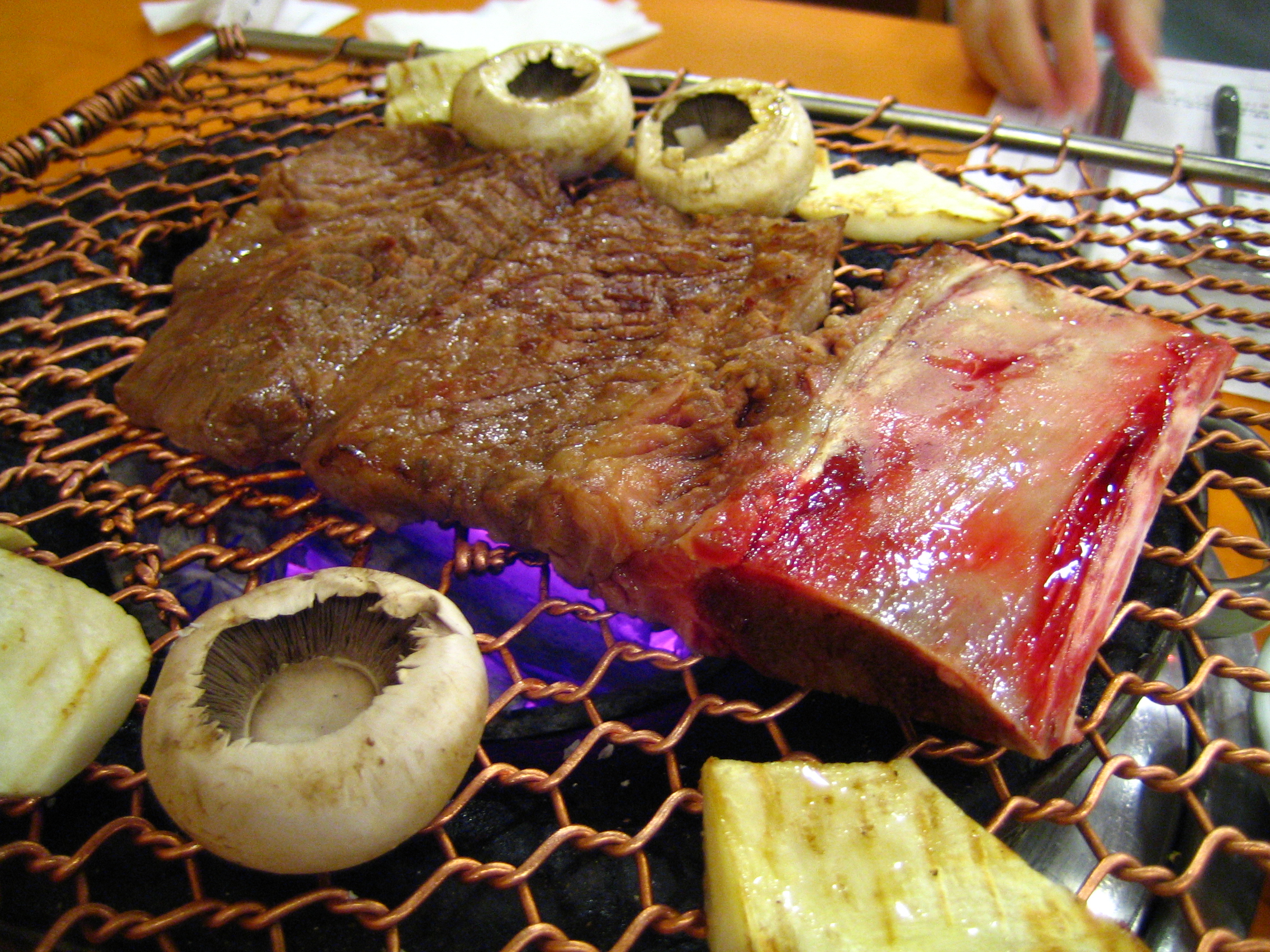
Galbi is the showpiece of the Korean barbecue table: beef short ribs soaked in a glossy sweet-savory marinade of soy, garlic, sesame, and pear, then grilled hot and fast until caramelized at the edges. The meat comes off the grill tender, sweet, smoky, and deeply savory, ready to be wrapped in lettuce with rice and a dab of sauce. It is a dish built for sharing and for cooking together at the table. The marinade does most of the work, so the actual grilling is quick and easy.
The Korean BBQ Centerpiece
Galbi means ribs, and the dish is marinated beef short ribs, a centerpiece of Korean barbecue, where meat is grilled at the table over charcoal or a gas burner. It is a celebratory, social food, cooked and eaten communally. Two cuts are common: thin, cross-cut LA-style ribs (flanken), which cook fast and are easy to handle, and thicker English-cut ribs that are scored open. This recipe uses the thin cross-cut, the most popular for home grilling. Galbi sits alongside dishes like bulgogi on the Korean barbecue spread, distinguished by being made from the rib.
The Cut
The classic home cut for galbi is flanken, or LA galbi: short ribs sliced thin across the bones, so each piece has a few small cross-sections of bone running through it. This thin cut cooks in minutes over high heat and is easy to grill and eat, which is why it is the go-to. Korean and many general groceries sell short ribs cut this way, often labeled for galbi or LA-style. Rinsing the ribs and soaking them briefly in cold water before marinating draws out blood for a cleaner flavor and lighter marinade, a traditional first step worth doing.
The Marinade
The galbi marinade is what makes the dish, and it is a balance of savory, sweet, and aromatic: soy sauce for the salty-savory base, brown sugar for sweetness and caramelization, sesame oil for aroma, and plenty of garlic, ginger, and scallion. The traditional special ingredient is grated Asian pear, which tenderizes the beef with its natural enzymes and adds a clean, fruity sweetness that refined sugar alone does not give. If you cannot find Asian pear, a regular pear, apple, or kiwi works as a tenderizer. Marinate the ribs for at least a few hours, and overnight is better, so the flavor soaks deep.
Grilling Hot and Fast
Galbi wants high heat and a quick cook. The thin cross-cut ribs need only a couple of minutes per side over a hot grill, where the sugars in the marinade caramelize into a savory-sweet char at the edges. Do not slow-cook these; they are thin and cook fast, and overcooking makes them tough and dry. Charcoal gives the best smoky flavor, but a hot grill pan or a tabletop grill work well too. Grill in batches so the pieces sear rather than steam. The goal is caramelized, slightly charred edges with juicy meat inside, done in minutes.
How to Eat Galbi
Galbi is eaten the Korean barbecue way, in ssam, wraps. Take a leaf of lettuce or perilla, add a piece of grilled galbi, a little rice, some ssamjang (the savory dipping paste), and perhaps a slice of raw garlic or a bit of kimchi, then fold it up and eat it in one bite. The fresh, crisp lettuce and pungent ssamjang against the rich, sweet-savory beef are the whole point. You gnaw the meat off the small bones as you go. Serve galbi with rice, an array of banchan side dishes, and plenty of lettuce for wrapping.
Serving and Sides
Galbi is meant to be a spread, so set the table with steamed rice, lettuce and perilla leaves, ssamjang, kimchi, and other banchan like pickled radish and seasoned vegetables. Grilling at the table, on a portable burner or tabletop grill, turns the meal into a shared, interactive event, which is the spirit of Korean barbecue. Marinated galbi also freezes well raw, so a big batch portioned and frozen gives quick meals later, grilling straight from thawed. Cook it fresh and serve it hot off the grill, since galbi is at its best right off the heat.
Common Questions
What cut do I buy?
Thin cross-cut beef short ribs, sold as flanken or LA-style galbi, are easiest for home grilling and cook in minutes. Korean and many general groceries carry them cut this way. Thicker English-cut ribs are also used but need scoring and different handling.
What does the pear do?
Grated Asian pear tenderizes the beef through natural enzymes and adds a clean, fruity sweetness. It is the traditional ingredient in galbi marinade. A regular pear, apple, or kiwi can stand in as a tenderizer if you cannot find Asian pear.
How is galbi different from bulgogi?
Both are marinated grilled beef, but galbi is made from short ribs, often on the bone, while bulgogi is thinly sliced beef like sirloin or ribeye. Galbi is meatier and eaten off the rib; both use similar sweet-savory soy marinades.
Galbi means ribs, a Korean dish of beef short ribs marinated in a soy-based sauce with garlic and sugar and grilled, often at the table, a centerpiece of Korean barbecue.