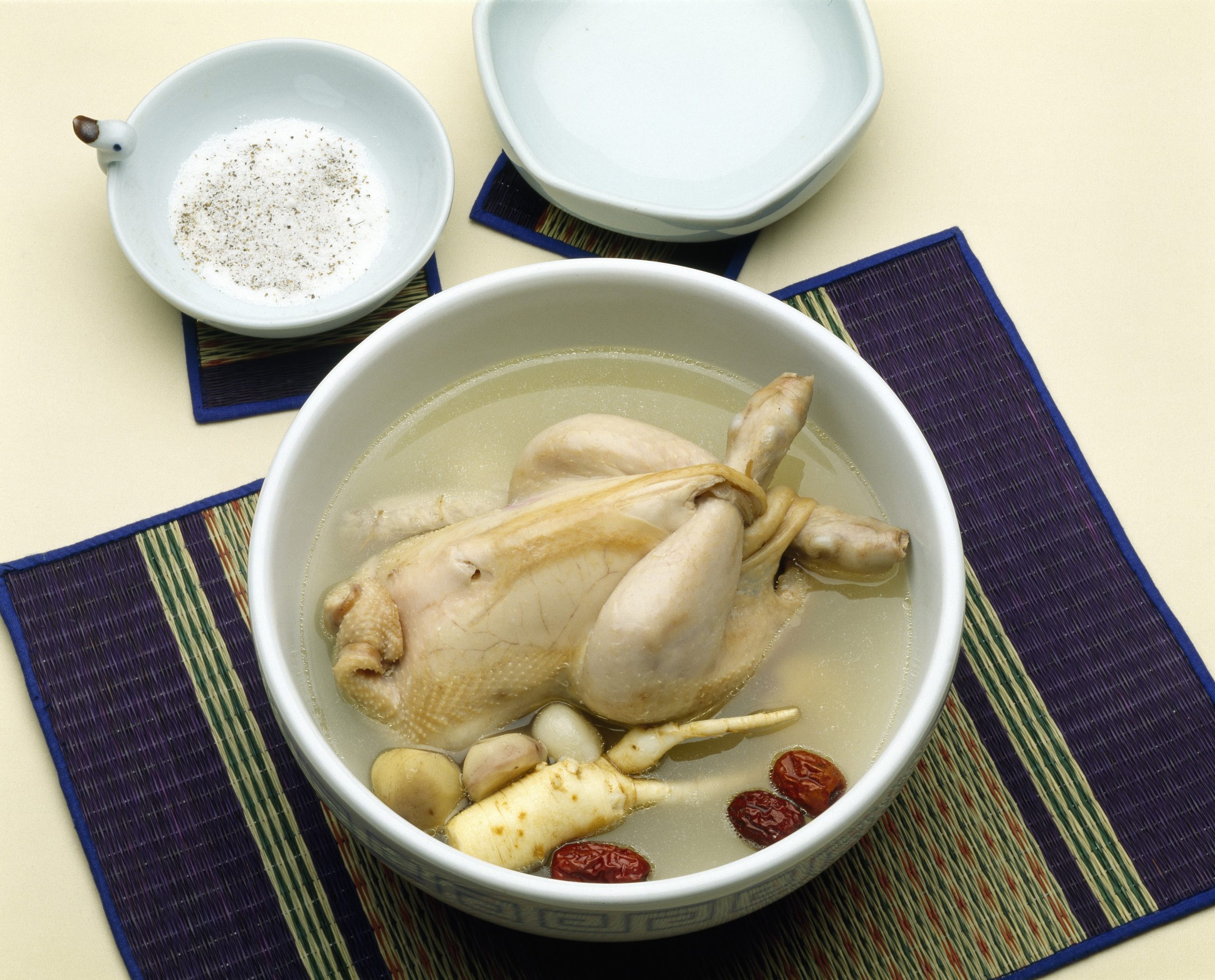
Samgyetang is a whole small chicken, stuffed with sticky rice, ginseng, garlic, chestnuts, and jujubes, simmered until the meat falls off the bone and the broth turns pale and milky. Each person gets their own bird in their own bowl. It is served scalding hot in the middle of the Korean summer, which sounds like a mistake until you understand the reasoning behind it. Gentle, restorative, and barely seasoned, it is the least spicy famous dish in Korean cooking.
Fighting Heat With Heat
The name breaks down neatly: sam for ginseng, gye for chicken, tang for soup. Koreans eat it year round but above all during Sambok, the three hottest days of summer known as Chobok, Jungbok, and Malbok, whose dates are set each year by the lunar calendar. The logic comes from the saying i-yeol-chi-yeol, meaning to beat heat with heat: a scalding, nourishing soup is understood to replace what the body loses in extreme summer weather. On those days, lines form outside samgyetang restaurants across Korea, and eating it is treated as seasonal maintenance rather than indulgence.
One Bird Per Person
Samgyetang uses a whole young chicken small enough for one person, which is why Cornish game hens are the usual choice outside Korea, where small young birds are sold specifically for this dish. A large chicken will not work in the same way, since the point is an individual portion served whole in its own bowl. Clean the bird thoroughly, trim excess fat around the cavity opening, and some cooks blanch it briefly first for a cleaner broth. Look for the smallest birds your butcher carries, roughly a pound to a pound and a half each.
The Stuffing
Inside goes glutinous rice, soaked in advance so it cooks evenly, along with a root of fresh ginseng, several cloves of garlic, peeled chestnuts, and a jujube or two. The rice absorbs the chicken fat and broth as it cooks, turning into a soft, savory porridge that is the best part of the dish for many people. Fill the cavity only about two thirds, because glutinous rice swells substantially and a tightly packed bird will split. Cross the legs and tuck them into each other, or tie them, so the stuffing stays where it belongs.
Ginseng and Jujube
Ginseng gives the soup its name and its character: earthy, slightly bitter, faintly medicinal, and unmistakable. Fresh roots are sold at Korean markets, often vacuum packed, and dried ginseng works when fresh is unavailable. Jujubes, the dried Korean dates, balance that bitterness with a gentle sweetness, and chestnuts add starch and softness. Some cooks add astragalus root, wolfberries, or other herbs from the traditional medicine cabinet. The overall flavor stays subtle, which surprises people expecting the bold, spicy profile that most Korean dishes carry.
The Milky Broth
The pale, slightly opaque broth is the goal, and it comes from a steady gentle simmer rather than a hard boil, which emulsifies fat into the liquid and clouds it unpleasantly. Cover the birds with water, add the remaining garlic and jujubes, and keep the pot barely trembling for well over an hour until the meat pulls away from the bone at a touch. Skim any scum early on. Deliberately, no salt goes into the pot: the broth is served plain, and each person seasons their own bites at the table.
Serving Samgyetang
Serve each bird whole in its own deep bowl with plenty of broth and a scatter of scallions, alongside a small dish of salt and pepper for dipping. Eat by pulling pieces of meat off with chopsticks, dipping them in the salt, and spooning up the rice and broth from inside the bird. Kimchi is served alongside, and in Korea a small cup of ginseng liquor sometimes accompanies it. Leftover broth with the rice makes an excellent porridge the next day, which is a common way to finish what nobody managed to eat. Warn anyone eating it for the first time that the whole bird arrives intact and that the softened rice inside is meant to be eaten with the broth rather than left behind.
Common Questions
Where do I find fresh ginseng?
Korean markets sell it fresh, often vacuum packed, and dried ginseng is more widely available and works well. Some shops sell a packaged samgyetang herb kit containing ginseng, jujubes, and other roots, which is the easiest route for a first attempt.
Can I use a regular chicken?
Cornish game hens are the standard substitute because the dish is built around one small bird per person. A larger chicken can be simmered the same way and shared, but it changes both the presentation and the balance of rice to meat.
Why is the soup not seasoned?
By design. Samgyetang is served plain so each person can dip pieces of meat into salt and pepper at the table and control the seasoning themselves. This keeps the clean, gentle flavor of the ginseng and chicken in the foreground.
Samgyetang joins sam for ginseng, gye for chicken, and tang for soup: a small chicken stuffed with glutinous rice and ginseng, eaten especially during Sambok, the three hottest days of summer.