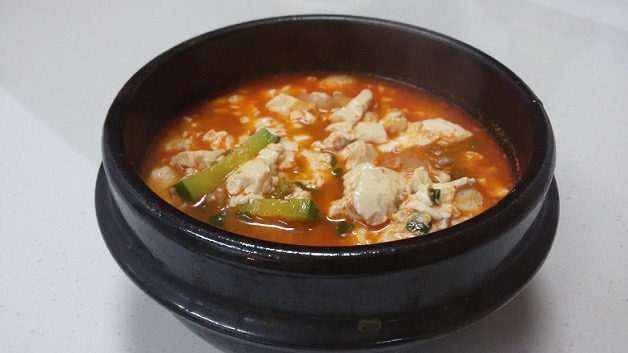
Sundubu jjigae arrives at the table still boiling, spitting quietly in its stone bowl, a fierce red broth holding great soft clouds of tofu. Someone cracks an egg into it and the yolk sets slowly in the heat while everyone eats around it. It takes about twenty minutes to make, costs very little, and delivers more comfort per spoonful than almost anything else in Korean cooking. The tofu is unlike any other kind, and it is the whole reason the dish exists.
The Softest Tofu
Sundubu is extra soft, uncurdled tofu with a very high water content, sold in tubes rather than blocks and softer than anything labeled silken in a Western supermarket. Its origin is traced to the village of Chodang, where a Joseon-era civil official is said to have made tofu using spring water discovered in the yard of his office, setting it with sea water instead of the usual brine. Records from the Joseon archives show an early form of the stew being served, and unpressed tofu spread widely during that dynasty. The spicy red version most people know today became popular in the twentieth century.
The Chili Oil Base
The color and depth of the broth come from blooming gochugaru, Korean chili flakes, in fat before any liquid goes in. Cook thinly sliced pork belly, or mushrooms for a meatless version, in toasted sesame oil until the fat renders, then pull the pan off the heat and stir in the chili flakes and minced garlic. Off the heat matters: gochugaru scorches quickly and turns bitter, and the residual warmth is enough to release its color and aroma into the oil. That red, glossy base is what separates a proper sundubu jjigae from a thin, orange-tinted soup.
The Stock
Korean households build this stew on a stock of dried anchovies and dried kelp, simmered briefly and strained, which gives a clean savory backbone without heaviness. It takes fifteen minutes and can be made in a large batch and refrigerated. Dried shiitake added to the pot gives a vegetarian version real depth. Plain water works in a hurry, seasoned harder with fish sauce or soup soy sauce, but the difference is noticeable. Season the broth with fish sauce for a rounder, more traditional flavor, or soy sauce to keep the stew vegetarian.
Adding the Tofu
Sundubu comes in a tube and slides out in one soft mass. Cut the tube open and spoon it into the boiling broth in large pieces rather than pouring it in and stirring, because the whole point is to keep those silky curds intact so they can be scooped up whole. Break it up only a little with the edge of a spoon, then leave it alone and let it heat through. Stirring vigorously turns the tofu into a cloudy suspension, which tastes fine but loses the texture that gives the dish its name and its appeal.
The Variations
The base is fixed and the additions are open. Haemul sundubu uses seafood such as shrimp, clams, mussels, and squid, and it is the version most people order in Busan and in Korean restaurants abroad. Pork belly with kimchi is the common household version in Seoul, richer and deeper. Mushroom versions are entirely vegetarian, and beef, kimchi, or a combination all appear. Restaurants specializing in sundubu offer a long list of these on a single menu. Whatever goes in, the tofu, chili oil, and stock stay the same, so the method never changes.
Serving Sundubu Jjigae
Serve it in a ttukbaegi, the earthenware bowl that holds heat so well the stew keeps bubbling on the table for several minutes. Crack a raw egg into each bowl on arrival and let it poach in the heat, breaking the yolk into the broth as you eat. A bowl of steamed short-grain rice and several banchan are essential, since the stew is intensely seasoned and meant to be eaten with rice rather than alone. Spoon rice into the broth or dip it in; both are normal. This is a dish that stops being good the moment it cools, so eat it hot.
Common Questions
Can I use regular silken tofu?
It is the closest substitute, though not identical. Korean sundubu is softer and wetter than boxed silken tofu, which comes in graded firmness. If you can find the tube at a Korean market, use it, since the texture is the reason for the dish.
How spicy is it?
Adjustable. Gochugaru carries moderate heat with a fruity sweetness rather than sharp burn, so start with a smaller amount and add more. Restaurants in Korea usually offer several heat levels for exactly this reason. A little goes further once bloomed in oil.
Do I need a stone bowl?
No, a small heavy pot works. The ttukbaegi simply retains heat so the stew keeps bubbling at the table, which cooks the egg and keeps every spoonful hot. If you use a regular pot, serve immediately and expect it to cool faster.
Sundubu jjigae is a Korean stew built on sundubu, extra soft uncurdled tofu; the tofu is traced to the village of Chodang, where a Joseon official made it using spring water and sea water.