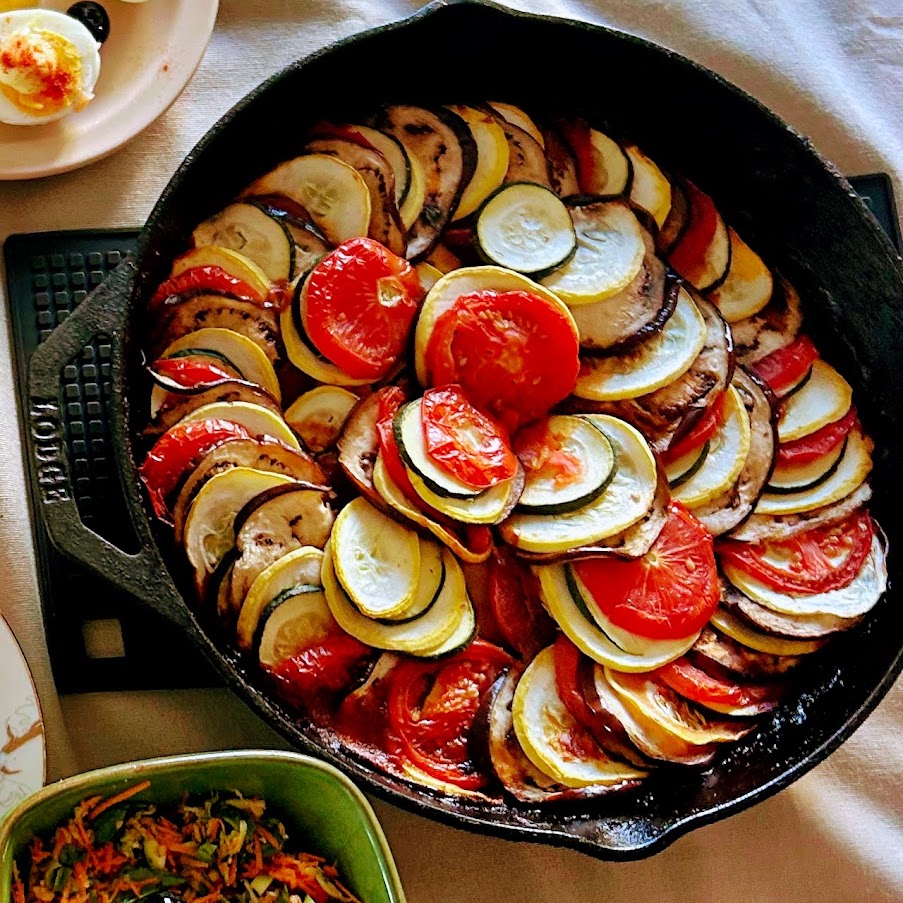
Ratatouille is what the south of France does with a summer garden running over: eggplant, zucchini, peppers, and ripe tomatoes cooked down in good olive oil with garlic and herbs into a soft, fragrant stew. It is humble food, vegan by nature, and endlessly useful, good hot as a main, warm as a side, or cold the next day scooped onto bread. Made with care, giving each vegetable its due, it tastes far richer than a pile of stewed produce has any right to.
A Taste of Provence
Ratatouille belongs to Provence and specifically to the region around Nice, where it grew as a peasant dish to use up the summer vegetables that grow abundantly in the Mediterranean sun. The name comes from the French touiller, to stir up. It is honest country cooking, never fussy, though a famous stylized version presented the vegetables in thin overlapping rounds, a technique properly called tian or confit byaldi rather than traditional ratatouille. This recipe follows the rustic original, where the vegetables are cut into chunks and cooked into a loose, savory stew.
The Eggplant Question
Eggplant is the vegetable most apt to sabotage a ratatouille, because it drinks oil like a sponge and turns bitter and greasy if handled carelessly. The fix is salting: toss the cubes with salt and let them sit for twenty minutes, which draws out moisture and some bitterness, then pat them dry before cooking. Salted and dried, eggplant browns and stays firm instead of collapsing into oily mush. This one step, skipped by many, separates a clean ratatouille from a heavy one, and it takes only the time it takes to cut the other vegetables.
Cook Them Separately
The single choice that most improves ratatouille is cooking each vegetable on its own before combining them. Eggplant, zucchini, and peppers each brown properly and develop their own character when they have the pan to themselves, whereas everything dumped in together simply stews into a gray, watery uniform. Yes, it means more time and a few more dishes. It also means a ratatouille where you can taste the individual vegetables inside the harmony, which is the whole reward. Set each one aside as it finishes and reunite them in the tomato base at the end.
The Tomato Base
Once the vegetables are browned and resting, build a quick sauce in the same pot: softened onion and garlic, a spoon of tomato paste for depth, herbes de Provence, and chopped fresh tomatoes or good canned ones. Let it cook down into a thick, savory base before the vegetables return. Fresh summer tomatoes are ideal, but a can of quality plum tomatoes makes an excellent off-season version, so ratatouille is not strictly a summer dish. Fold everything together and let it simmer gently so the flavors marry without the vegetables turning to paste.
Herbs and Finishing
Herbes de Provence, the dried blend of thyme, rosemary, oregano, and often savory and lavender, gives ratatouille its southern French accent and goes in during cooking. Fresh basil, torn and stirred in off the heat at the very end, adds a bright top note that dried herbs cannot; adding it early would only cook the life out of it. Taste for salt and a generous grind of pepper. A final thread of good olive oil over the top, the way it is served across Provence, is the right last touch.
How to Serve It
Ratatouille is remarkably flexible. Serve it hot as a light vegetarian main with crusty bread or rice, or alongside roasted chicken, grilled fish, or a fried egg. It is arguably even better the next day, once the flavors have deepened, and it is traditionally as welcome at room temperature or cold as it is hot. Spoon it onto toasted baguette, fold it into an omelet, or toss it with pasta. It keeps four days refrigerated and freezes well, making it one of the most practical things you can cook from a summer market haul.
Common Questions
Do I really have to cook each vegetable separately?
For the best result, yes. It is the main thing separating a good ratatouille from a watery one. If you are short on time, at least cook the eggplant on its own, since it is the vegetable that suffers most from being crowded and stewed.
Can I use canned tomatoes?
Yes. Good canned plum tomatoes make a fine base out of season and are often better than pale winter fresh ones. Fresh, ripe summer tomatoes are ideal when you can get them, but the dish works year-round.
Is ratatouille served hot or cold?
Both are traditional. It is good hot as a main or side, and equally at home warm or cold the next day on bread or with eggs. The flavors deepen overnight, so leftovers are a feature, not a compromise.
Ratatouille comes from Provence and the area around Nice, a rustic summer stew that turns a garden glut of eggplant, squash, peppers, and tomatoes into something greater than its parts.