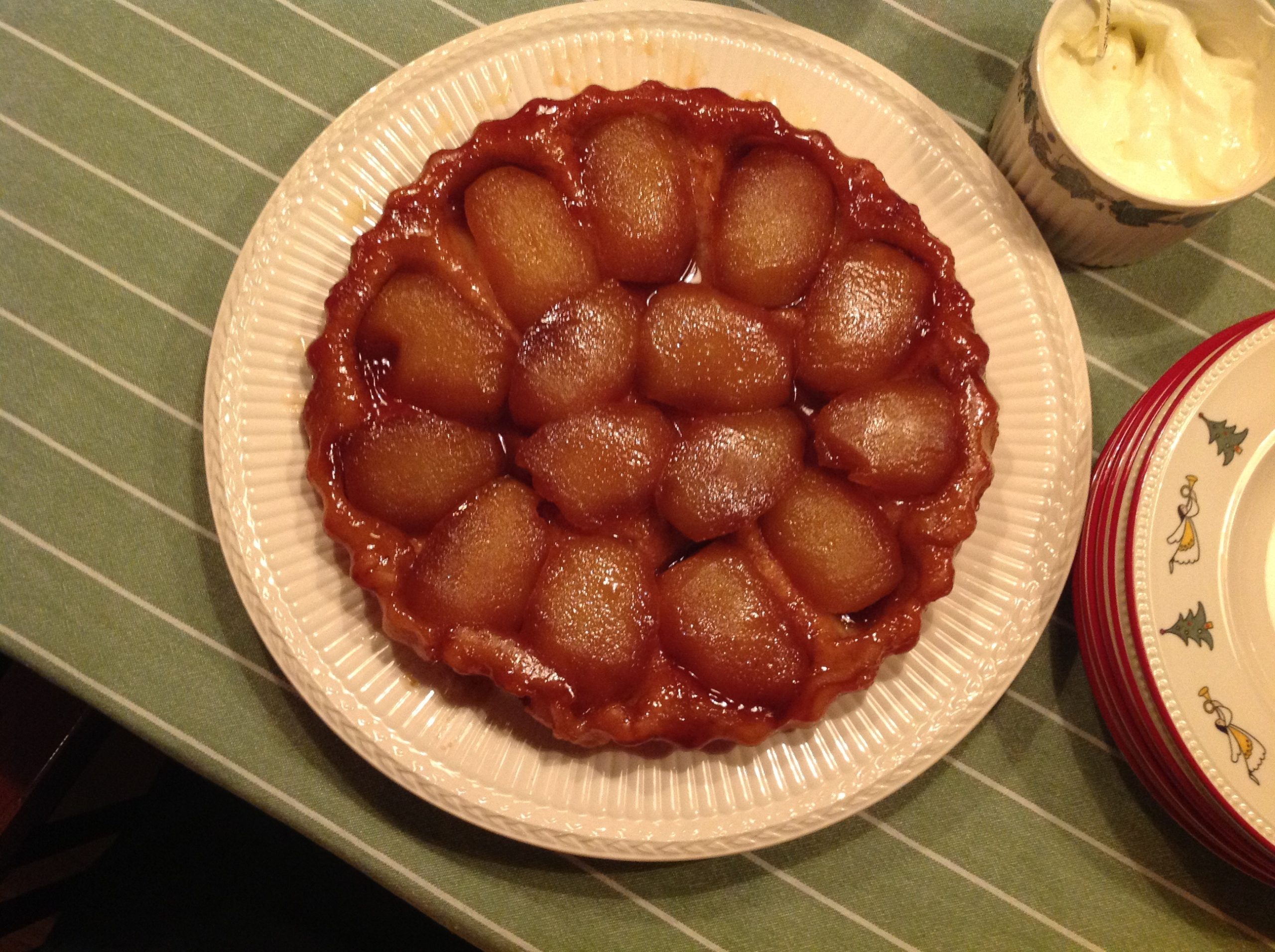
Tarte Tatin is an upside-down apple tart, and its magic is in the reveal: apples cooked in caramel at the bottom of a pan, baked under a lid of pastry, then flipped onto a plate so the glossy, amber fruit sits on top. It looks like a bakery centerpiece and comes from a kitchen accident. The apples turn tender and deeply caramelized, the pastry stays crisp underneath, and served warm with cold cream, it is one of the most satisfying desserts in the French canon.
A Happy Accident
The story, told across France, credits the Tatin sisters, who ran a hotel in the Loire Valley town of Lamotte-Beuvron around the turn of the twentieth century. As the tale goes, one of them was making an apple tart, left the apples cooking too long in butter and sugar, and tried to rescue it by laying the pastry on top and finishing it in the oven, then flipping it out. The upside-down result was a hit, and tarte Tatin was born. Accident or not, the method it describes is exactly how the dessert still works.
The Right Apples
Apple choice makes or breaks a Tatin. You need firm varieties that hold their shape through caramelizing and baking, because soft apples dissolve into applesauce under the heat and lose the distinct, glossy wedges the tart is known for. Firm, slightly tart baking apples work best; a mix can add complexity. Peel, halve, and core them, and a little lemon juice keeps them from browning while you work. Packing them in tightly matters too, since they shrink as they cook, and a loosely filled pan yields a sparse, gappy tart after the flip.
The Caramel
Everything starts with caramel made right in an oven-safe skillet. Melt sugar over medium heat until it turns a clear amber, watching closely because caramel burns in seconds, then whisk in butter and a pinch of salt to make it rich and smooth. The apple halves go in cut side up and cook in the caramel for a while to soften and take on color before the pastry lid arrives. This is where the deep flavor comes from, so let the caramel get properly amber; too pale and the tart is merely sweet, too dark and it turns bitter.
The Pastry Lid
A round of pastry goes over the apples, and puff pastry is the popular modern choice for its dramatic rise and crisp shatter, though a shortcrust is also traditional. Lay it over the fruit and tuck the edges down inside the pan, around the apples, so that when the tart is flipped those edges form a neat rim holding everything in. Bake in a hot oven until the pastry is puffed and deep golden. Because it bakes on top and becomes the bottom, it stays crisp against the caramel rather than going soggy, which is the clever engineering of the whole dish.
The Flip
The inversion is the moment of truth, and it demands both care and confidence. Let the baked tart rest a few minutes so the caramel settles slightly, but do not let it cool and set, or the apples will stick. Run a knife around the edge, place a serving plate larger than the pan over the top, and flip the whole thing over in one decisive motion, keeping hands and arms clear of the hot caramel that can drip. Lift the pan away and the caramelized apples sit glistening on top. If a piece sticks, just lift it back into place; no one will know.
Serving It Warm
Tarte Tatin is at its best warm, not long out of the oven, when the caramel is glossy and the pastry still crisp. The classic accompaniment is cold: a scoop of vanilla ice cream, a spoon of creme fraiche, or lightly whipped cream, whose coolness plays against the warm, sweet apples. It can be made a few hours ahead and gently rewarmed, which loosens any set caramel and re-crisps the pastry. Leftovers keep a day or two, though the pastry softens; a short reheat in the oven brings back much of the crispness.
Common Questions
What apples work best?
Firm, slightly tart baking apples that hold their shape. Soft varieties turn to sauce under the caramel and heat. A mix of firm apples can add flavor, but avoid anything that goes mushy when cooked.
Puff pastry or shortcrust?
Both are traditional. Puff pastry gives a light, dramatic, crisp top and is the common modern choice. Shortcrust makes a sturdier, more biscuit-like base. Use whichever you prefer or have on hand.
How do I flip it safely?
Rest it a few minutes, run a knife around the edge, cover with a plate wider than the pan, and invert in one confident motion with your hands protected. Do it while still warm so the caramel has not set and the apples release cleanly.
Tarte Tatin is said to have been created by accident by the Tatin sisters at their hotel in the Loire Valley, an upside-down apple tart that became a celebrated French dessert.