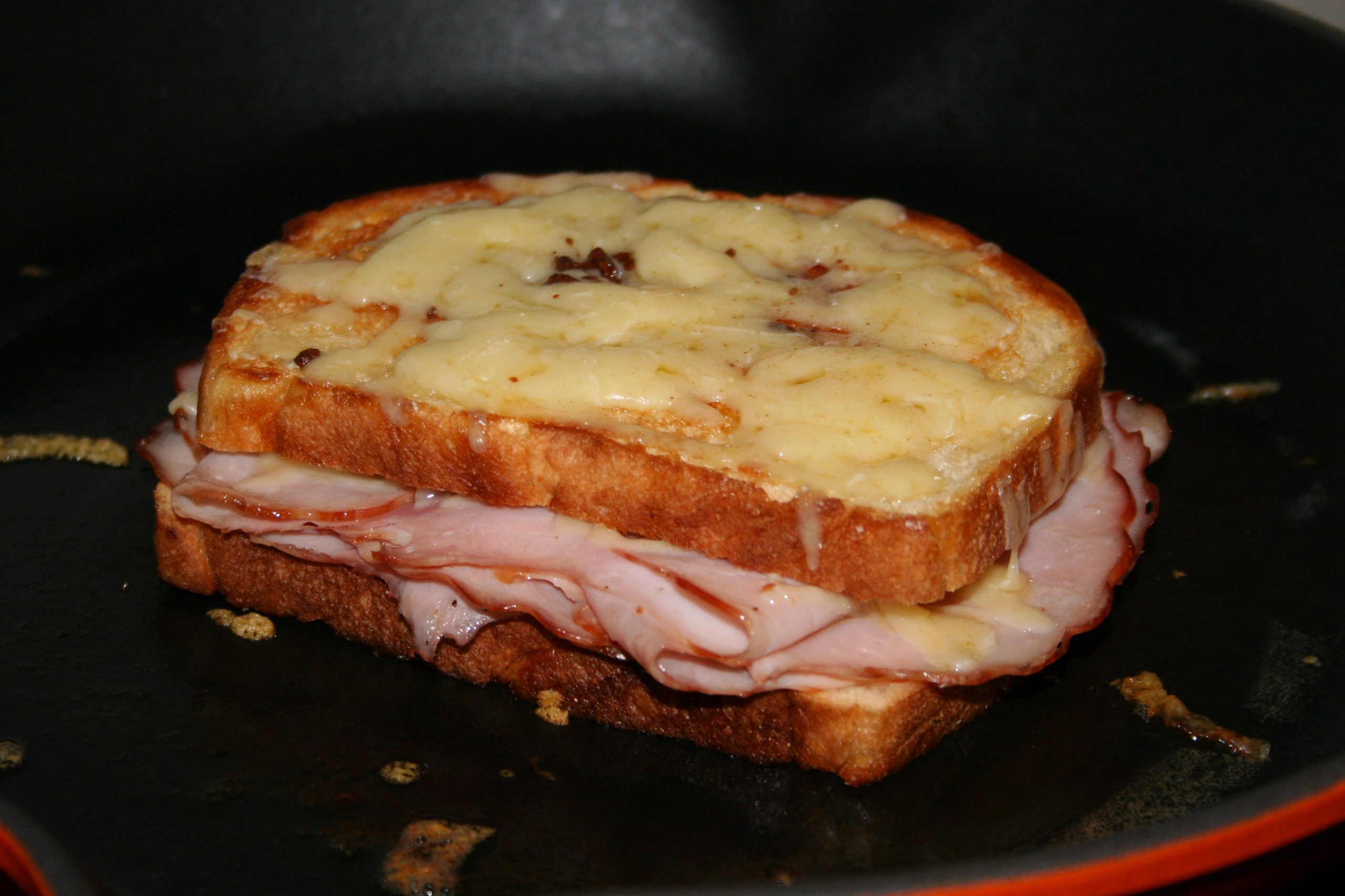
A croque monsieur is what happens when the French decide a ham and cheese sandwich deserves better. Good bread, good ham, and Gruyere are bound and blanketed with bechamel, then baked and broiled until the top turns golden and bubbling. It is a cafe classic, rich and satisfying, and it sits several levels above a simple grilled cheese thanks to that creamy sauce. Made at home it takes about half an hour, most of it hands-off in the oven, and it turns lunch into something worth sitting down for.
A Parisian Cafe Fixture
The croque monsieur has been on Parisian cafe menus since the early 1900s, its name coming from croquer, to crunch, and monsieur, a bit of café whimsy. It was designed as a quick, hot, satisfying snack to serve alongside a coffee or a glass of wine, and it never left. Its close relative, the croque madame, adds a fried egg on top, said to resemble a woman’s hat. Both remain everyday classics in France, the kind of thing ordered without thought and enjoyed without fail.
Bechamel Makes the Difference
The single thing that separates a croque monsieur from a grilled ham and cheese is bechamel, the classic white sauce of butter, flour, and milk. It goes both inside the sandwich and over the top, adding a creamy richness and a surface that browns beautifully under heat. Making it is quick: cook butter and flour into a roux, whisk in warm milk until it thickens, then season with mustard, nutmeg, and some of the Gruyere. Skip the bechamel and you have made a decent sandwich, but you have not made a croque monsieur.
The Bread, Ham, and Cheese
The components are simple, so their quality shows. Use a good white sandwich bread, sturdy enough to hold the sauce without going limp; a pain de mie or a firm bakery loaf is ideal. Use a proper cooked ham with real flavor, sliced not too thick. And the cheese is Gruyere, whose nutty taste and excellent melt define the sandwich; Emmental or Comte can stand in. Lightly toasting the bread first helps it stay crisp under the bechamel rather than turning soggy from the moisture of the sauce.
Building and Baking
Assembly is straightforward: a thin layer of bechamel on the bottom slices, then ham and grated Gruyere, then the top slices. Spread the remaining bechamel generously over the tops and scatter the last of the cheese on top of that, so the whole surface can brown. Bake at a hot 400 F until heated through and beginning to color, then finish under the broiler for the last couple of minutes to get the top properly golden and bubbling. Watch the broiler closely, since the line between browned and burnt is only a minute wide.
Croque Madame and Variations
Crown the finished sandwich with a fried egg, its yolk left runny, and it becomes a croque madame, the egg replacing the plain cheese top with something even richer. Beyond that, the croque takes variation well: some cooks add a slice of tomato, a different cheese, or a smear of extra mustard. The frame stays the same, bread, ham, cheese, and bechamel baked golden, and the additions are personal. Start with the classic monsieur to learn the balance, then decide whether the egg of the madame is worth it, which it usually is.
Serving It
A croque monsieur is rich, so it wants a sharp green salad alongside, dressed with a mustardy vinaigrette that cuts through the cheese and cream. That pairing, the hot sandwich and the crisp acidic salad, is the standard cafe plate and the way to eat it at home. It is best straight from the oven, when the cheese still stretches and the top is at its crispest. It does not keep or reheat especially well, so make it to order; happily, it is quick enough to do exactly that.
Making It for a Crowd
The croque monsieur scales up neatly for a brunch. Make a larger batch of bechamel, assemble the sandwiches on a sheet pan, and bake them together, finishing the whole tray under the broiler at once. The bechamel can be made a day ahead and rewarmed with a splash of milk to loosen it. Assembled sandwiches can wait a short while before baking, though they are best not left long, since the bread softens under the sauce. For a party plate, cut each baked croque into halves or quarters and serve with a bowl of dressed greens for people to help themselves.
Common Questions
What is the difference between croque monsieur and croque madame?
A croque madame is a croque monsieur with a fried egg on top. Everything else is the same. The egg adds richness and the runny yolk becomes part of the sauce as you eat it.
Can I make it without bechamel?
You can, but then it is essentially a baked ham and cheese, not a true croque monsieur. The bechamel is quick to make and is the defining element, so it is worth the few extra minutes.
What cheese should I use?
Gruyere is the classic, for its flavor and melt. Emmental and Comte are good substitutes. Grate it yourself rather than buying pre-shredded, which melts less smoothly because of its anti-caking coating.
The croque monsieur has been served in Parisian cafes since the early twentieth century, a hot ham and cheese sandwich lifted well above the ordinary by a blanket of bechamel and Gruyere.