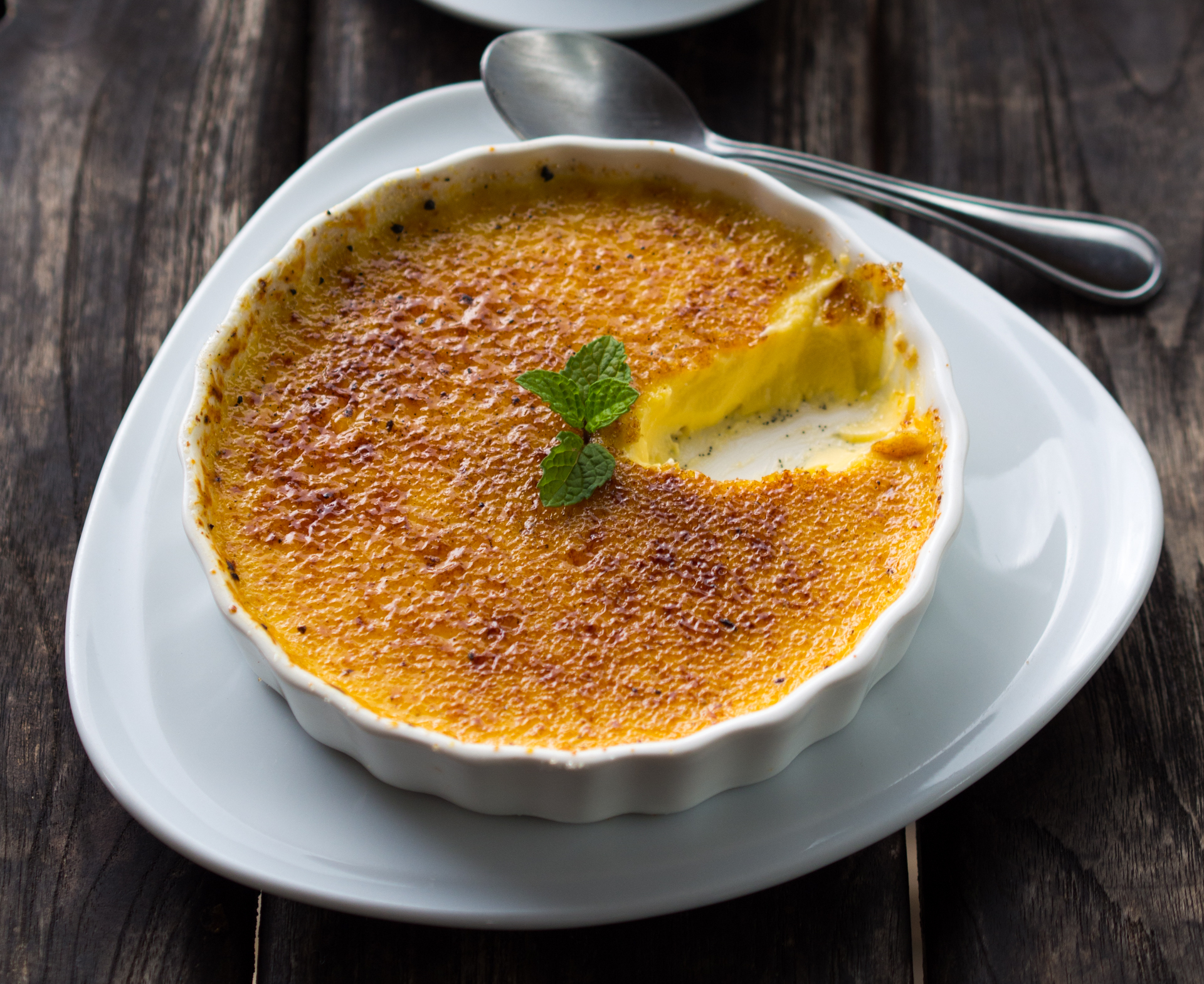
Creme brulee is theater you can eat. Under a thin, glassy sheet of caramelized sugar hides a cool, rich vanilla custard, and the first tap of a spoon through that crackling top is half the reason the dessert exists. It looks like a restaurant showpiece and behaves like one on the plate, but it is built from five simple ingredients and a couple of careful techniques. Make the custards a day ahead, torch the tops at the last minute, and you have an impressive dessert with almost no last-minute work.
Burnt Cream, Refined
The name means burnt cream, and versions of a custard topped with hard caramel appear in French, English, and Spanish cooking going back centuries; the French and the Catalans both claim close relatives. Whatever its exact lineage, creme brulee earned its place as one of the classic desserts of the French repertoire, the elegant standard-bearer of the baked custard. Its appeal is the contrast: the crack and bitterness of burnt sugar against the smooth, sweet, cool custard below. Everything about the recipe serves that single, satisfying contrast.
Cream and Vanilla
The custard is mostly cream and egg yolks, which give it the dense, luxurious texture that separates creme brulee from a lighter custard. Heavy cream is the base, and vanilla is the flavor. A real vanilla bean, split and scraped so its seeds and pod steep in the warm cream, gives the fullest, most fragrant result and those pretty black specks; good vanilla extract is a fine substitute added off the heat. Warming the cream and letting the vanilla infuse for a few minutes before mixing draws out its flavor into every spoonful.
Tempering the Yolks
The one technique that trips people up is combining hot cream with egg yolks without scrambling them. The answer is tempering: whisk the yolks with sugar, then pour the warm cream into them slowly, in a thin stream, whisking constantly so the eggs warm gradually instead of cooking on contact. Dump the hot cream in all at once and you get sweet scrambled eggs. After tempering, strain the custard to catch any bits of cooked egg or vanilla pod, which guarantees the silky texture. Whisk gently throughout to avoid beating in air, which leaves bubbles in the baked custard.
The Water Bath
Creme brulee bakes gently in a water bath, a bain-marie, and this is not a step to skip. Setting the ramekins in a dish of hot water that reaches halfway up their sides insulates the custards from the oven’s direct heat, so they cook slowly and evenly into a silky set rather than curdling at the edges. Bake until the custards are just set but still wobble slightly in the center, since they firm as they chill. An overbaked custard turns grainy and weeps; pull them while they still jiggle and let the fridge finish the job.
The Caramel Crust
The signature top comes last, after the custards are fully chilled. Sprinkle an even, thin layer of sugar over each and caramelize it until it melts, bubbles, and turns amber. A kitchen torch is the ideal tool, giving control and that classic even crust; a very hot broiler works too, watched closely, though it warms the custard more. Do this just before serving so the crust is still hard and crackling when it reaches the table, since caramel softens within an hour as it absorbs moisture from the custard. The fresh, shattering top is the whole point.
Make Ahead and Serve
Creme brulee is a gift to the host because the custards must chill for hours anyway, so they are made entirely ahead. Bake them a day early, keep them covered in the fridge, and caramelize the tops only at the last moment. That splits the work from the meal completely. Serve them cold, in their ramekins, with the warm caramel crust just set. A few berries alongside cut the richness if you like. Few desserts deliver this much drama with this little last-minute effort, which is exactly why it endures on menus and at dinner parties.
Common Questions
Do I need a kitchen torch?
A torch gives the best, most even crust with the least effect on the custard, but a very hot broiler also works. Watch it constantly and expect the custard to warm a little; chill the ramekins well first to offset that.
Why did my custard curdle?
It baked too hot or too long, or the yolks scrambled during mixing. Use a water bath, pull the custards while they still wobble, and temper the hot cream into the yolks slowly to prevent both problems.
Can I make it ahead?
Yes, and you should. Bake and chill the custards up to two days ahead. Caramelize the sugar tops only just before serving, since the crust softens within an hour of torching.
Creme brulee, burnt cream, is a baked custard finished with a hard caramel crust, a dessert with a long history in French cooking and a rightful place among its most loved sweets.