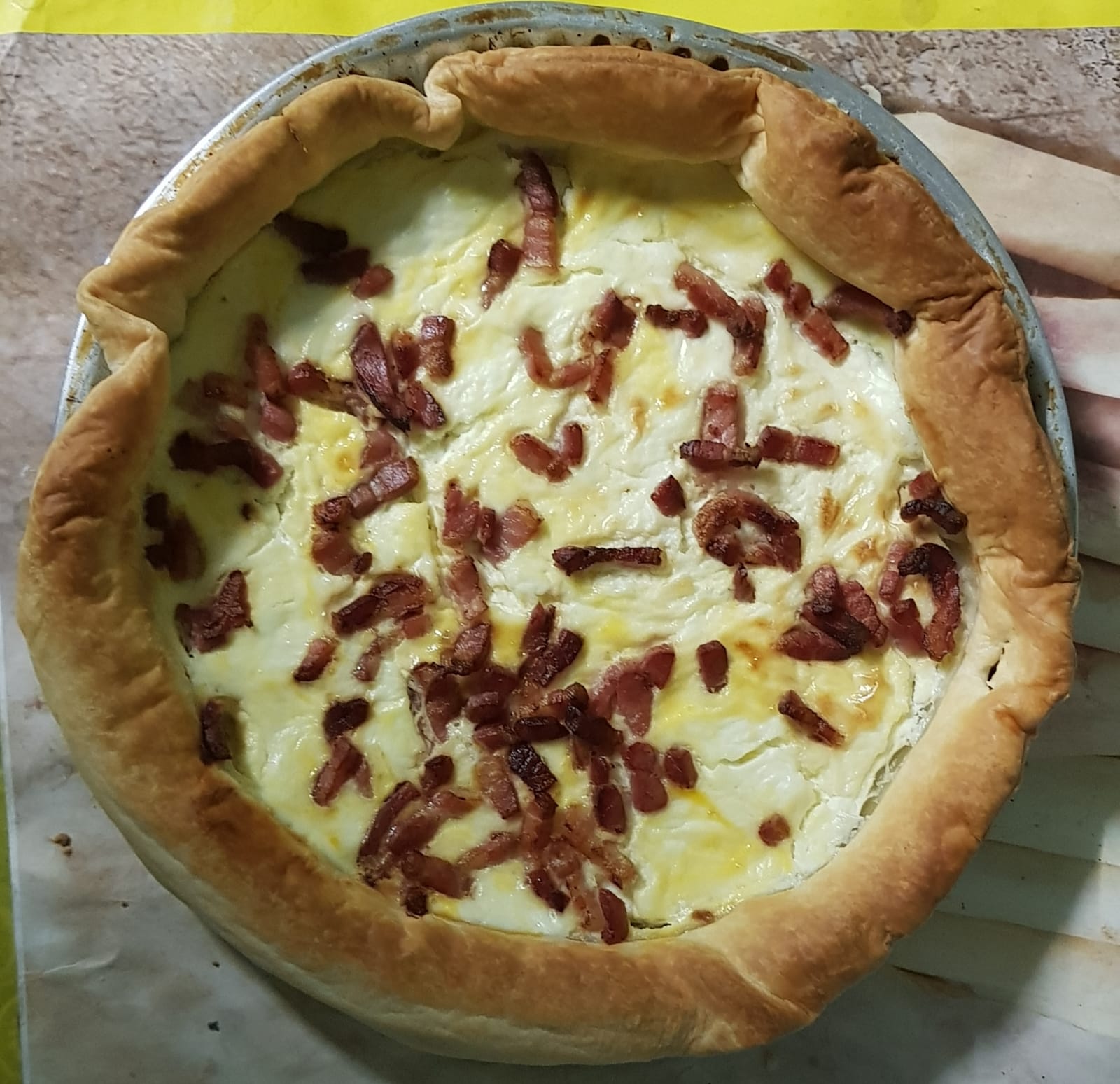
Quiche Lorraine is the savory tart that made quiche famous: a crisp, buttery pastry shell holding a silky custard of eggs and cream shot through with smoky bacon. It is rich, elegant, and deceptively simple, the kind of thing that works for brunch, lunch, a light supper, or a picnic. Served warm or at room temperature with a sharp green salad, it is one of the most useful dishes in the French repertoire, and getting it right comes down to a few small techniques rather than any real difficulty.
The Original Quiche
Quiche Lorraine comes from Lorraine, in northeastern France near the German border, and it is the ancestor of the entire quiche family. The classic version is austere by modern standards: just eggs, cream, and smoked bacon in a pastry shell, with no cheese at all. Over time cooks added Gruyere, onions, and countless other fillings, and the word quiche came to mean any savory custard tart. Purists still insist true Lorraine contains no cheese, though a little Gruyere has become so common it is now the accepted variation rather than a scandal.
The Crust
The shell is pate brisee, a short, buttery pastry that bakes crisp and holds the custard. You can make it from flour, butter, and a little water, or use a good store-bought crust to save time; a solid all-butter one gives a genuinely good quiche. Whichever you choose, keep the dough cold, since warm butter makes a tough, greasy crust. Fit it into the pan and chill it again before baking. Cold pastry going into a hot oven is the reliable path to a flaky, well-set shell.
Blind-Baking Matters
The most common quiche failure is a soggy bottom, and blind-baking prevents it. Line the chilled shell with parchment, fill it with pie weights or dried beans, and bake it until the sides are set, then remove the weights and bake a few minutes more to dry the base. Only then does the wet custard go in. Skipping this step leaves the raw dough unable to crisp before the custard soaks it, and no amount of oven time afterward will save a bottom crust that started underneath a pool of cream. Take the extra fifteen minutes.
The Custard
The filling is a simple custard, and its ratio is what makes it silky. Eggs bound with a generous amount of cream, plus a little milk to lighten it, seasoned with salt, pepper, and the traditional pinch of nutmeg. Whisk it smooth but gently, without beating in air, which would puff and then deflate the quiche. Too many eggs and it turns rubbery; too much dairy and it will not set. This balance of roughly four eggs to a cup and a half of dairy gives the tender, just-set texture that defines a proper quiche.
Baking to the Right Set
Scatter the cooked bacon over the baked shell, pour in the custard almost to the rim, and bake at a moderate 350 F. The goal is a custard that is just set, with a slight wobble at the center when you nudge the pan; it looks slightly underdone and that is correct. Carryover heat finishes setting it as it cools, giving a silky, tender slice rather than a firm, curdled one. An overbaked quiche weeps and turns spongy. Pull it early, let it rest fifteen minutes, and it firms into exactly the right texture for clean slices.
Serving and Keeping
Quiche is best warm or at room temperature, not piping hot, so let it rest before cutting. A crisp salad dressed with a sharp vinaigrette is the classic partner, its acidity cutting the richness of the custard. It travels well, which is why it is a picnic and buffet staple, and it keeps three days refrigerated, reheating gently in a low oven that re-crisps the crust far better than a microwave. It also freezes well cooked, making a homemade quiche a genuinely convenient thing to have on hand.
Beyond the Lorraine
Once the technique is in hand, quiche becomes a template for almost anything. The custard and blind-baked shell stay the same; the filling changes. Sauteed leeks and Gruyere make a quiche that rivals the original. Spinach and cheese, caramelized onion, roasted vegetables, smoked salmon and dill, or mushrooms all work, provided you cook out excess moisture first so the custard sets. The one rule that never bends is drying wet fillings before they go in, since a watery vegetable will keep the eggs from setting and weep into the crust. Master the Lorraine and the rest of the family follows.
Common Questions
Does real quiche Lorraine have cheese?
The strict original does not; it is only eggs, cream, and bacon. Gruyere is a later addition that has become the most common variation. Use it or leave it out; both are widely accepted today, though purists hold the line on no cheese.
Why is my crust soggy?
The shell was not blind-baked, or not baked long enough before filling. Bake it with weights until the sides set, then a few minutes more to dry the base, so it can crisp before the custard goes in.
Can I make it ahead?
Yes. Bake it a day ahead, refrigerate, and rewarm gently in a low oven before serving. It also freezes well fully baked. Reheating in the oven rather than the microwave keeps the crust crisp.
Quiche Lorraine takes its name from the Lorraine region of northeastern France, where a custard tart of eggs, cream, and bacon became the template for the whole quiche family.