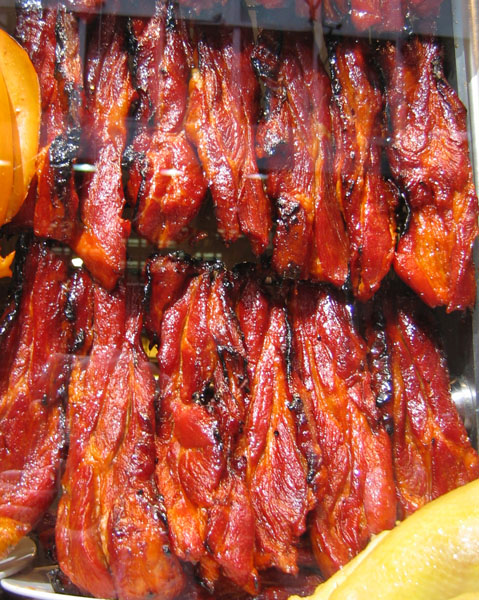
Char siu is the glossy red barbecued pork you see hanging in the windows of Cantonese roast-meat shops, and it is one of the most rewarding things you can cook at home: strips of pork marinated in hoisin, soy, and five-spice, roasted until the edges caramelize and char, and brushed with honey for a sticky, shining glaze. Sweet, savory, and deeply fragrant, it is delicious sliced over rice, tucked into noodles, or stuffed into buns. The method is simple, and the payoff tastes like the best Chinatown deli counter.
Fork-Roasted Pork
Char siu is a cornerstone of Cantonese cuisine, originating in Guangdong province in southern China. The name means fork roasted, a nod to the traditional method of skewering seasoned pork on long forks and roasting it over fire or in an oven. Its distinctive red color traditionally came from red fermented bean curd and red yeast rice, though food coloring is often used now. In Hong Kong and across the Cantonese world, char siu is sold at siu mei shops that specialize in roast meats, hung in the window and sliced to order. It is comfort food, eaten over rice, in noodle soups, in fried rice, and as the filling in cha siu bao buns.
Choosing the Pork
The cut matters. A fattier cut such as pork shoulder or pork butt gives the juiciest, most tender char siu, since the fat keeps the meat moist through the roasting and bastes it from within. Some cooks prefer pork belly for richness or a leaner pork loin or tenderloin for a tidier slice, as many Cantonese restaurants do. Cut the pork into long strips roughly two inches thick, which lets the marinade coat plenty of surface and helps the meat cook evenly while developing caramelized edges. Even thickness means even cooking, so aim for uniform strips rather than one big block that chars outside before the center is done.
The Marinade
The flavor of char siu lives in its marinade, a sweet-savory blend of hoisin sauce, soy sauce, Shaoxing wine, honey or sugar, garlic, and Chinese five-spice powder, with red fermented bean curd added for color and depth in the traditional version. Whisk it together and coat the pork thoroughly, then let it marinate for several hours or, better, overnight in the fridge, so the seasoning sinks deep into the meat. Reserve a little marinade before it touches the raw pork to use for glazing later. The longer the marinade works, the more flavorful and deeply colored the finished char siu, so plan ahead and let time do the work.
Roasting and Charring
Roast the pork on a rack set over a tray, in a hot oven, turning the strips so they color on all sides. The aim is pork that is cooked through and juicy with darkened, slightly charred edges, since those caramelized tips carry the deepest flavor and are the most prized part. A little char is the goal, not a fault. The rack lets heat circulate and drippings fall away, and a tray of water beneath catches them and keeps the oven from smoking. Watch the pork toward the end, since the sugary marinade browns fast and the line between deeply caramelized and burnt is quick to cross.
The Glaze
The signature glossy, sticky surface of char siu comes from glazing. Mix honey or maltose with some of the reserved marinade and brush it over the pork partway through roasting, then again near the end, letting each coat set in the heat. This builds the shiny, lacquered finish that makes char siu look and taste like the restaurant version, the sugars caramelizing into a sweet, sticky crust over the savory meat. Maltose gives the most authentic Cantonese sheen, while honey is easy and works well. Do not skip the second brushing near the end, since that final glaze is what gives the pork its irresistible gloss.
Serving Char Siu
Rest the char siu a few minutes, then slice it across the grain into thin pieces and serve. The classic plate is char siu over steamed white rice with a little of the pan juices and some blanched greens like choy sum, a dish sometimes finished with a fried egg. Beyond that, char siu shines in wonton noodle soup, fried rice, lo mein, and steamed or baked bao buns, so leftovers are a gift. It keeps several days in the fridge and freezes well, making a double batch worthwhile. Fresh from the oven or cold from the fridge, it is one of the most useful things to have on hand.
Common Questions
What cut of pork is best?
Pork shoulder or pork butt gives the juiciest result thanks to its fat. Pork belly is richer, while pork loin or tenderloin gives leaner, tidier slices like many restaurants use. Whichever you choose, cut it into even strips about two inches thick for good caramelization.
How do I get the red color?
Traditionally red fermented bean curd and red yeast rice give char siu its color, and many cooks add a little red food coloring. The color is optional, since the flavor comes from the marinade. Without it, the pork is a deep caramel brown rather than red.
Can I make char siu without an oven?
Yes. It cooks well on a covered grill over indirect heat, or in an air fryer for small batches, glazing the same way. The traditional method roasts it hung in a special oven, but a home oven with a rack reproduces it closely.
Char siu is Cantonese-style barbecued pork from Guangdong, its name meaning fork roasted, marinated in hoisin, soy, and five-spice and glazed with honey or maltose to a glossy red finish.