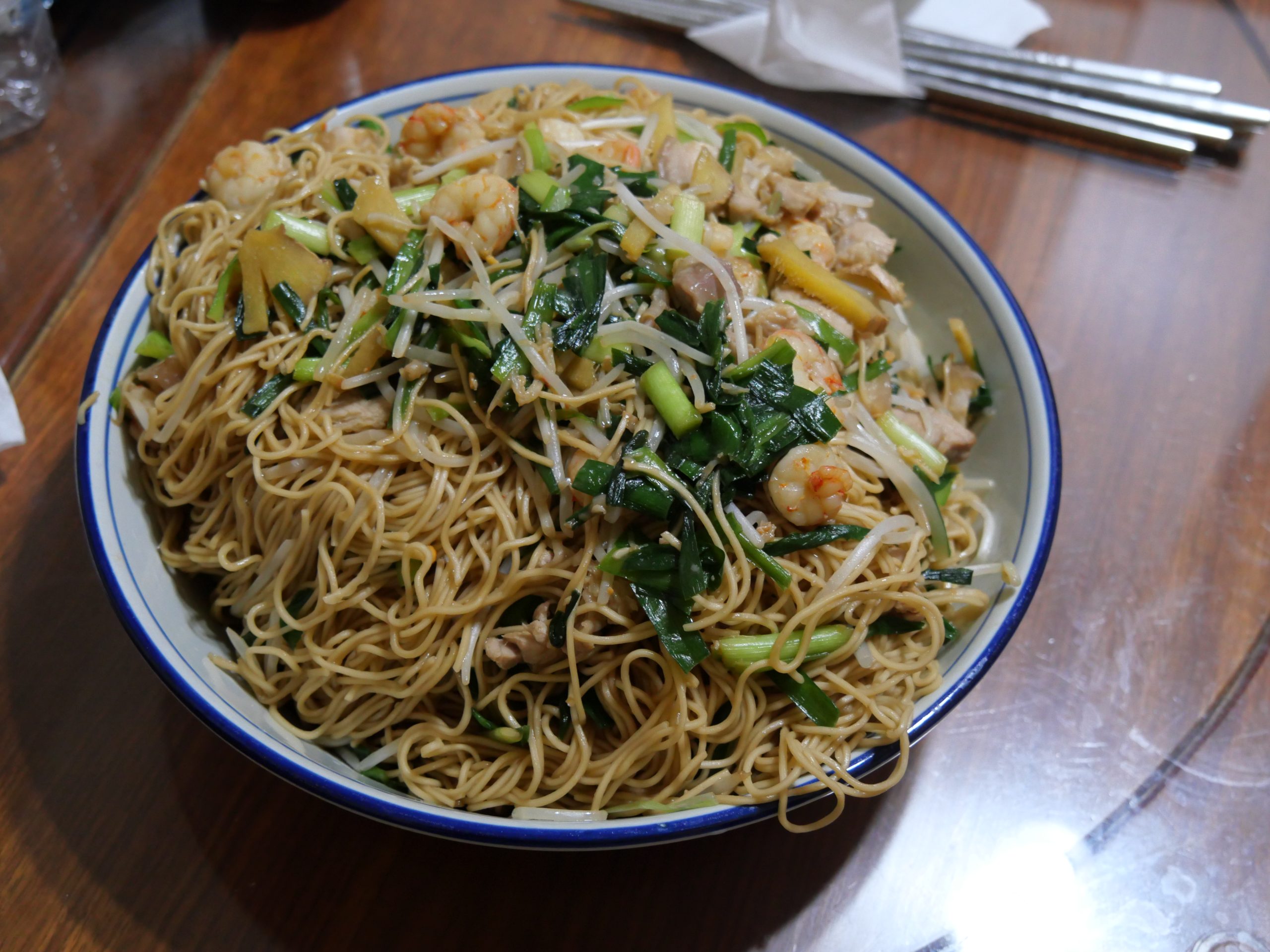
Chow mein is the fried-noodle dish that started as Cantonese street food and spread around the world: egg noodles tossed in a blazing-hot wok with crisp vegetables and a savory soy-based sauce until they take on that smoky wok flavor and, if you like, a few crisped edges. It is fast, endlessly adaptable, and far better fresh from your own wok than from a takeout box. With the noodles boiled and the sauce mixed ahead, the whole thing comes together in minutes of quick tossing.
Stir-Fried Noodles
The name chow mein comes from the Cantonese for stir-fried noodles, and that is exactly what it is: cooked egg noodles tossed over high heat with vegetables, sometimes meat, and a seasoning sauce. There are two main styles. The steamed or soft chow mein tosses boiled noodles with the other ingredients into a tender, saucy tangle, the version most familiar from American Chinese restaurants. The Hong Kong style pan-fries the noodles into a crisp, golden cake that is then topped with a saucy stir-fry. Both start from the same idea, and this recipe leans toward the tossed, slightly crisped home style that is quick and forgiving.
The Noodles
Egg noodles are the traditional choice, fresh from the refrigerated section of an Asian market or dried, and getting them right is half the dish. Boil them just until tender, no further, then drain them thoroughly and toss with a little oil so they do not clump while you prep everything else. Overcooked or wet noodles turn gummy and mushy in the wok and will not take on any texture, so err toward slightly underdone, since they cook a little more in the stir-fry. Loosen any stuck clumps with your fingers before they hit the pan. Well-drained, springy noodles are what let chow mein crisp and stay distinct rather than turning to paste.
The Vegetables and Sauce
Chow mein is flexible, but the classic vegetables are shredded cabbage, julienned carrot, bean sprouts, and scallions, with garlic for aroma; onion, celery, mushrooms, or snow peas all fit too. Cut everything into thin, even pieces that cook fast. The sauce is a simple mix of soy sauce, oyster sauce, a little dark soy for color, sesame oil, and sugar, stirred together before cooking begins. Dark soy gives the noodles their appetizing brown color without extra salt. Mix the sauce in advance and keep it by the stove, since stir-frying leaves no time to measure. Add cooked chicken, pork, shrimp, or beef if you want a heartier plate.
Wok Heat
Chow mein depends on high heat, the source of the smoky flavor Chinese cooks call wok hei, the breath of the wok. Get the wok as hot as it goes, add oil, and stir-fry the firmer vegetables first for just a minute so they stay crisp. Then add the drained noodles and toss them through the heat, pressing some against the hot surface and letting them sit a moment to catch a little char before tossing again. Pour in the sauce and toss until every strand is coated and colored. A crowded or cool pan steams instead of searing, so use your largest wok or skillet and keep the heat high throughout.
Bringing It Together
Once the noodles are coated and hot, add the quick-cooking additions, bean sprouts and scallions, and toss just to warm them so they keep their crunch. Everything happens in a few fast minutes, which is why prep is everything: noodles boiled and drained, vegetables cut, sauce mixed, protein cooked, all lined up before the wok gets hot. Taste and adjust with a splash more soy if it needs salt. The finished chow mein turns out glossy, savory, and a little smoky, with tender noodles, crisp vegetables, and here and there a browned, chewy strand. Serve it straight from the wok while it is at its best.
Serving Chow Mein
Serve chow mein hot, on its own as a light meal or as part of a larger Chinese spread alongside dishes like char siu or a stir-fry. It is a natural way to use up odds and ends of vegetables and cooked meat, so treat the recipe as a template rather than a rule. Leftovers keep a day or two and reheat best in a hot pan rather than the microwave, which steams them soft. Add chili oil or a splash of vinegar at the table for those who like it. Fast, cheap, and satisfying, chow mein earns its place in the weeknight rotation.
Common Questions
What noodles are used for chow mein?
Chinese egg noodles are traditional, fresh or dried, sold at Asian markets. Thin ones crisp nicely for Hong Kong-style chow mein; medium ones suit the tossed soft style. In a pinch, other wheat noodles work. Boil them just tender and drain well.
What is the difference between chow mein and lo mein?
Both use egg noodles, but chow mein stir-fries them for a drier, sometimes crisped texture, while lo mein tosses boiled noodles with sauce for a softer, saucier result. Chow mein leans on wok heat and texture; lo mein leans on the sauce.
How do I keep the noodles from sticking?
Drain the boiled noodles well and toss them with a little oil, then keep the wok very hot so they sear rather than clump. Loosen any stuck strands with your fingers before cooking. Wet noodles and a cool pan are the usual causes of sticking.
Chow mein, from the Cantonese for stir-fried noodles, is a Chinese dish of egg noodles tossed in a hot wok with vegetables and sauce, with steamed soft and crispy Hong Kong-style versions.