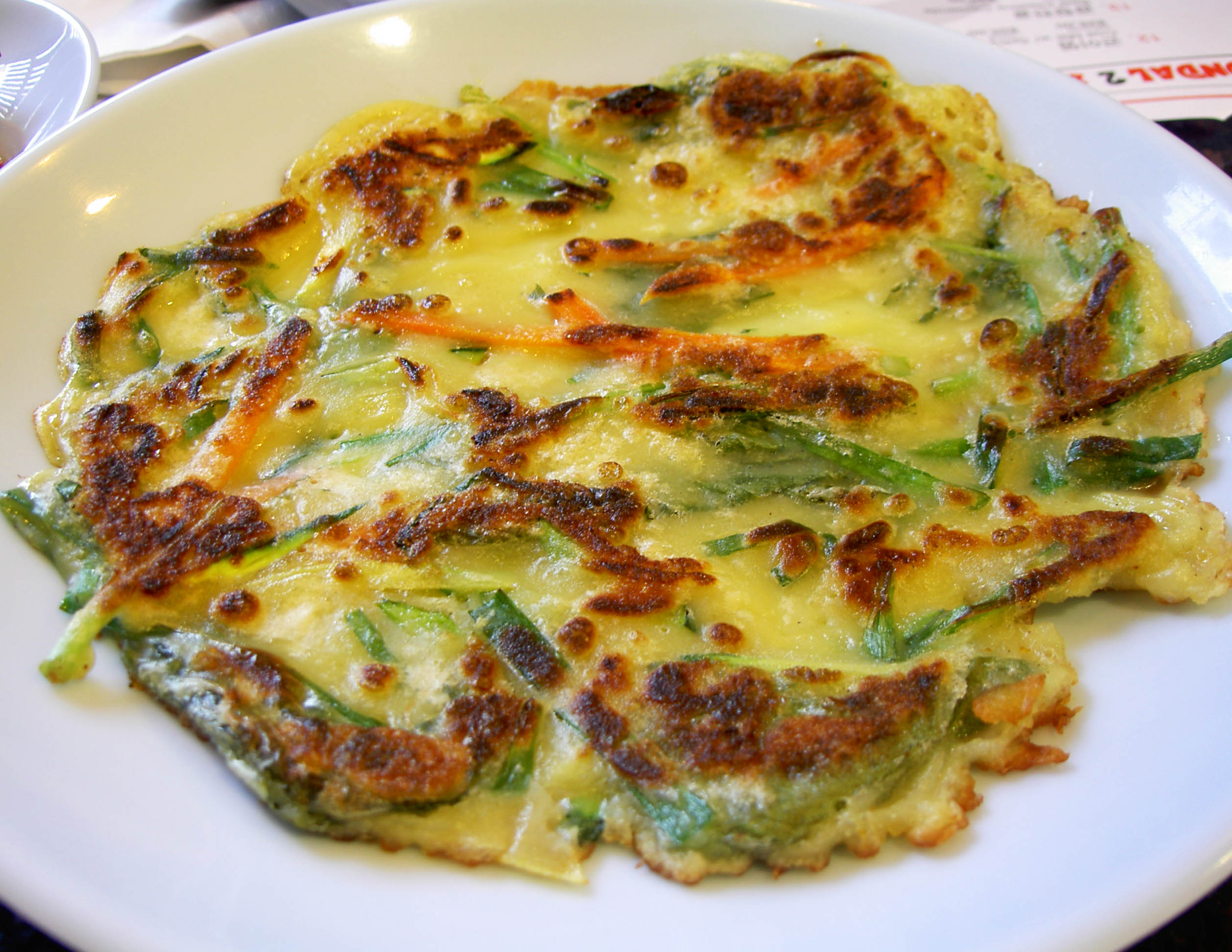
Haemul pajeon is a wide, ragged pancake of whole scallions and seafood held together by the thinnest possible batter, fried in enough oil that the edges turn brittle and lacy while the center stays soft. Torn into pieces and dipped in a sharp soy vinegar sauce, it is one of the great sharing dishes of Korean cooking. It takes fifteen minutes, uses whatever seafood you have, and is the standard answer in Korea when rain starts falling outside.
Scallion and Pan-Fried
The name is literal. Pa means scallion and jeon covers anything battered and pan-fried, a broad Korean category that includes kimchi jeon, mung bean pancakes, and battered vegetables or fish. Add haemul, seafood, and you have haemul pajeon, the most popular version of all. The dish is served as an appetizer, as banchan, or as anju, the food eaten alongside drinks. Its most celebrated regional form is Dongnae pajeon from Busan, a thicker, more elaborate version historically associated with the Joseon royal court and served with a gochujang-based sauce rather than the usual soy one.
Scallions as Structure
This is the point that separates a good pajeon from a bad one: the scallions are not an ingredient stirred into batter, they are the frame the pancake is built on. Trim whole scallions to fit the pan and lay them in the hot oil side by side, all running the same direction, then pour a thin layer of batter over the top so it seeps between them. The batter is a binder holding the scallions together, nothing more. A pancake made the other way, with chopped scallions mixed into a thick batter, comes out doughy and heavy.
Keeping the Batter Thin
Use ice water and mix the batter lightly, exactly as you would for tempura, and aim for something closer to cream than to pancake batter. A portion of rice flour or potato starch mixed with the plain flour is what produces the crackling edge, since these starches crisp harder than wheat flour alone. Korean shops sell a ready-made frying mix called buchim garu, already seasoned, and it is a pantry staple in Korean homes. An egg drizzled over the top near the end adds richness and helps the surface set.
The Seafood
Almost anything from the sea belongs here: shrimp, squid, mussels, clams, oysters, and baby octopus are all traditional, and a bag of frozen mixed seafood works perfectly well. Chop the pieces small and pat them dry, since wet seafood releases water into the batter and softens the pancake. Scatter them over the batter rather than mixing them in, so they sit on the surface where they cook quickly and stay visible. Fresh red chili slices add color and a little heat, and some cooks add a handful of thin onion or carrot strips alongside.
Frying Crisp
Be generous with the oil, more than feels right, and get it properly hot before anything goes in. The pancake needs to fry rather than steam, and a dry pan gives a pale, soft, disappointing result. Cook the first side undisturbed until the underside is deep golden and the edges have set, then flip once, add a little more oil around the rim so it runs underneath, and press the pancake flat with a spatula to crisp the second side. One flip is enough. Cook it in two smaller pancakes if your pan is not wide enough.
Serving Haemul Pajeon
Slide it onto a board, cut it into squares or simply tear it apart, and serve hot with a dipping sauce of soy sauce, rice vinegar, chili flakes, and sesame seeds. In Korea it goes with makgeolli, the cloudy unfiltered rice wine, a pairing so established that rainy days send people to pajeon restaurants for both. There is a widely repeated explanation that the sizzle of batter hitting oil sounds like falling rain. Whatever the reason, it is shared food, meant to sit in the middle of the table while people pull pieces off with chopsticks.
Common Questions
Why is my pajeon soggy?
Not enough oil, a pan that was not hot enough, or batter that was too thick. Use plenty of oil, get it shimmering first, keep the batter thin and cold, and add rice flour or potato starch for a crisper edge.
Can I make it without seafood?
Yes. Plain scallion pajeon is the base version, and kimchi jeon and vegetable jeon are equally traditional. The method stays identical, so use whatever you have and keep the scallions as the structural layer at the bottom of the pan.
What is Dongnae pajeon?
A thicker, more elaborate version from the Dongnae district of Busan, historically linked to the royal court, made with more seafood and egg and served with a gochujang-based dipping sauce instead of the standard soy and vinegar one.
Pajeon is a Korean savory pancake whose name joins pa, scallion, with jeon, pan-fried battered food; the seafood version is called haemul pajeon and is traditionally paired with makgeolli.