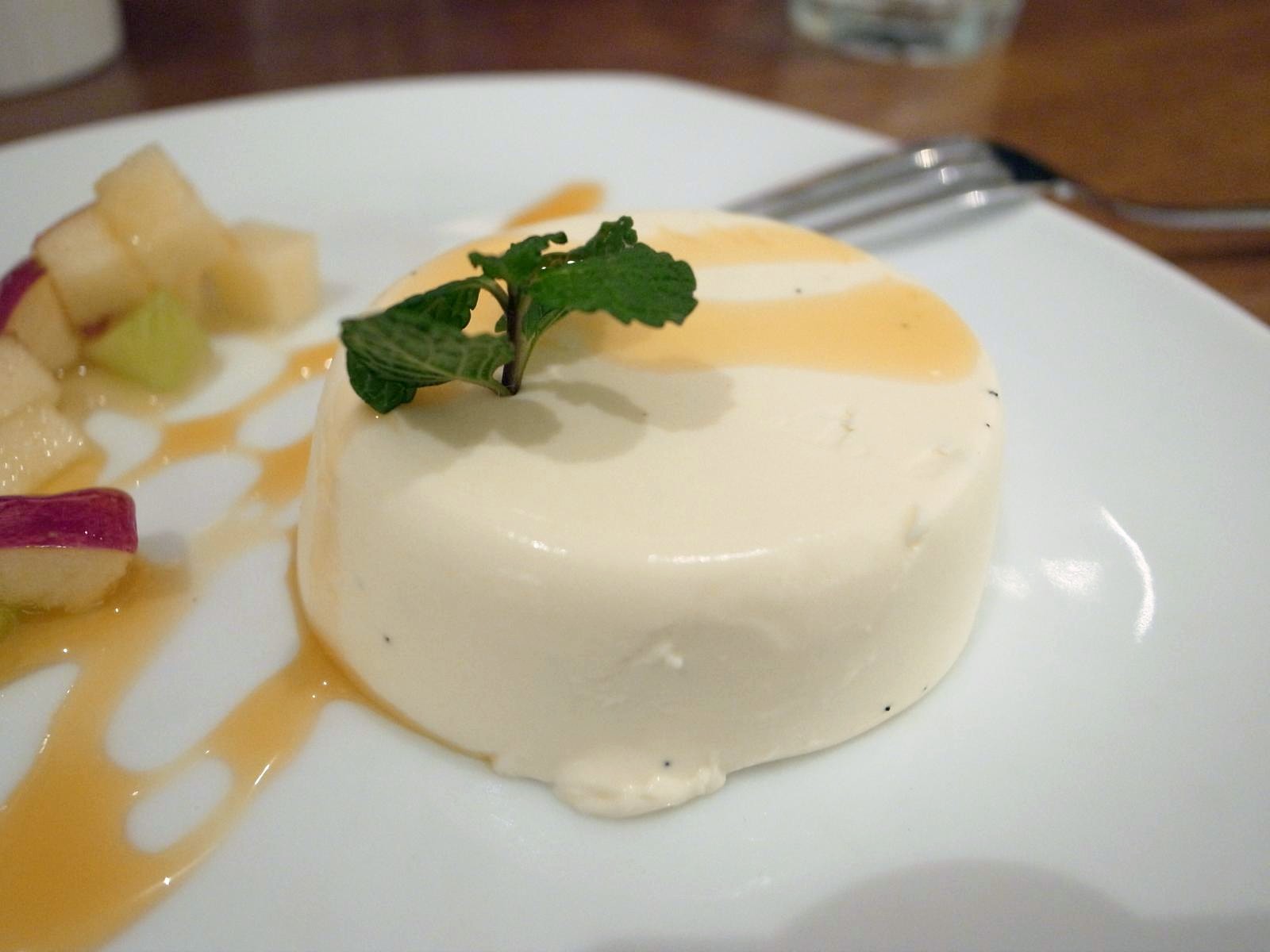
Panna cotta is cream, sugar, vanilla, and just enough gelatin to hold everything together, chilled until it sets into something that trembles when the plate moves. It takes about ten minutes of actual work and no skill beyond stirring, yet it looks and tastes like restaurant pastry. The whole art lies in restraint: the least gelatin that will do the job, gentle heat that never boils, and a topping sharp enough to cut the richness. Get those right and it is close to a perfect dessert.
Cooked Cream
The name translates literally as cooked cream, and it is usually described as a dessert of Piedmont in northern Italy. Its history is more recent than its classic reputation implies: the name does not appear in Italian cookbooks before the 1960s, despite being widely presented as a longstanding regional tradition. An unverified story credits a Hungarian woman living in the Langhe hills in the early nineteenth century. A nineteenth-century dictionary records a dish called latte inglese, cream cooked with gelatin and moulded, and the French fromage bavarois of Marie-Antoine Careme is essentially the same preparation with part of the cream whipped.
The Cream
With so few ingredients, the cream is the dessert, so buy the best you can find. Heavy cream gives the richest result, and cutting it with a little whole milk lightens the texture without losing the silkiness, which is how most versions are balanced. Warm the cream with sugar, a pinch of salt, and a split vanilla bean, stirring only until the sugar dissolves. It never needs to boil, and boiling changes the flavor of dairy in a way that is easy to taste. A vanilla bean is worth the cost here, since the tiny black seeds are visible in the finished cream.
Getting the Gelatin Right
Gelatin is where panna cotta is won or lost. The goal is the softest possible set, a cream that only just holds its shape and quivers on the plate, not a firm rubbery block. Sprinkle powdered gelatin over cold water and leave it to swell for several minutes, then stir it into the hot cream off the heat until it fully dissolves. Sheet gelatin works identically, softened in cold water and squeezed out first. If you plan to serve the dessert in glasses rather than unmoulding it, use even less gelatin, since it does not have to stand up on its own.
Moulding and Chilling
Strain the mixture through a fine sieve to catch any undissolved gelatin or vanilla pod fragments, which is a small step that guarantees a smooth texture. Pour into ramekins, dariole moulds, or glasses and refrigerate for at least four hours, though overnight is better and the dessert keeps happily for a couple of days. To unmould, dip the base of each mould in warm water for only a few seconds, run a thin knife around the edge, and invert onto a plate with a sharp downward flick. Leave it in the water too long and the outside starts to melt.
Flavoring It
Vanilla is the standard, but the cream takes other flavors readily. Steep coffee beans, citrus zest, a cinnamon stick, bay leaf, or lemongrass in the warm cream and strain them out before setting. Coffee and chocolate versions are common, as is buttermilk panna cotta, which brings a pleasant tang. Whatever you add, infuse it in the cream while it warms and give it time off the heat to develop, then taste before the gelatin goes in. Keep the sweetness moderate, because the dessert is rich and the accompaniment usually adds sugar of its own.
Serving Panna Cotta
Panna cotta wants something acidic or bitter against it. Macerated berries, a raspberry or passion fruit coulis, roasted stone fruit, or a sharp cherry compote all work, and a dark caramel sauce is the classic Piedmontese partner, its slight bitterness balancing the sweet cream. A few toasted nuts or a crisp biscuit add texture. Because it is made entirely in advance and unmoulds in seconds, it is one of the most practical desserts for entertaining, and it looks far more difficult than the ten minutes it actually took.
Common Questions
How firm should panna cotta be?
Barely set. It should hold its shape when unmoulded but wobble noticeably when the plate is moved. If it slices cleanly like jelly, there was too much gelatin. Use less for glasses, since it does not need to support itself there.
Can I make it without gelatin?
Agar agar sets a vegetarian version, though it gives a firmer, less creamy texture and must be boiled to activate, unlike gelatin. Use considerably less than you would gelatin by weight and test a small batch first, since agar sets very firmly.
Why won’t my panna cotta unmould?
It needs a brief dip in warm water and a knife run around the rim to break the seal. If it still resists, it may need longer chilling, or slightly more gelatin next time. Serving it in glasses avoids the problem entirely.
Panna cotta means cooked cream: an Italian dessert of sweetened cream thickened with gelatin and moulded, associated with the northern region of Piedmont.