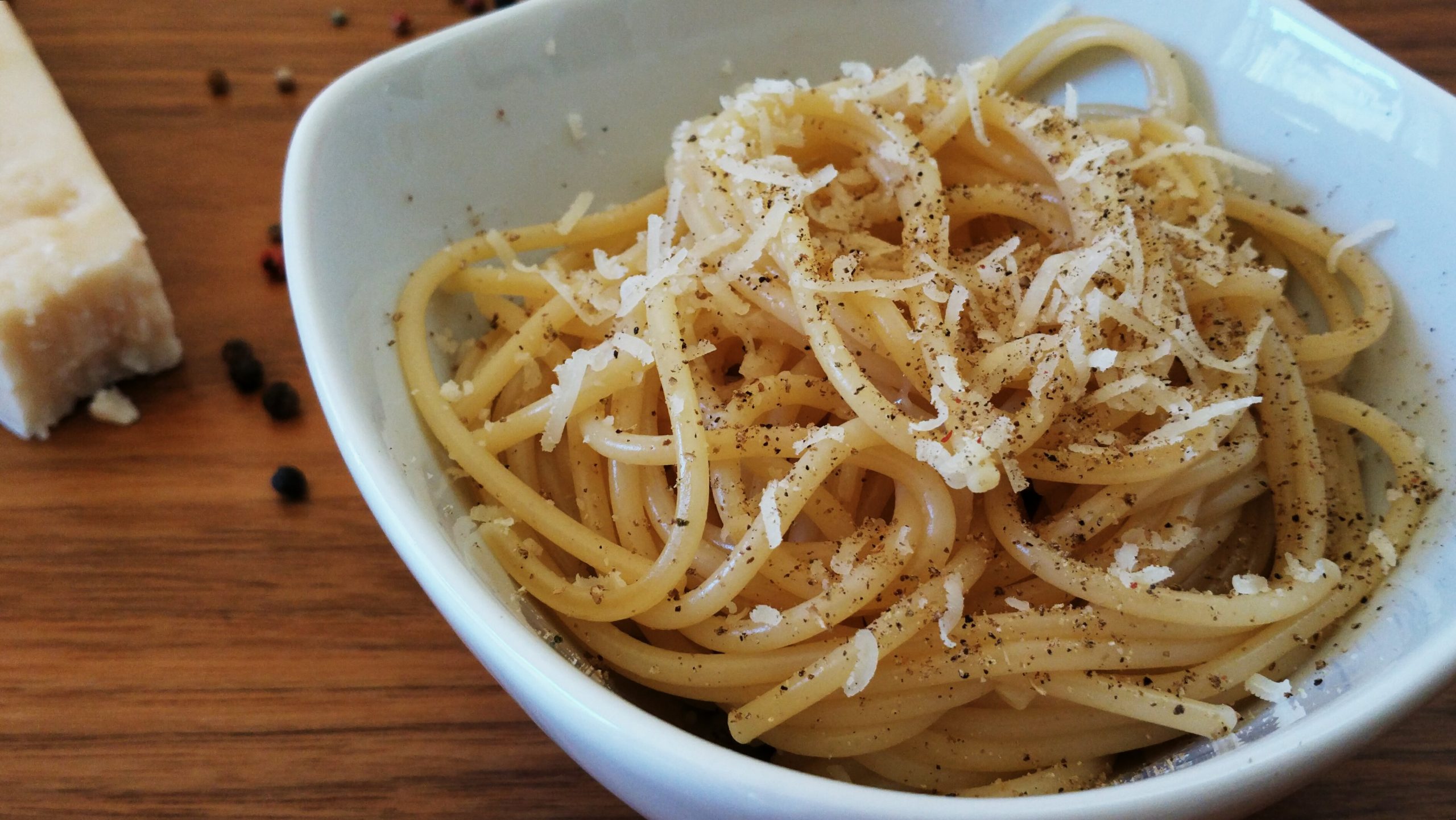
Cacio e pepe is a lesson in how three ingredients, pasta, cheese, and pepper, become something greater than their sum. There is no cream, no butter, no garlic; the silky, clinging sauce comes entirely from pecorino romano emulsified with starchy pasta water and sharpened with plenty of black pepper. It is simple to list and deceptively tricky to execute, since the cheese loves to clump. Get the technique right, though, and you have one of Rome’s greatest pasta dishes: creamy, sharp, peppery, and ready in the time it takes to boil pasta.
Cheese and Pepper
Cacio e pepe means simply cheese and pepper in Roman dialect, and that is the entire dish. It is one of the classic pastas of Rome and the wider Lazio region, said to come from the shepherds of central Italy, who carried hard cheese, dried pasta, and pepper, ingredients that kept well on the move. It belongs to a family of Roman pastas built on pecorino, along with gricia, amatriciana, and carbonara. Its genius is its minimalism: no sauce is cooked, nothing is added but cheese, pepper, and the water the pasta cooked in, yet the result is rich and satisfying.
The Three Ingredients
With so few components, each one has to be right. The cheese must be pecorino romano, the hard, sharp, salty sheep’s-milk cheese; it is essential to the flavor and not interchangeable with Parmesan, which behaves and tastes differently. Grate it very finely so it melts smoothly. The pepper needs to be freshly and coarsely ground, and a generous amount, since it is half the dish, not a background note. The pasta is traditionally spaghetti or tonnarelli, the fresh square-cut Roman noodle. And the fourth, unlisted ingredient is the starchy pasta water, which does the work of binding.
Toast the Pepper
A small step that makes a real difference: toast the coarsely ground black pepper in a dry pan for a moment until it becomes fragrant. Warming the pepper wakes up its aromatic oils and deepens its flavor, so it perfumes the whole dish rather than just adding heat. Since pepper is one of only three ingredients, treating it with this care matters. Grind it fresh and coarse for the best texture and aroma. Then a little pasta water goes into the pan with the pepper to make a peppery base that the pasta and cheese join. Do not use pre-ground pepper here; it is flat by comparison.
Starchy Water Is the Trick
The secret to the creamy sauce is starch. Cook the pasta in less water than usual, so the water becomes very starchy, and save plenty of it before draining. This starchy water is what lets the pecorino emulsify into a smooth, glossy sauce that coats the pasta instead of seizing into lumps. The classic failure of cacio e pepe is clumpy cheese, and it happens when the pecorino meets too much direct heat. So mix the grated cheese with a little cool pasta water first into a paste, keeping the heat gentle, before combining everything. The starch and controlled temperature are what prevent the dreaded clumps.
Bringing It Together
The assembly happens fast and off high heat. Add the drained pasta to the pan with the toasted pepper and a little hot pasta water, then add the pecorino paste and toss and stir vigorously, adding more starchy water as needed, until the cheese melts into a creamy sauce that clings to every strand. The key is constant motion and moderate heat, working the starch, water, and cheese into an emulsion. If it clumps, more warm pasta water and hard stirring can often rescue it. If it tightens, loosen with a splash more water. The finished sauce turns silky and glossy, coating the pasta evenly.
Serving Cacio e Pepe
Cacio e pepe must be served immediately, the moment it comes together, since the sauce tightens and the pasta cools quickly. Plate it at once, with an extra grind of black pepper and a little more grated pecorino on top. It waits for no one. This is a dish to make just before you sit down, not ahead, and it does not reheat well, so make only what you will eat. Simple, fast, and deeply satisfying, cacio e pepe is the kind of thing you can throw together on a weeknight once the technique is in your hands, using ingredients you can keep on the shelf.
Common Questions
Why does my cheese clump?
Pecorino seizes into clumps when it meets too much direct heat. Grate it finely, mix it with cool pasta water into a paste first, and combine everything off high heat, tossing hard with starchy water. The starch and gentle temperature keep it smooth.
Can I use Parmesan instead of pecorino?
Traditional cacio e pepe uses pecorino romano, the sharp, salty sheep’s-milk cheese, which is central to the flavor. Parmesan tastes different and behaves differently. Some blend in a little Parmesan to make the sauce more forgiving, but pecorino is the authentic choice.
What pasta is best?
Spaghetti or tonnarelli, the fresh square-cut Roman noodle, are traditional. Any long pasta works. Cook it in less water than usual so the water is extra starchy, which helps bind the sauce, and save plenty of that water before draining.
Cacio e pepe means cheese and pepper, a Roman pasta dish of just pasta, pecorino romano, and black pepper, bound into a creamy sauce by starchy pasta water.