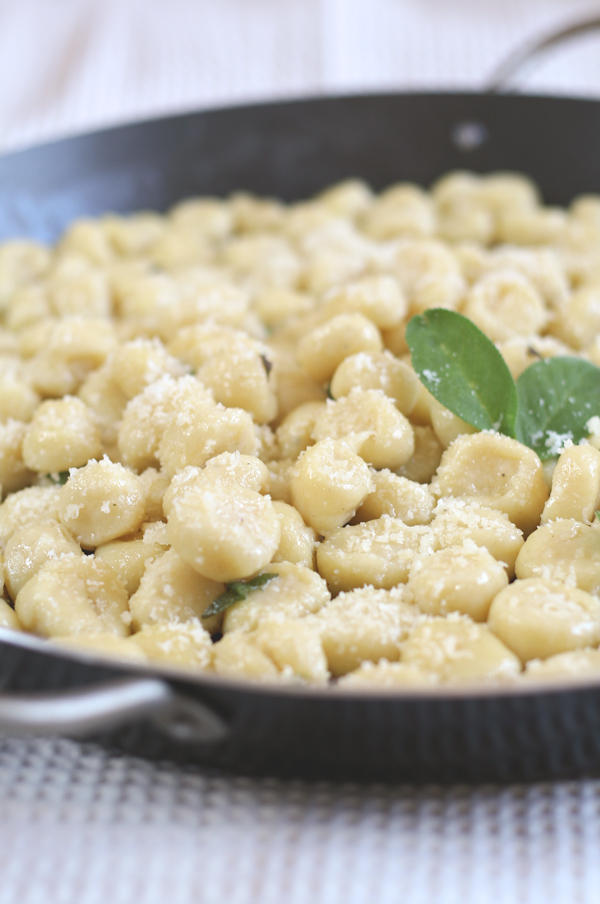
Gnocchi are small potato dumplings, boiled for barely two minutes and dressed simply with butter and sage, tomato sauce, or pesto. Made well they are feather-light and tender, almost dissolving on the tongue. Made badly they sink like stones, and the culprit is nearly always too much flour or too much handling. The recipe has only three or four ingredients, which means technique carries everything, and the good news is that the technique is quickly learned. One afternoon of practice and you will make them for years.
A Family of Dumplings
Gnocchi are not one recipe but a whole family of Italian dumplings, made variously with wheat flour, semolina, breadcrumbs, ricotta, or vegetables. The potato version most people mean today could only appear after the potato reached Italy from the Americas, and it took hold in the cool north where the crop grows well. Exactly which region deserves the credit is argued over, with Veneto, Piedmont, and Lombardy all putting forward a case. The name traces to a dialect word for knuckle, borrowed from German, describing the small knobbly shape. Roman gnocchi alla romana, by contrast, are semolina discs baked with butter and cheese, a completely different preparation.
The Potatoes
Starchy, floury potatoes such as russets are what you want, since waxy varieties hold water and produce a wet, gluey dough. How you cook them matters as much as which ones you buy. Boiling waterlogs the flesh, which then demands extra flour to become workable, and every extra spoonful of flour makes the finished gnocchi heavier. Steam them whole in their skins instead, or bake them in a dry oven, both of which drive moisture out rather than in. Peel them as soon as they are cool enough to handle, while they are still hot, since warm potato riced immediately gives a lighter dough.
Ricing and Mixing
Push the hot potato through a ricer or food mill directly onto your work surface, spreading it out in a loose layer so the steam escapes rather than condensing back into the dough. Never use a food processor or blender, which turns potato into glue in seconds. Let it cool briefly, then scatter over the flour, salt, and a little nutmeg, add a beaten egg, and bring everything together with a light hand. Stop the moment it holds. The dough should feel soft and slightly tacky, not smooth and elastic, because elasticity means gluten and gluten means rubber.
Rolling and Shaping
Cut the dough into pieces and roll each into a long rope about as thick as your thumb on a lightly floured surface, then cut the ropes into short pillows. That is already a finished gnocco, and many Italian cooks stop there. For ridges, roll each piece down the back of a fork or a gnocchi board with your thumb, which creates grooves on one side and a hollow on the other, both of which catch sauce. Work in batches and lay the finished gnocchi on a floured tray in a single layer, not touching, or they will stick together into a lump.
Boiling
Bring a wide pot of well-salted water to a gentle boil, not a violent one, which would batter the dumplings apart. Drop in a small test batch first: if they hold together and float within a couple of minutes, the dough is right, and if they dissolve, work a little more flour into the remaining dough. Cook the rest in batches without crowding, and lift them out with a slotted spoon the instant they rise to the surface. Every extra moment past that point pushes them toward mush, so keep the sauce ready and waiting before the water even boils.
Sauces for Gnocchi
The simplest dressing is also the best known: butter melted with whole sage leaves until it smells nutty and turns golden, poured over the drained gnocchi with a heavy shower of Parmigiano. Fresh tomato sauce with basil is equally classic, as is pesto, which suits potato gnocchi particularly well. In Piedmont and Lombardy they are often tossed with butter and cheese or a rich cheese sauce browned under the grill; in Veneto, tomato is the standard. Gnocchi alla Sorrentina bakes them with tomato, mozzarella, and basil. Raw gnocchi freeze well on a tray, then go straight from freezer to boiling water.
Common Questions
Why are my gnocchi heavy?
Too much flour, or overworked dough. Steam or bake the potatoes instead of boiling them so they stay dry, add flour gradually, and mix only until the dough just holds together. Kneading builds gluten, which makes the dumplings tough.
Why did my gnocchi fall apart in the water?
The dough needed more flour, or the water was boiling too hard. Test one first, adjust the dough if it dissolves, and keep the water at a gentle boil. Adding an egg also helps bind the dough if you have been leaving it out.
Do I need a gnocchi board?
No. The back of a fork makes the same ridges, and plain smooth pillows are perfectly traditional in many households. The grooves help sauce cling, which is useful with thin sauces, but they change nothing about the texture of the dumpling itself.
Gnocchi are a family of Italian dumplings; the potato version is associated with northern Italy and the name derives from a dialect word meaning knuckle, describing the small dumpling shape.