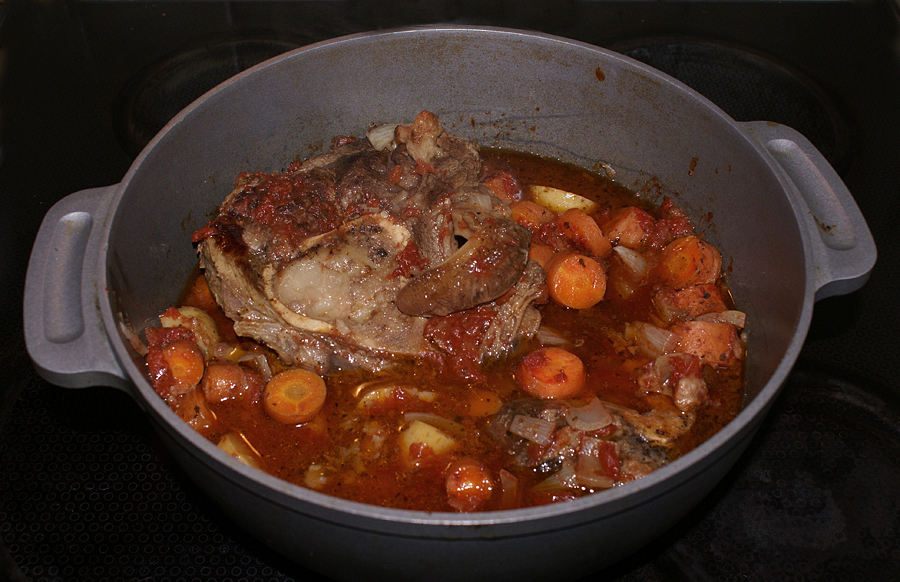
Osso buco means “bone with a hole,” and the name points straight at the prize. Cross-cut veal shanks braise slowly in white wine, tomatoes, and broth until the meat surrenders from the bone, and at the center of each piece sits a ring of bone filled with marrow, which patient diners spoon out like a reward. This is Milanese cooking at its most generous: humble cut, long oven, deep sauce, and a bright final flourish of lemon zest, garlic, and parsley called gremolata that wakes the whole plate up.
A Milanese Classic
Osso buco belongs to Milan and the surrounding Lombardy region, where it has been a fixture of home and trattoria cooking for well over a century. The older tradition, ossobuco in bianco, braised the shanks without tomato, in wine, broth, and aromatics only; the tomato version used here became widespread later and is now the more common form. In Milan the canonical partner is risotto alla milanese, the saffron risotto, making one of Italian cooking’s few sanctioned pairings of meat and rice on a single plate. The two dishes share a city, a color palette of gold and amber, and a talent for making a Sunday feel like an occasion.
Choosing and Prepping the Shanks
Ask for veal shanks cross-cut about an inch and a half thick, with the marrow bone centered and the meat tied around its circumference with kitchen twine. The tying matters: the meat shrinks and loosens as it braises, and untied shanks fall apart into stew instead of holding their handsome shape. Snip small cuts in the silverskin membrane around each shank’s edge so the pieces stay flat instead of cupping in the pan. Dredge in flour, shake off the excess, and brown deeply in olive oil, several minutes per side. That crust is the flavor base of the sauce.
Soffritto, Wine, and the Long Braise
Onion, carrot, and celery, the soffritto, cook down in the same pot, scraping up the browned bits the veal left behind. Dry white wine deglazes next and simmers until its alcohol smell fades, then the crushed tomatoes, broth, and bay leaf join the party. The shanks return, the liquid comes to a bare simmer, and the pot goes into a low oven or stays over the gentlest burner for about two and a half hours. The meat is done when a fork twists into it without resistance. Turn the shanks once midway and add broth if the liquid drops below halfway up the meat. Rushing an osso buco at a boil toughens it; the collagen needs time and low heat to melt into gelatin.
Gremolata, Three Ingredients That Change Everything
After hours of rich braising, the dish needs one thing: contrast. Gremolata delivers it with nothing more than finely grated lemon zest, minced garlic, and chopped parsley, mixed fresh and scattered over the plated shanks in the final seconds. The raw garlic bites, the lemon cuts the richness, and the parsley makes the whole plate smell like a garden. Chop it while the shanks rest so the aromatics stay sharp. Some Milanese cooks stir half the gremolata into the sauce and save half for the top, a trick worth stealing.
The Marrow Is Not Optional
Old Milanese table settings included a narrow spoon, sometimes called an esattore or tax collector, made specifically for extracting the marrow from the bone. A regular small spoon or the handle of a teaspoon does the job today. Spread the marrow on grilled bread, stir it into the risotto, or eat it straight; leaving it behind wastes the richest bite on the plate. If serving guests unfamiliar with the dish, say so out loud, because plenty of osso buco marrow goes back to kitchens untouched by diners who never knew.
Serving and Leftovers
Risotto alla milanese is the classic base, and its saffron plays beautifully against the tomato-wine sauce. Soft polenta and mashed potatoes are honorable stand-ins that catch the sauce just as well. Osso buco reheats magnificently: refrigerate up to three days and warm it, covered, in a low oven with a splash of broth. The braise even freezes well for two months, though the marrow is best enjoyed on day one.
Common Questions
Can I use beef shanks instead of veal?
Yes. Beef shanks are larger, darker in flavor, and need roughly an extra half hour to hour of braising. The dish becomes heartier and less delicate, and plenty of cooks prefer it that way, not to mention the lower price.
What wine works in the pot?
Any dry white you would drink: Pinot Grigio, Soave, or an unoaked Chardonnay. Avoid anything sweet or heavily oaked, since the sauce concentrates whatever character the wine brings.
Can I make it a day ahead?
It improves for it. Braise, cool, and refrigerate in the sauce, then reheat gently and make the gremolata fresh at serving time. Day-two osso buco is a dinner party’s best-kept secret.
Osso Buco, meaning \'bone with a hole\' in Italian, refers to the marrow hole in the cross-cut veal shanks that are the star of this Milanese classic. This dish is a testament to slow cooking, transforming tough cuts of meat into fork-tender perfection. The rich, savory sauce, often thickened with the natural gelatin from the marrow, is brightened by a splash of white wine and a vibrant gremolata—a fresh garnish of lemon zest, garlic, and parsley. Traditionally served with risotto alla Milanese, it\'s a hearty and elegant meal.