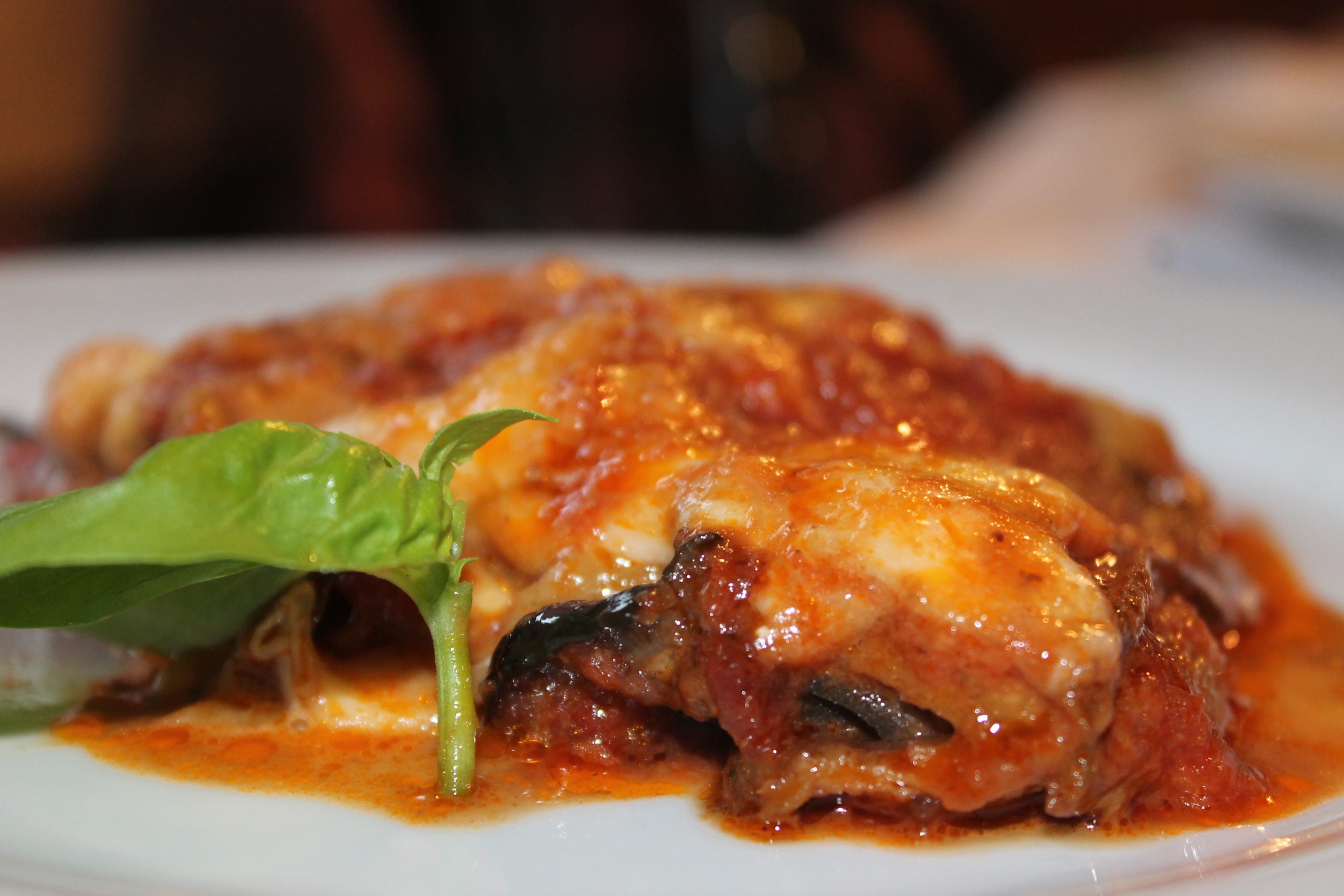
Eggplant parmigiana is layers of fried eggplant, tomato sauce, basil, and cheese baked until the top browns and the edges bubble. It is rich, deeply savory, and entirely vegetarian, and it belongs to that category of southern Italian dishes that taste better an hour after leaving the oven than straight out of it. The frying takes time and the assembly takes patience, but everything can be done in stages, and a good parmigiana rewards every minute spent on it.
Three Regions, One Dish
Who invented parmigiana di melanzane is an argument that has never been settled. Sicily, Campania, and Emilia-Romagna all claim it, and each has a reasonable case. The name is the puzzle: it suggests Parma, yet the dish is southern in character and Parma is firmly northern. One much-repeated explanation traces it instead to the Sicilian word parmiciana, describing the overlapping wooden slats of a shutter, which is exactly how the eggplant slices sit in the dish. Whatever its birthplace, the combination of eggplant, tomato, basil, and cheese is southern Italian to the core, and versions of it are cooked all over the peninsula.
Preparing the Eggplant
Eggplant holds a great deal of water, and unmanaged water is what turns parmigiana into soup. Slice the eggplant lengthwise, roughly a centimeter thick, then salt the slices generously and stand them in a colander for about an hour, weighted if you like. Beads of moisture will appear on the surface. Rinse briefly if the salt seems heavy, then pat every slice properly dry before it goes near hot oil. Salting also softens any bitterness in larger, older eggplants, though modern varieties are much less bitter than they once were, so this step is mainly about the water.
Frying or Baking
Traditional parmigiana fries the slices in hot oil until golden on both sides, sometimes after a light dusting of flour or a pass through beaten egg, which gives the richest flavor and the silkiest texture. Fry in batches in oil hot enough to sizzle on contact, since lukewarm oil is absorbed rather than resisted, and drain the slices on paper afterwards. Baking or grilling the slices instead is a lighter route that many home cooks prefer, giving a cleaner, less heavy dish. Both are honest versions; the fried one is the original, and the baked one is what you make on a weeknight.
The Tomato Sauce
Keep the sauce simple, because it has to support three other strong flavors without shouting over them. Soften chopped onion or a crushed garlic clove in olive oil, add good tomatoes passed through a food mill, tear in basil, season, and simmer until it thickens and loses its raw edge. A thin, watery sauce will pool in the bottom of the dish, so cook it down properly. San Marzano or other good canned tomatoes work all year, and ripe fresh tomatoes in late summer are better still. Fresh basil leaves also go between the layers, where their perfume comes through the baking.
Layering
Start with a smear of sauce on the bottom of the dish so nothing sticks, then build: eggplant, sauce, torn mozzarella, basil, and a dusting of Parmigiano, repeated until everything is used, finishing with sauce and a heavy final layer of grated cheese. Drain the mozzarella well beforehand, ideally torn and left in a colander for an hour, because fresh mozzarella carries a surprising amount of liquid. Keep the layers even and do not overload any single one with cheese, which would make the middle greasy. Three or four layers in a deep dish gives the best proportion of eggplant to sauce.
Baking and Resting
Bake in a moderate oven until the sauce bubbles at the edges and the Parmesan on top turns brown and crusted. Then let it stand for at least half an hour before cutting, and an hour is better. This is not a suggestion but the difference between neat squares and a puddle, since the layers need time to settle and the cheese to firm up. Many Italian families serve parmigiana warm rather than hot, or even at room temperature, and it is unquestionably better on the second day, which makes it an ideal dish to cook ahead for guests.
Common Questions
Do I have to salt the eggplant?
It helps considerably. Salting draws out water, which keeps the finished dish from turning watery, and it reduces bitterness in older eggplants. Modern varieties are less bitter than they used to be, but the moisture problem remains, so most cooks still salt and drain.
Can I bake the eggplant instead of frying?
Yes. Brush the slices with oil and roast or grill them until golden. The dish is lighter and less work, though frying gives the richer, silkier texture of the traditional version. Both approaches are widely used in Italian home kitchens.
Why is my parmigiana watery?
Unsalted eggplant, undrained mozzarella, or a thin tomato sauce. Salt and drain the slices, drain the torn mozzarella well, cook the sauce down until thick, and let the baked dish rest before cutting so the layers set properly.
Parmigiana di melanzane is an Italian dish of fried eggplant layered with tomato sauce and cheese then baked, claimed by Sicily, Campania, and Emilia-Romagna alike.