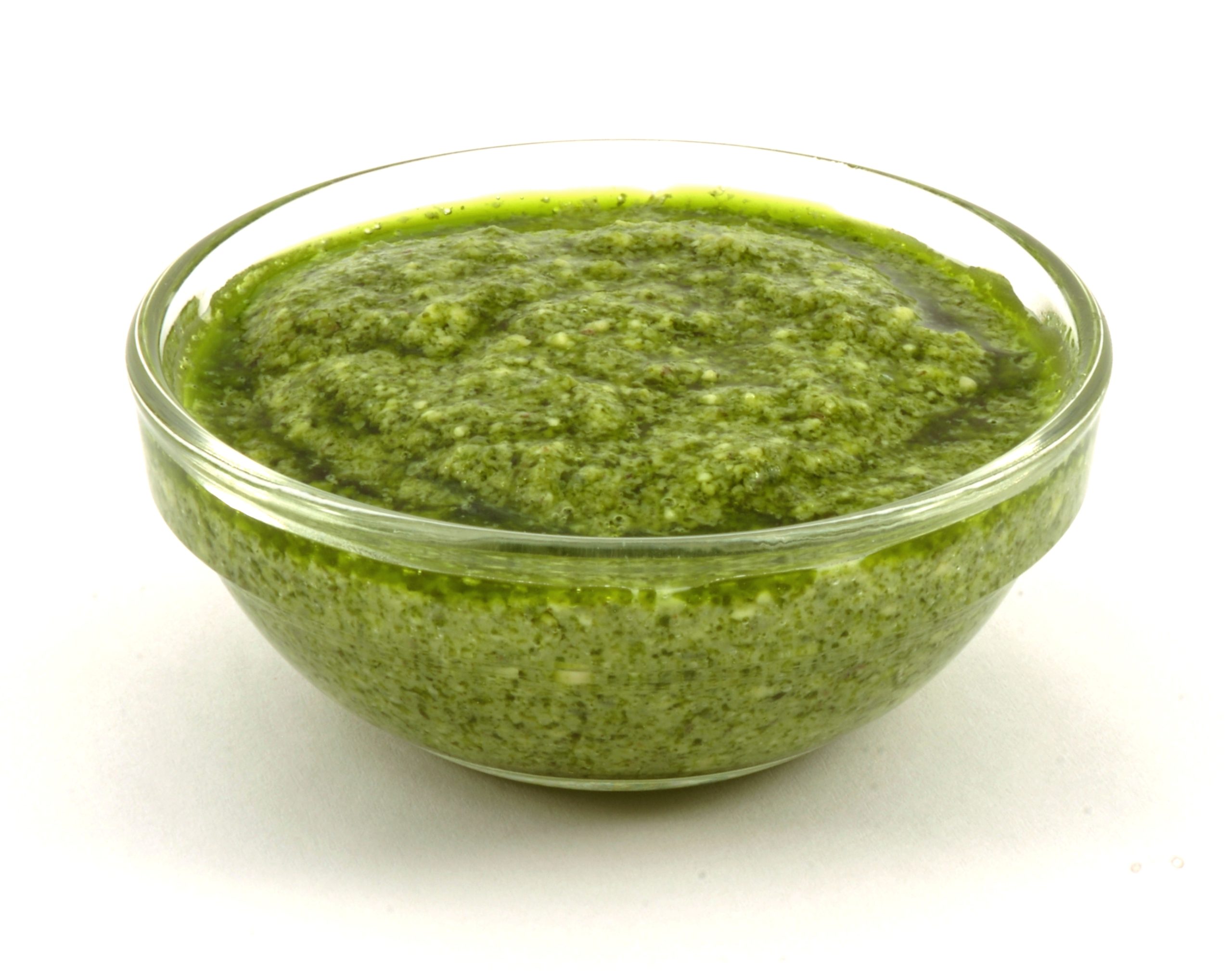
Pesto alla Genovese is basil, pine nuts, garlic, two cheeses, and good olive oil worked into a fragrant green sauce that needs no cooking at all. Made well, it is one of the most intensely flavored things you can put on pasta, and it takes about fifteen minutes. Made badly, it turns bitter and khaki. The difference lies almost entirely in technique: how the basil is treated, how much heat it meets, and whether you grind the ingredients or chop them. Genoa has strong opinions on all three.
The Sauce of Genoa
Pesto belongs to Genoa, the port city of Liguria on Italy’s northwestern coast, where the steep, sun-facing hillsides grow a small-leaved basil prized above all others. The name comes from the dialect verb meaning to crush or pound, the same root that gives us pestle, and it describes the method rather than the ingredients. Ancestors of the sauce reach back to the Roman moretum, a paste of garlic, herbs, cheese, and oil ground in a mortar, with a medieval walnut and garlic sauce as a nearer relative. The recipe in something close to its modern form appeared in print in Genoese cookery writing in the 1860s.
The Ingredients
Seven ingredients, no more: basil, extra virgin olive oil, Parmigiano Reggiano, pecorino, pine nuts, garlic, and salt. Ligurian basil has small tender leaves and a sweet aroma without the minty edge that larger basil develops, so pick young leaves and avoid the big coarse ones. Two cheeses rather than one is traditional and gives the sauce both nuttiness and a sharp, salty edge. Use a mild, fruity olive oil, since a bitter, peppery one fights the basil. Pine nuts need to be fresh, as they go rancid quickly and one stale nut spoils the whole batch.
Mortar Against Machine
The traditional marble mortar and wooden pestle are not nostalgia. Grinding crushes the basil cells open and coaxes out the aromatic oils, while a spinning blade slices the leaves and bruises them, and the friction warms everything, which is what turns pesto dark and slightly bitter. Start by pounding the garlic with coarse salt, which acts as an abrasive, then add the pine nuts, then the basil a handful at a time, working with a circular grinding motion against the sides. A food processor does work if you pulse briefly, keep the bowl and blade cold, and stop before it heats up.
Keeping It Green
Basil darkens through oxidation and heat, so speed and coolness are the whole battle. Dry the washed leaves completely, since water dilutes the sauce and hastens discoloration. Work quickly once you start, and if using a machine, chill the bowl first. The olive oil goes in last, poured slowly and stirred in rather than pounded, so it emulsifies without breaking. Covering finished pesto with a thin film of oil keeps air off the surface and preserves the color for days in the fridge. Some cooks blanch the basil briefly to lock in the green, which works, though purists in Genoa consider it a compromise.
Pasta, Potatoes, Green Beans
In Liguria pesto is served with trofie, short hand-rolled twists, or trenette, a flat ribbon much like linguine, and it clings beautifully to potato gnocchi as well. The classic version adds diced potato and green beans boiled in the same pot as the pasta, a combination called avvantaggiata, meaning with something extra. The potato softens and thickens the sauce while the beans add sweetness and bite. Toss everything together off the heat with a spoonful of the starchy cooking water, which loosens the pesto into a creamy coating. Pesto is never cooked; heat dulls the basil and can make the cheese greasy.
Beyond Pasta
Once a jar is in the fridge, pesto goes almost everywhere: stirred into minestrone at the last moment, spread on bruschetta, spooned over roasted vegetables or grilled fish, folded into a potato salad, or used as a sandwich spread. It freezes well in small portions, and many cooks freeze it without the cheese and stir that in fresh after thawing. A layer of olive oil on top protects it in the fridge for several days. Homemade pesto tastes so much brighter than the jarred kind that the comparison barely holds, and it takes very little time to prove it.
Common Questions
Why did my pesto turn dark?
Heat and air. A food processor warms the basil as it spins, and exposed pesto oxidizes in the bowl. Work fast, keep everything cool, dry the leaves well, and cover the surface with olive oil for storage to keep the color bright.
Can I substitute the pine nuts?
Walnuts, almonds, or cashews all make a good sauce, and walnut-garlic pastes are an old Ligurian tradition in their own right. It is no longer pesto alla Genovese in the strict sense, but the result is delicious and considerably cheaper.
Can I freeze pesto?
Yes. Freeze it in ice cube trays for single portions. Many cooks leave the cheese out before freezing and stir it in after thawing, since dairy changes texture in the freezer. Thaw it in the fridge and never heat it directly.
Pesto alla Genovese comes from Genoa in Liguria and is made from Genovese basil, olive oil, Parmesan, pecorino, pine nuts, and garlic; its name comes from the dialect word meaning to crush.