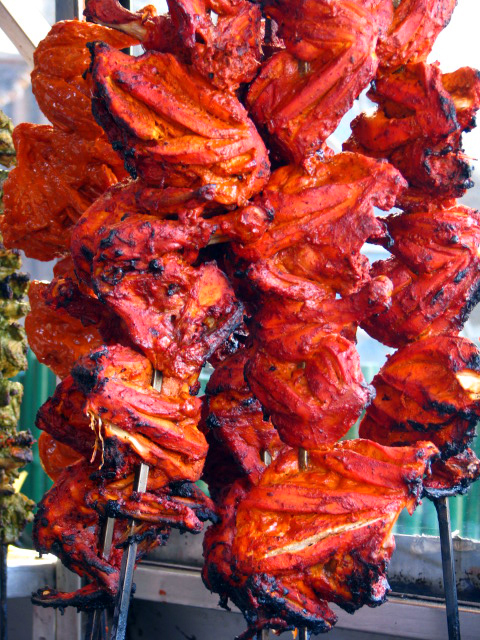
Tandoori chicken is the dish that carried Indian cooking around the world: chicken stripped of its skin, slashed to the bone, steeped in spiced yogurt, and blasted at ferocious heat until the edges blacken and the meat inside stays startlingly juicy. The yogurt tenderizes while the spices stain the flesh deep red. No clay oven is required at home, only a very hot oven or grill and a little patience while the marinade does its work. Served with raw onion rings and a squeeze of lemon, it needs almost nothing else.
From Peshawar to Delhi
Cooking in a tandoor, the cylindrical clay oven, is ancient in the Indian subcontinent, but the modern dish has a documented history. Tandoori chicken in its present form was popularized in the late 1940s at Moti Mahal in the Daryaganj district of New Delhi by Kundan Lal Jaggi, Kundan Lal Gujral, and Thakur Das Magu, Punjabi Hindu migrants from Peshawar who had worked at a restaurant of the same name there before Partition. Their innovation was cooking marinated chicken in an oven previously used mainly for baking bread. Jawaharlal Nehru, independent India’s first prime minister, became such an admirer that the dish entered official state banquets, and its fame spread from there.
Skinning and Slashing
Two preparation steps separate proper tandoori chicken from a mediocre attempt. First, remove the skin entirely, since skin blocks the marinade and prevents the char from reaching the meat. Second, cut deep slashes into the flesh, right down to the bone, spaced along each piece. Those cuts let the yogurt marinade penetrate the interior rather than sitting on the outside, so the chicken is seasoned all the way through and cooks faster and more evenly. Bone-in legs and thighs give the juiciest results; breast dries out quickly at these temperatures. A preliminary rub of lemon juice, salt, and chili powder before the yogurt goes on adds another layer of seasoning.
The Yogurt Marinade
Thick yogurt is the backbone of the marinade, and it does more than carry flavor. Its gentle acidity and enzymes tenderize the chicken without turning the surface mushy the way a heavy lemon marinade can, and its body helps the spices cling through roasting. Whisk it with ginger and garlic pastes, garam masala, cumin, coriander, turmeric, and Kashmiri chili powder, then coat every piece and push the mixture into the slashes. Use thick yogurt, or drain regular yogurt in a cloth first, since watery marinade slides off. Marinate for several hours at minimum, and overnight if the schedule allows, which produces noticeably better chicken.
The Color Question
The bright red of restaurant tandoori chicken often comes from food coloring, but you do not need it. Kashmiri red chili powder delivers a deep, glowing red with only mild heat, which is how home cooks achieve the color honestly, and a higher proportion of turmeric pushes the tone toward orange. The chicken from your own oven will look darker and more natural than the neon version, and it will taste better for it. Heat levels are adjustable: the dish is moderately spicy in India and usually toned down elsewhere, so balance the Kashmiri powder with a hotter chili if you want more bite.
Cooking Without a Tandoor
A tandoor runs blisteringly hot, and the closer you get to that, the better the result. Set your oven as high as it goes with the rack near the top element, or use the broiler, roasting the chicken on a rack over a tray so air circulates and the drippings fall away. Turn the pieces once for even charring. A charcoal grill is even closer to the original and adds real smoke. Near the end, baste with melted butter or ghee, which crisps the surface and enriches the crust. Look for blackened edges and charred spots; that char is the flavor, not a mistake.
Serving Tandoori Chicken
Serve it hot from the oven with raw onion rings, lemon wedges, and mint chutney, which is the standard accompaniment across India and abroad. Naan or roti and a cooling raita round out a full meal, and rice suits it too. Tandoori chicken is eaten as a starter in much of South Asia and as a main course elsewhere. Its influence runs deep in Indian restaurant cooking: chicken tikka, and later chicken tikka masala, both descend from this method of marinating and roasting. Leftovers are excellent shredded into wraps or salads the following day.
Common Questions
Can I make tandoori chicken without a tandoor?
Yes. Use the hottest setting of your oven or the broiler, with the chicken on a rack over a tray, or cook it over charcoal on a grill for closer flavor. The tandoor’s advantage is extreme heat, so get as close to that as your equipment allows.
How do I get the red color naturally?
Kashmiri red chili powder gives a deep red with mild heat, and it is the usual answer without dye. Paprika helps too. Restaurant versions often use red food coloring for that uniform neon shade, which is cosmetic rather than a flavor ingredient.
Which cut of chicken works best?
Bone-in legs and thighs, skin removed. Dark meat stays juicy under the intense heat that this dish requires, while breast meat dries out fast. Whole small chickens, spatchcocked and slashed, also work well if you extend the cooking time.
Tandoori chicken is chicken marinated in yogurt and spices and roasted in a tandoor, a cylindrical clay oven; its modern form was popularized at the Moti Mahal restaurant in Delhi in the late 1940s.