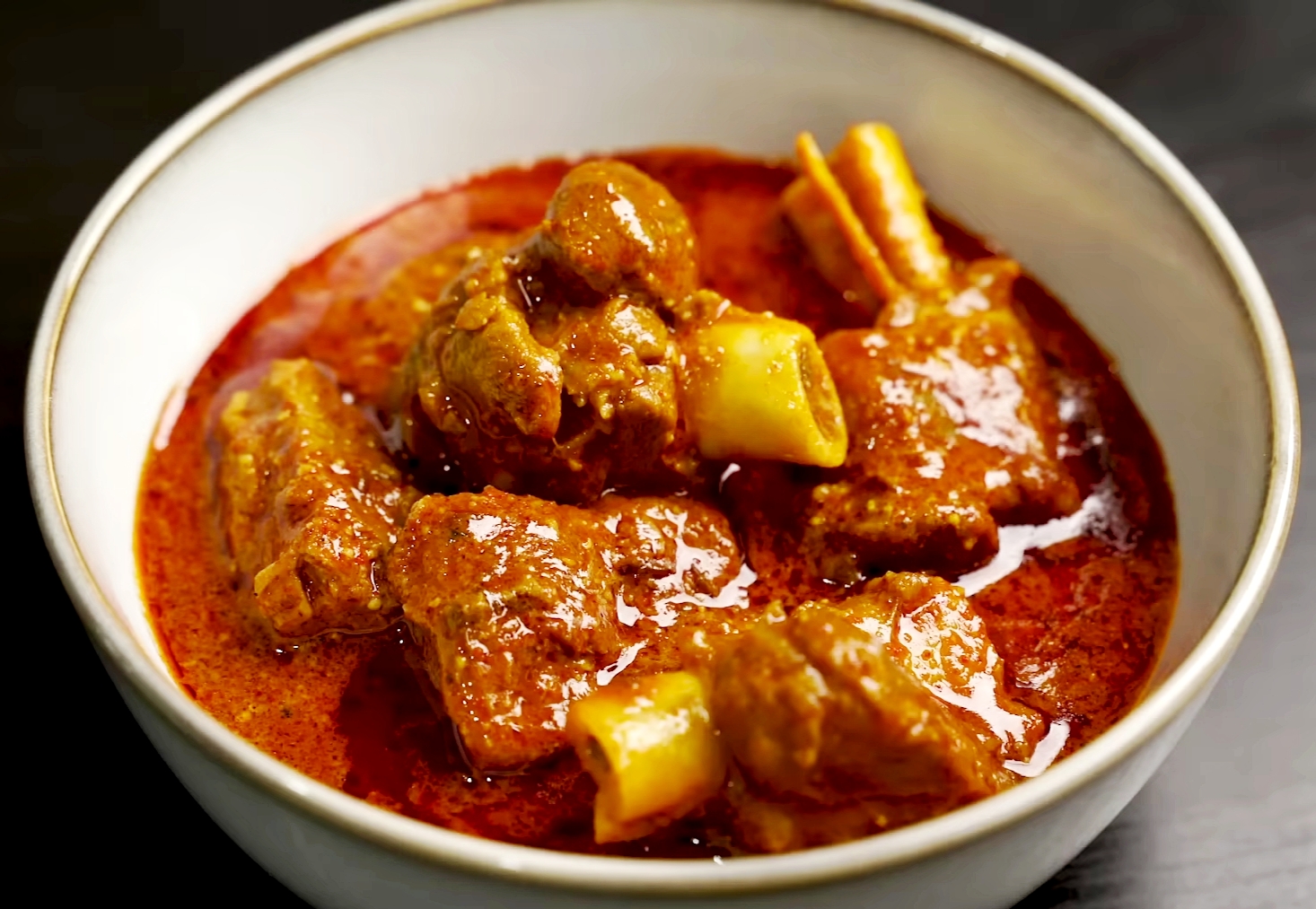
Rogan josh is the jewel of Kashmiri cooking: chunks of lamb slow-simmered until they fall apart, in an aromatic gravy scented with cardamom, cinnamon, cloves, and fennel, stained a deep, glowing red. It is rich and fragrant rather than fiery, a curry built on warm spices and tender meat instead of raw heat. It takes a long, slow cook, but the work is mostly waiting while the lamb softens and the sauce develops. The result is one of India’s most celebrated curries, elegant and deeply satisfying.
A Kashmiri Signature
Rogan josh is a signature dish of Kashmir and a centerpiece of the wazwan, the elaborate Kashmiri multi-course feast. It was brought to the region by the Mughals, whose cuisine carried strong Persian influence, and the name itself is of Persian origin, roughly meaning cooked in oil or clarified butter over heat. The Mughals retreated to cool Kashmir to escape the summer heat of the plains and made use of local ingredients there. Two traditional versions exist, the Kashmiri Hindu Pandit style, which avoids onion and garlic and uses asafoetida, and the Muslim style, which uses browned shallots. Both share the same aromatic, deep-red character.
The Red Color
The deep red color of rogan josh is one of its defining features, and traditionally it comes not from tomatoes but from Kashmiri red chili and, in the most authentic versions, ratan jot, a natural red colorant from the alkanet root. Kashmiri chili is prized here precisely because it is mild, giving intense red color and flavor without much heat, so the curry glows red while staying gentle. Many Western versions add tomatoes for color and body, which changes the character; the traditional dish uses none. If you want the authentic look and taste, lean on good Kashmiri chili powder rather than reaching for tomato.
The Meat and the Spices
Rogan josh is made with lamb or mutton, and a cut with some fat and connective tissue, like shoulder, is ideal because it turns meltingly tender over the long cook while lean cuts stay dry. The spicing is aromatic and whole-spice driven: cardamom, cinnamon, cloves, and bay fried in the oil at the start, plus fennel and ginger, which give rogan josh its distinctive perfume. Brown the meat well in the spiced oil to build flavor. The combination of whole and ground spices is what gives the dish its complex, fragrant depth, so use them generously and let them bloom in the hot fat.
Yogurt, Added Carefully
Yogurt is the base of the gravy in most rogan josh, giving it body and a subtle tang, but it needs care to add. Whisk the yogurt smooth first, then lower the heat and stir it in gradually, a little at a time, rather than dumping it into a screaming-hot pan, which would make it split and curdle into grainy curds. Added slowly with the heat down, the yogurt melts into a smooth, rich gravy. This is the moment to pay attention. Once the yogurt is incorporated, the curry can go back to a gentle simmer to cook the lamb through.
The Slow Simmer
Rogan josh cannot be rushed. After the yogurt is in, add a little water, cover, and simmer gently until the lamb is fork-tender and falling apart, which takes an hour and a half or more depending on the cut. Low, patient heat is what breaks down the meat and lets the sauce and spices meld into it. High heat only toughens the lamb and can split the sauce. Near the end, uncover and reduce the gravy to a consistency that clings to the meat, and finish with a little garam masala. The oil rising to the top is the traditional sign it is done.
Serving Rogan Josh
Serve rogan josh with plain steamed basmati rice to soak up the fragrant gravy, or with naan or another flatbread to scoop it. A dollop of yogurt or a cooling raita on the side balances the richness. As part of a larger Indian meal it sits well alongside rice, dal, and a vegetable dish. Like all slow-cooked curries it improves overnight as the flavors deepen, so make it ahead when you can; it keeps several days refrigerated and reheats gently. The tender lamb and aromatic sauce only get better with a day’s rest.
Common Questions
Why is it red if there are no tomatoes?
The traditional red comes from mild Kashmiri chili powder and, in the most authentic versions, ratan jot from the alkanet root, not from tomatoes. Kashmiri chili gives deep color without much heat. Many Western recipes add tomato, but the classic dish has none.
Can I use beef or goat?
Lamb and mutton are traditional, and goat is common in India. A fatty, collagen-rich cut works best for tender results. Beef can be used, though it changes the character. Whatever the meat, give it a long, slow simmer.
How do I stop the yogurt splitting?
Whisk it smooth first, lower the heat, and stir it in gradually rather than all at once into a very hot pan. Added slowly with the heat down, the yogurt blends into a smooth gravy instead of curdling into grainy curds.
Rogan josh is an aromatic Kashmiri lamb curry brought to the region by the Mughals, its name of Persian origin, traditionally colored deep red by Kashmiri chili and alkanet rather than tomato.