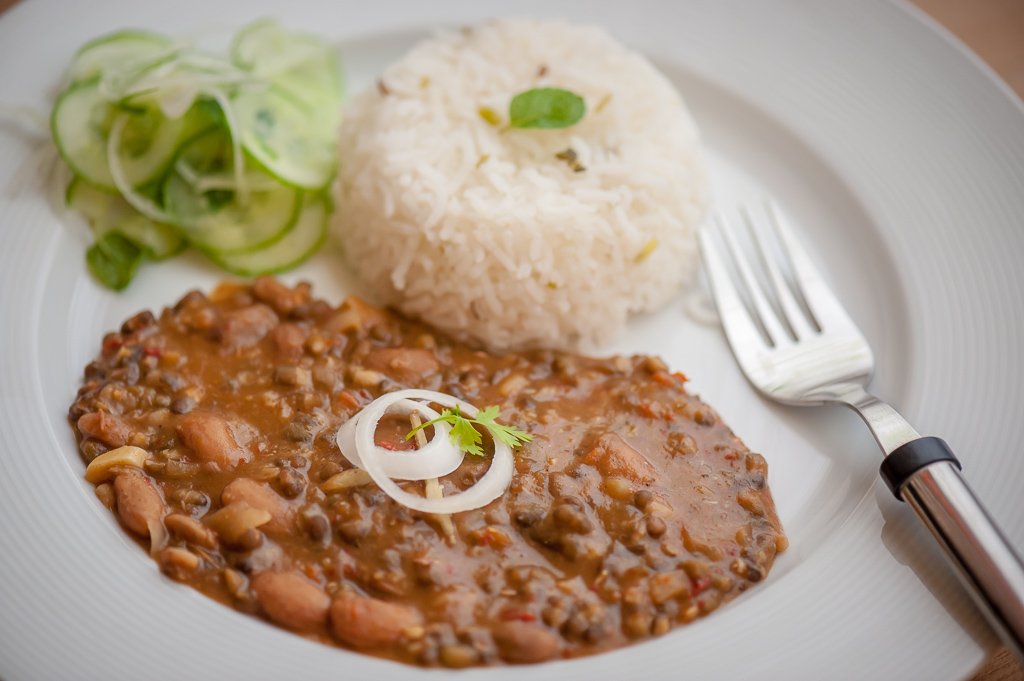
Dal makhani is the king of lentil dishes: whole black lentils and kidney beans slow-simmered for hours with butter and cream into a dal so rich and velvety it feels indulgent. This is not a quick weeknight lentil soup. It is a dish that rewards patience, developing a deep, smoky-sweet flavor and a luxurious texture that comes only from long, slow cooking. Served with warm naan, it is one of the great comfort foods of North India, and once you taste a properly made one, the effort makes complete sense.
The Buttery Dal
Dal makhani comes from the Punjab region, and its name says what it is: dal means lentils, and makhani means buttery. It is a relatively modern dish, a rich variation on traditional lentil cooking, and it was developed at the same Moti Mahal restaurant in Delhi that gave us butter chicken, by the same chefs, as a vegetarian companion to that dish. Where everyday dals are simple and quick, dal makhani is the celebratory version, enriched with butter and cream and cooked low and slow. It has become a fixture of Punjabi restaurants and feasts, and a benchmark of North Indian cooking.
The Lentils and Beans
The base is whole black lentils, urad dal, sometimes called black gram, combined with a smaller amount of kidney beans, rajma. The whole black lentils are essential; this is not made with the split red or yellow lentils of everyday dal, but with the whole black ones that hold their shape and give the dish its dark color and creamy body. Soak the lentils and beans overnight, then boil them until they are completely soft, which is the foundation for the creamy texture. Well-cooked, soft lentils are what let the dal turn velvety as it simmers. Do not shortcut the soaking and boiling.
The Masala Base
The flavor starts with a masala: onion, ginger, and garlic cooked in butter, followed by pureed tomato and spices like Kashmiri chili and garam masala, cooked down until thick and the fat separates. This spiced tomato base gives the dal its savory depth and gentle warmth. The boiled lentils and beans then go into this masala with their cooking liquid, and the two meld together over the long simmer. Cook the masala properly before the lentils go in, since it is the flavor backbone. Kashmiri chili gives color and mild warmth rather than sharp heat, keeping the dal rich and rounded.
The Long Simmer
Here is the secret to dal makhani, and there is no way around it: time. The dal is simmered on very low heat for a long stretch, traditionally hours, stirring now and then and mashing some of the lentils against the side of the pot. This slow cooking is what develops the deep, complex flavor and the thick, creamy, almost silky texture that sets great dal makhani apart from a quick lentil dish. Mashing part of the lentils thickens it naturally. The longer and slower it cooks, the better it gets, so give it time and keep the heat gentle so it does not catch.
Butter and Cream
The richness of dal makhani is the whole point, so do not be shy with the butter and cream that give it its name and character. Butter goes in at the start and often again at the end; cream is stirred in near the finish to make it luxurious and smooth. Crushed dried fenugreek leaves, kasuri methi, added toward the end, give that characteristic aromatic note also found in butter chicken. Taste and balance the salt and spices. This is an indulgent dish by design, so a generous hand with butter and cream is authentic, not excessive. A final knob of butter on top is traditional.
Serving Dal Makhani
Dal makhani is best served with warm naan or another flatbread to scoop it, though it is also wonderful over steamed basmati rice or with jeera rice. Its richness makes it satisfying enough to be a main, and it anchors a Punjabi meal. Like the other slow-cooked dishes it improves overnight as the flavors settle, so it is an excellent make-ahead; it keeps several days refrigerated and thickens as it stands, so loosen it with a little water or cream when reheating. Garnish with a swirl of cream and fresh cilantro. Made well and given its time, it is unforgettable.
Common Questions
Which lentils do I need?
Whole black lentils, urad dal or black gram, plus a small amount of kidney beans (rajma). The whole black lentils, not split red or yellow ones, give the dark color and creamy body. They are sold at Indian and many general groceries.
Can I make it faster in a pressure cooker?
A pressure cooker speeds up softening the lentils and beans, and many home cooks use one. Even so, a stretch of slow simmering afterward develops the deep flavor and creamy texture that define dal makhani. Some time is worth spending.
Can I make it lighter?
You can reduce the butter and cream and it will still be good, though richness is the essence of dal makhani. For a lighter everyday dal, other lentil dishes suit better. Here the butter and cream are what make it what it is.
Dal makhani is a rich lentil dish from the Punjab region made with whole black lentils (urad) and kidney beans, slow-cooked with butter and cream, developed at the same Delhi restaurant as butter chicken.