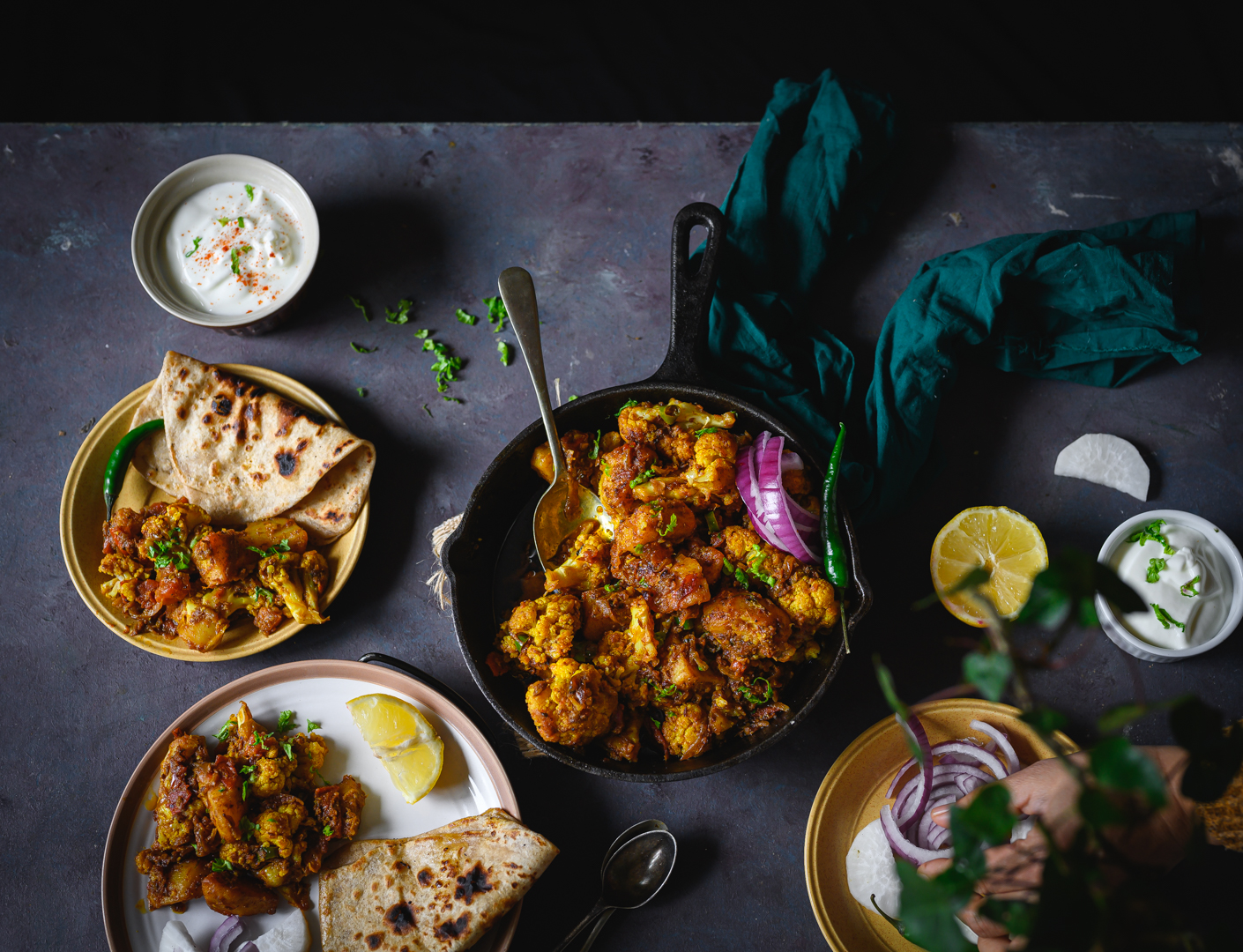
Aloo gobi is the vegetable dish that turns up on North Indian tables more often than almost any other: potato and cauliflower cooked together with cumin, ginger, and turmeric until both are tender and browned at the edges, the whole pan glowing yellow. It is dry rather than saucy, which means the vegetables actually taste of themselves and of the spices clinging to them. Cheap, quick, entirely vegan, and made from ingredients almost everyone already has, it is home cooking rather than restaurant showmanship.
Potato and Cauliflower
The name says exactly what the dish is: aloo means potato, gobi means cauliflower, and there is no third element pretending otherwise. It belongs to the family of North Indian dry curries, dishes cooked without gravy so the spices coat the vegetables directly. Turmeric gives the characteristic warm yellow-orange color, and beyond the core spices, cooks add their own touches, with kalonji, curry leaves, garlic, amchur, or dried fenugreek leaves all common. It appears as one dish among several at a meal, alongside dal and bread, rather than as a centerpiece, which is how most Indian vegetable dishes are actually eaten.
Cutting for Even Cooking
The single most common failure with aloo gobi is uneven cooking, and it starts at the cutting board. Potatoes take longer than cauliflower, so cut the potato into chunks slightly smaller than the florets, or give it a head start in the pan before the cauliflower joins. Aim for pieces of similar size overall, since a mix of large and small guarantees that some are mush while others stay raw. Break the cauliflower into florets rather than chopping it, which keeps the pieces intact, and dry them well after washing so they brown instead of steaming in the pan.
Blooming the Spices
Indian cooking almost always begins by cooking whole spices in hot fat, a step called tempering, and it is what gives this simple dish its depth. Heat oil or ghee, drop in cumin seeds and let them crackle and darken slightly, then add onion, ginger, and slit green chilies. Ground turmeric and coriander go in next and cook for only a few seconds before the vegetables follow, since powdered spices burn quickly but taste raw and dusty if they never meet hot oil at all. Garam masala is different: add it at the very end, off the heat, so its aroma stays fresh.
Keeping It Dry
Aloo gobi is a dry preparation, not a curry swimming in sauce, and the instinct to add water is what ruins it. Cover the pan and cook on low heat instead, letting the vegetables release their own moisture and steam gently in it, stirring occasionally so nothing sticks or breaks. Toward the end, take the lid off and let any remaining liquid cook away so the pieces brown and pick up color where they touch the pan. Those browned edges are where the flavor concentrates. A wide, heavy pan with room to spread out helps far more than a crowded small one.
Variations
Every household makes aloo gobi a little differently. Some cooks add chopped tomato with the onion for a slightly saucier, tangier version; others keep it strictly dry. Amchur, dried mango powder, adds sourness at the end, as does a squeeze of lemon. Kasuri methi, dried fenugreek leaves crushed between the palms, gives a distinctly restaurant-like aroma. Peas often join the pan, and asafoetida is common in kitchens that avoid onion and garlic. Some cooks fry the potato and cauliflower separately before combining them, which gives a deeper color at the cost of more oil and another pan to wash.
Serving Aloo Gobi
Serve it hot, scattered with plenty of chopped cilantro, alongside roti, paratha, or naan, with dal and yogurt to complete the meal. It works equally well with plain rice. Because it is dry, aloo gobi also travels well and is a popular lunchbox dish across India, tasting fine at room temperature. It reheats without trouble, though the cauliflower softens further each time. For a fuller plate, pair it with a lentil dish and a raita, and you have a straightforward vegetarian dinner assembled from very ordinary ingredients.
Common Questions
Why is my cauliflower mushy?
It cooked too long, or water was added. Give the potato a head start, keep the pan covered on low heat without extra liquid, and stir gently so the florets stay whole. Uncover at the end so any moisture evaporates and the edges brown.
Can I make aloo gobi in the oven?
Yes. Toss the vegetables with oil and the ground spices and roast at high heat until browned, then finish with the tempered cumin, ginger, and chili. Roasting gives excellent color and requires less attention, though the texture differs from the traditional pan method.
Is aloo gobi spicy?
It is mild by default. The heat comes from green chilies, which you can reduce, remove, or increase to taste. Turmeric, cumin, and coriander provide warmth and aroma rather than fire, so the dish suits people who prefer gentle spicing.
Aloo gobi is a North Indian dry curry of potatoes and cauliflower, its name literally meaning potato and cauliflower, with turmeric giving the dish its warm yellow color.