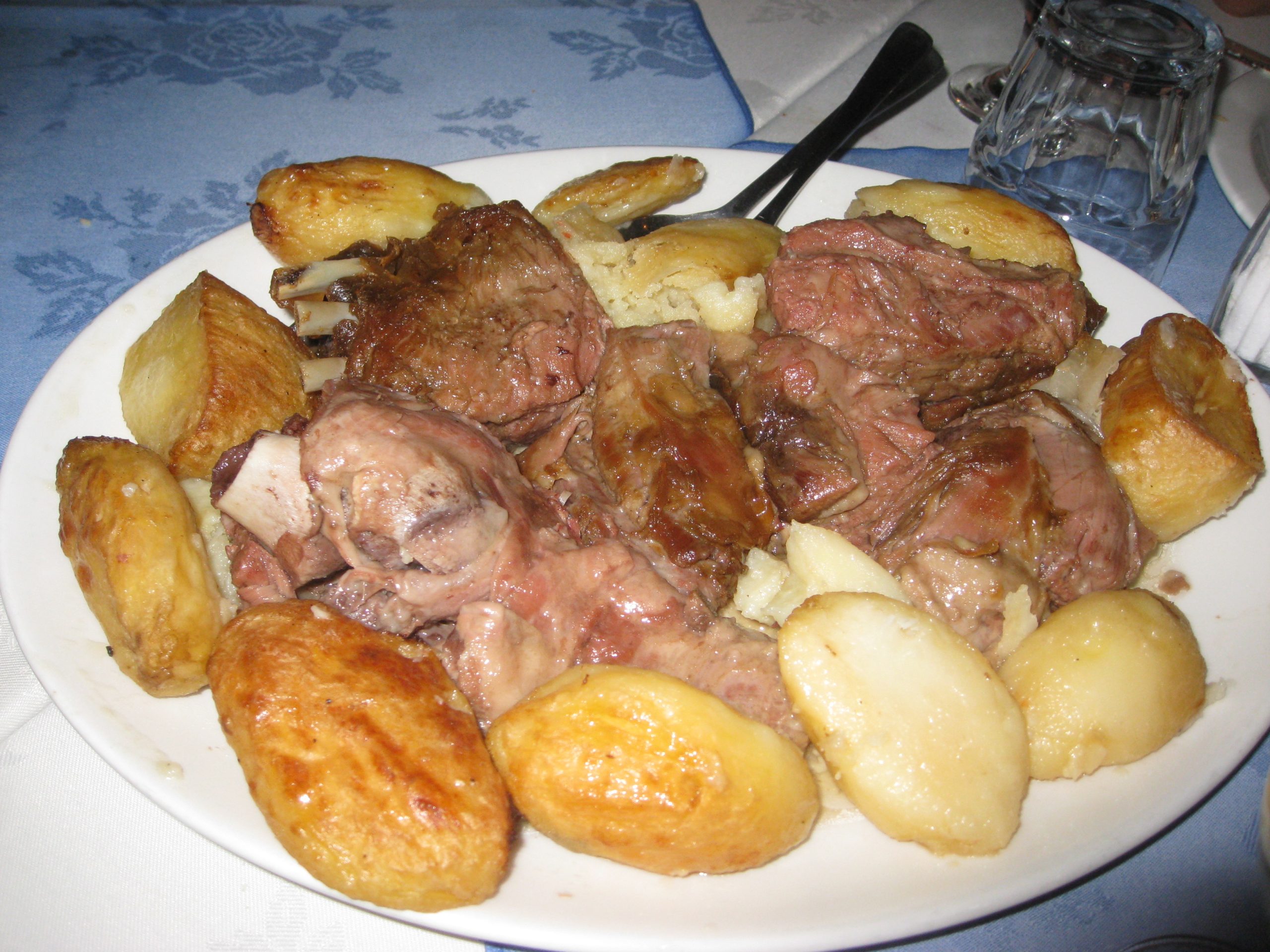
Kleftiko is lamb cooked the patient way: studded with garlic, marinated in lemon and oregano, sealed in parchment with potatoes and onion, and left in a low oven for hours until the meat gives way at the touch of a fork. Nothing escapes the parcel, so the lamb steams in its own juices and the potatoes underneath soak up everything that drips down. Open the paper at the table and the smell alone justifies the wait. It is a special-occasion dish that asks almost nothing of the cook.
The Dish of the Klephts
The name kleftiko comes from the klephts, Greek insurgents and mountain fighters during the long period of Ottoman rule, and it shares a root with words like kleptomania, from the Greek verb meaning to steal. The klephts kept no flocks of their own, so they took lambs and goats and cooked the meat on coals in a covered hole in the ground, sealing it over so no smoke or aroma could rise and give away their position. That sealed, slow, underground cooking is the ancestor of the modern dish, which achieves the same effect with parchment paper and a home oven. Kleftiko is also a favorite in Cyprus, where it was added to the register of intangible cultural heritage in 2019.
Choosing the Lamb
Lamb shoulder is the ideal cut for kleftiko: well marbled, full of connective tissue, and forgiving over a long cook, it turns silky and pulls apart cleanly after hours in the oven. Leg works too and gives leaner slices, and shanks make handsome individual parcels. Ask for large pieces on the bone, since bones add flavor and body to the juices that collect in the parcel. Lean, quick-cooking cuts are the wrong choice here; this method needs the fat and collagen that only tougher cuts provide. Goat is traditional in some regions and cooks the same way.
Garlic, Lemon, Oregano
The seasoning is unmistakably Greek and very simple. Cut small slits all over the lamb and push slivers of garlic deep inside, so the flavor perfumes the meat from within rather than sitting on the surface. Then marinate it in plenty of lemon juice, olive oil, dried oregano, salt, and pepper, for several hours or overnight if you can manage it. Bay leaves, thyme, and rosemary are common additions. The lemon does double duty, seasoning the lamb and tenderizing it, and its brightness is what keeps such a rich, fatty roast from feeling heavy on the plate.
Sealing the Parcel
The seal is the whole technique. Line a deep dish with large overlapping sheets of parchment, leaving generous overhang on every side. Put the potatoes, onion wedges, and bay leaves in first, set the lamb on top, and pour over all the marinade. Then fold the parchment up and over and crimp it closed into a tight parcel with no gaps for steam to escape; many cooks add a layer of foil outside the paper for insurance. Trapping the steam is what turns the lamb meltingly tender, so a leaky parcel gives a drier roast. Some Greek and Cypriot cooks add chunks of hard cheese inside, which melt into the juices.
The Long Roast
Roast the sealed parcel at a low temperature for several hours. There is nothing to check, stir, or baste, since opening it early lets out the steam that is doing the work. The lamb is ready when a fork twists the meat off the bone with no resistance at all. For the last stretch, open the top of the parcel and turn the heat up so the surface browns and the juices reduce slightly, then close it loosely and let everything rest before serving. The potatoes beneath will have absorbed the lemon, garlic, and lamb fat and are often the part people fight over.
Serving Kleftiko
Bring kleftiko to the table in its parcel and open it in front of everyone, which is half the pleasure. Serve the lamb with the potatoes and onions from underneath, spooning over the collected juices, with a Greek salad, tzatziki, and bread to mop the plate. It is festive food in Greece and Cyprus, cooked for celebrations and Sunday tables, and it suits entertaining perfectly because the oven does the work unattended while you deal with everything else. Leftover lamb is excellent shredded into pita the next day with yogurt and lemon.
Common Questions
Can I use foil instead of parchment?
Foil seals well and many cooks use it, often wrapped around parchment. Parchment is preferred as the inner layer because acidic lemon juice sits against foil less happily. What matters most is that the parcel is fully closed so no steam escapes during the long roast.
What cut of lamb is best?
Shoulder, for its fat and connective tissue, which break down over hours into tender, juicy meat. Leg gives leaner slices and shanks make neat single portions. Bone-in pieces add flavor to the juices. Avoid lean quick-cooking cuts, which dry out over this long roast.
Why is my kleftiko dry?
The parcel was not sealed tightly, the oven ran too hot, or the cut was too lean. Crimp the paper closed with no gaps, keep the heat low, and use a fatty cut like shoulder so the meat bastes itself throughout the cook.
Kleftiko is a Greek dish of slow-roasted marinated lamb named after the klephts, insurgents under Ottoman rule who cooked meat in covered pits so the smoke would not reveal them.